Industry Update - March 1, 2019 <h4>By Jeremy Feucht</h4>
<h3></h3>
<h3><strong><u>Did you Know?</u></strong></h3>
An engine in a semi is designed to run 24/7 for 1,000,000 miles before needing to be completely rebuilt.
<h3></h3>
<h3><strong><u>Trucking tip of the Week</u></strong></h3>
In the cold weather, increasing the air pressure in your tires is a good idea. This helps ensure that cold air does not affect the safety of your tires. In cold weather, air molecules huddle together thus reducing pressure. Be careful though not to over inflate your tires as it makes for an incredibly rough ride and reduces your control over the vehicle.
<h3></h3>
<h3><strong><u>Weather</u></strong></h3>
Good portions of the west and mid-west saw record breaking snow fall for the month of February. This snow fall shut down portions of highways through Washington, Oregon and Idaho in particular. However, these states have not called for Declarations of Emergency because it only affects a portion of the state. Montana, North Dakota, South Dakota, Minnesota and Wisconsin, however, have all declared a <a href="https://www.fmcsa.dot.gov/emergency-declarations">State of Emergency</a> due to a lack of fuel, heating oil and propane for its citizens because of the continued poor weather across their entire state. Propane carriers are usually exempted from hours of service rules this time of year anyway, but fuel haulers will now be granted this exemption until the middle of March.
<h3></h3>
<h3><strong><u>Legislation</u></strong></h3>
The age restriction for interstate driving may change 21 to 18. In a rare move of bipartisanship in both the US House and US Senate, a piece of legislation called the “<a href="https://www.young.senate.gov/imo/media/doc/DRIVE-Safe%20Act%20FINAL%20Draft.pdf">DRIVE Safe Act</a>” looks like it will be pushed through. The act itself does not simply opening the doors for those that are 18 to immediately go long haul, but that does not make it any less controversial. While it is endorsed heavily by the ATA to slow the increasing driver shortage, it still allows younger people, with significantly less driving experience, to drive dangerous vehicles. The legislation would require those under 21 to log significant hours both on duty and behind the wheel as an apprentice before being able to do so on their own. This is the same bill that was introduced in March of last year but has more backing this go around.
<h3></h3>
<h3><strong><u>I</u></strong><strong><u>ntermodal and Trucking at Odds</u></strong></h3>
Lobbyists for the intermodal transportation entities had a chance to have their voices heard this week in DC. Looking to head off the desire for bigger and heavier trucks hitting the roadways, rail and waterway experts were called upon for a <a href="http://www.landlinemag.com/Story.aspx?StoryID=73829#.XHl43vZFw2x">hearing with the US Senate Transportation and Safety subcommittee</a>. Members of the Senate subcommittee though did press back on some of the strategies that ocean liners are beginning to practice using such as “street turns.” A street turn is using the empty container that was picked up at port and using it to haul a load back towards, or even back to, the port.
6 Tips to Keep Safe at Truck Stops <h2></h2>
<h3></h3>
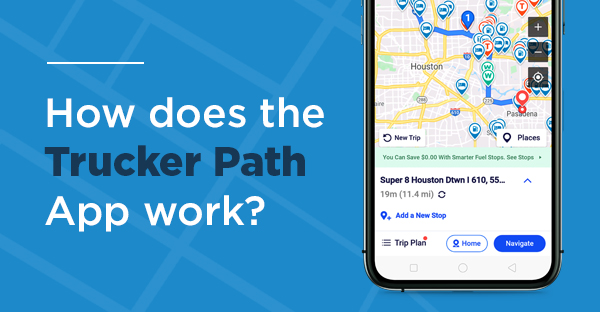
You have finally arrived at your truck stop of choice (or found one using <a href="https://truckerpath.com/trucker-path-app/">Trucker Path</a>) and conveniently located a parking spot. Watch out as things might not be so safe as you think. A large percentage of truck-trailer accidents occur at truck stops which should be the safest place to park. Drivers can never let their guard down when behind the wheel and even parked at that! Trucking accidents are expensive and causes major setbacks in your schedule which leads to more expenses. Below are a few tips to help reduce a trucking accident/incident at a truck stop:
<h2></h2>
<strong>Here are 6 tips to keep safe at truck stops:</strong>
<h2></h2>
<strong>1. Pre-plan your route:</strong> Pre-plan your route so you know you will be stopping at a location with plenty of room and that is well lit. Choose your stops, don’t let them choose you. Use truck apps such as Trucker Path to efficiently plan your route and plot your desired stops.
<h2></h2>
<a href="https://truckerpath.com/uploads/2020/06/b56.jpeg"><img src="https://truckerpath.com/uploads/2020/06/b56-300x156.jpeg" alt="" width="300" height="156" class="alignleft size-medium wp-image-5073" /></a>
<h2></h2>
<strong>2. Maximize your stops:</strong> Plan to take care of everything you need at a truck stop when you are there the first time. Stopping to fuel, refill your coffee, and eat is better than stopping five times.
<h2></h2>
<a href="https://truckerpath.com/uploads/2020/06/b55.jpeg"><img src="https://truckerpath.com/uploads/2020/06/b55-300x156.jpeg" alt="" width="300" height="156" class="alignleft size-medium wp-image-5072" /></a>
<h2></h2>
<strong>3. Avoid parking at the end of a row:</strong> Not only is there traffic crossing next to you but most people park on the end because they are tired and after a long day the end is the closest spot. Avoiding the end of a parking lot helps you avoid drivers who are parking when they are tired. Removing yourself from high traffic areas can help reduce risk.
<h2></h2>
<a href="https://truckerpath.com/uploads/2020/06/b54.jpeg"><img src="https://truckerpath.com/uploads/2020/06/b54-300x156.jpeg" alt="" width="300" height="156" class="alignleft size-medium wp-image-5071" /></a>
<h2></h2>
<strong>4. Avoid a spot that will force you to back out when you leave:</strong> Choose a spot you can either pull through (the best option) or back into (second best option).
<h2></h2>
<a href="https://truckerpath.com/uploads/2020/06/b53.jpeg"><img src="https://truckerpath.com/uploads/2020/06/b53-300x156.jpeg" alt="" width="300" height="156" class="alignleft size-medium wp-image-5070" /></a>
<h2></h2>
<strong>5. Park where there is space around you:</strong> The back of the lot will usually have more room than the front so let other drivers take the risk of all that traffic coming and going. No need to be a super Trucker when a safe and easy place is available. Think safe, not convenience.<h2></h2>
<a href="https://truckerpath.com/uploads/2020/06/b41.jpeg"><img src="https://truckerpath.com/uploads/2020/06/b41-300x156.jpeg" alt="" width="300" height="156" class="alignleft size-medium wp-image-5068" /></a>
<h2></h2>
<strong>6. Use your cameras:</strong> Don't be complacent when parking. When your space is tight, utilize what you have to your advantage. Using your cameras will help you see tight spots on sides and at the rear. Take your time and you can also step down to survey the surrounding areas.
<h2></h2>
<a href="https://truckerpath.com/uploads/2020/06/b40.jpeg"><img src="https://truckerpath.com/uploads/2020/06/b40-300x156.jpeg" alt="" width="300" height="156" class="alignleft size-medium wp-image-5067" /></a>
<h2></h2>
<h2></h2>
<h4>By Aldous Aldwin</h4>
<h3></h3>
<h3></h3>