Fuel Costs Are Squeezing Fleets Again: What Drivers Should Check This Week as Diesel Stays Elevated <p><em>Published July 21, 2026</em></p>
<p>The EIA put the national average for on-highway diesel at <a href="https://www.eia.gov/petroleum/gasdiesel/">$4.796 per gallon</a> for the week of July 13, 2026, and by July 17 pump prices had <a href="https://english.news.cn/20260717/1fd6cd0da45c46bb806fcfea8fecf435/c.html">pushed past $5.00</a> — the second sharp spike of the year after a January supply shock and a brief spring dip to $3.78-$3.81. In the Roanoke Valley, diesel hit <a href="https://www.wdbj7.com/2026/07/20/diesel-prices-hit-513-roanoke-valley-squeezing-truckers-consumers/">$5.13 on July 20, a 50% jump over six months</a>.</p>
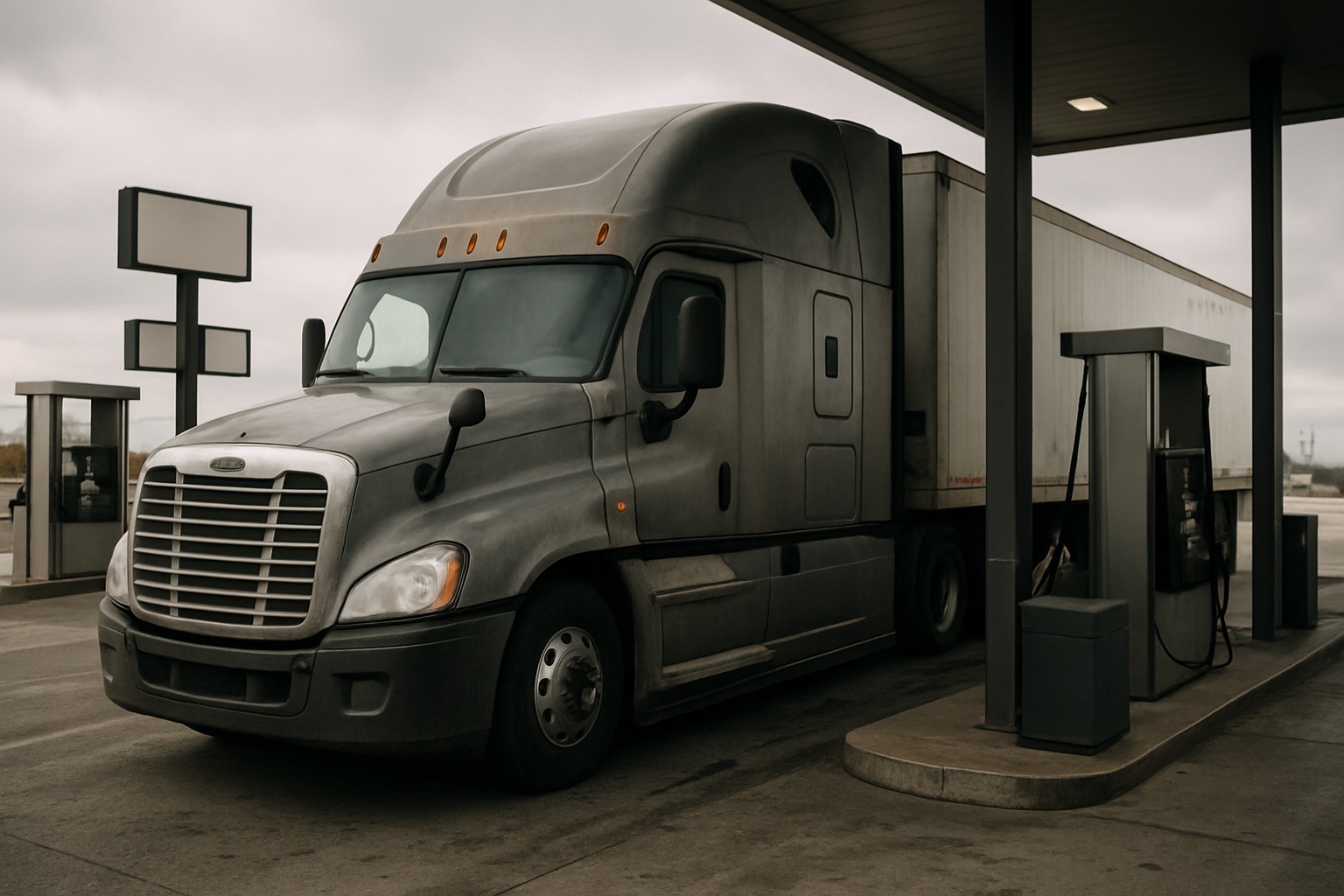
<p>At this level, a bad fuel stop, extra off-route miles, or a late parking decision can turn a decent run into a thin one fast — and smaller operations feel it first. Drivers who plan fuel stops as part of the full route, not as a last-minute decision, tend to avoid the worst of the extra cost from detours, idling, and rushed late-day stops.</p>
<h2>Why do smaller fleets feel diesel swings faster than large carriers?</h2>
<p>Smaller fleets and owner-operators usually carry more of the fuel cost upfront. When prices move faster than surcharge terms can reset, that gap comes out of the margin on the current load — not a future settlement. A Magnus Technologies report cited by <a href="https://www.ccjdigital.com/business/finance/article/15827534/how-the-2026-diesel-surge-is-costing-trucking-fleets-hundreds-of-thousands">Commercial Carrier Journal</a> found that a 55-truck fleet on a monthly surcharge reset failed to recover roughly $168,000 in fuel costs during the 2026 spike, while fleets on a quarterly reset saw unrecovered costs top $400,000. For an independent owner-operator with no company account to absorb that gap, the math gets personal fast: at these EIA prices, a 200-gallon fill runs over $1,000 today, versus roughly $730 back in the spring.</p>
<h2>How do drivers compare fuel stops without wasting time?</h2>
<p>Most drivers are not hunting for the lowest sign on the map. They are trying to find a stop that fits the route, the clock, and the parking plan later in the day. A practical fuel check usually runs in this order:</p>
<ol>
<li>Review fuel options on or near the route before departure</li>
<li>Compare posted prices before the tank gets low</li>
<li>Watch for long stretches with fewer truck stop choices</li>
<li>Match the fuel stop to the parking plan for the end of the day</li>
</ol>
<p>A lot of guys lose money by treating fuel as a separate decision from routing and parking. A cheaper stop can stop being cheap if it adds off-route miles, pushes the truck into heavier traffic, or leaves no solid parking option at the end of the run. Trucker Path shows along-route fuel prices so drivers can compare stops with the rest of the day already in view.</p>
<p><strong>Diesel back above $5 and margins tight? Check along-route fuel prices, live parking availability, and truck-safe routing in one place before the day gets away from you.</strong></p>
<p style="margin:24px 0;">
<a href="https://truckerpath.onelink.me/ivkh/n0eiei2g" style="display:inline-block; background-color:#0A8DD1; color:#FFFFFF; font-weight:bold; font-size:16px; padding:14px 28px; border-radius:6px; text-decoration:none;">Find Cheap Fuel Near You</a>
</p>
<h2>What should a driver check on the route before departing this week?</h2>
<p>Start with the route itself. With fuel prices this elevated and still climbing in some corridors, one wrong turn costs more than it did a year ago. Truck-safe routing in Trucker Path keeps drivers off restricted roads, low clearances, and awkward detours that burn fuel without moving the load forward.</p>
<p>Traffic and weather come next, checked across the full route, not just at the start. A slow afternoon can push a planned fuel stop into a crowded window and throw off the rest of the day — and when margins are already tight, avoidable delays get more expensive, not less. Parking belongs in that same pre-trip scan; if the target stop fills early, a driver may stop short, buy fuel at an unplanned location, or keep rolling and hope the next lot works out.</p>
<ul>
<li><strong>Route first</strong> — avoid wasted miles before they happen</li>
<li><strong>Traffic and weather next</strong> — protect stop timing across the full run</li>
<li><strong>Parking after that</strong> — keep the fuel plan from falling apart in the last hour</li>
</ul>
<h2>How can parking decisions raise fuel costs on a long day?</h2>
<p>Parking affects fuel decisions more than most drivers expect — the final few hours of a long day often decide whether the original fuel plan still holds. When parking fills up early, drivers improvise: stopping short, idling while searching for space, detouring to another lot, or buying fuel wherever the day leaves them. With fuel prices this elevated, that improvisation adds cost fast.</p>
<p>Trucker Path shows live parking availability — open, full, or closed — along the route, so drivers can shift a stop earlier or line up a backup before the late-day rush starts, instead of reacting to whatever is left. Worth asking by mid-afternoon: does this corridor's parking usually tighten up early, is there a backup stop that doesn't add miles, and if parking changes, does the fuel stop still make sense?</p>
<h2>Frequently Asked Questions</h2>
<h3>What is the current national diesel price for truck drivers, and why is it rising again?</h3>
<p>The EIA put the national average for on-highway diesel at <a href="https://www.eia.gov/petroleum/gasdiesel/">$4.796 per gallon</a> for the week of July 13, 2026, and prices pushed past $5.00 by July 17 as renewed conflict in the Gulf disrupted oil markets — the second sharp swing this year, after a January spike and a brief spring dip to around $3.80.</p>
<h3>Are small fleets and owner-operators getting hit harder than large carriers?</h3>
<p>Generally yes. Smaller operators typically have less cushion to absorb fuel swings, especially when surcharge terms lag behind the market. A <a href="https://www.ccjdigital.com/business/finance/article/15827534/how-the-2026-diesel-surge-is-costing-trucking-fleets-hundreds-of-thousands">Magnus Technologies report</a> found that fleets on quarterly surcharge resets absorbed more than $400,000 in unrecovered fuel costs during the 2026 spike, compared to roughly $168,000 for fleets on monthly resets. Independent owner-operators, with no company account to offset the swing, tend to feel it first.</p>
<h3>How does poor parking availability raise fuel costs?</h3>
<p>When drivers can't find parking at the planned stop, they often idle while searching, detour to another lot, or buy fuel at an unplanned location at a higher price. Checking parking availability earlier in the day gives drivers time to adjust without scrambling.</p>
<h3>What is the most common fuel planning mistake on a long day?</h3>
<p>Treating fuel as a separate decision from routing and parking. A stop that looks cheaper on the sign can end up costing more once off-route miles, heavier traffic, and a disrupted parking plan get factored in.</p>
<h2>Summary</h2>
<ul>
<li>National on-highway diesel was $4.796 per gallon for the week of July 13, 2026 per EIA, then pushed past $5.00 by July 17 as renewed conflict in the Gulf hit oil markets again</li>
<li>Smaller fleets and owner-operators absorb fuel swings fastest — one report found quarterly-reset fleets lost over $400,000 in unrecovered fuel costs during the spike, versus about $168,000 for monthly-reset fleets</li>
<li>Route mistakes, traffic delays, idling, and unplanned parking changes each add cost when diesel is this elevated</li>
<li>Planning fuel stops as part of the full route — alongside routing, traffic, and parking — tends to produce better results than treating fuel as a last-minute decision</li>
</ul>
<p>If elevated diesel prices are putting pressure on your margins this week, check along-route fuel prices, live parking, and truck-safe routing before the day gets away from you.</p>
<p style="margin:24px 0;">
<a href="https://truckerpath.onelink.me/ivkh/n0eiei2g" style="display:inline-block; background-color:#0A8DD1; color:#FFFFFF; font-weight:bold; font-size:16px; padding:14px 28px; border-radius:6px; text-decoration:none;">Check Fuel Prices Along Your Route</a>
</p>
<h3>Sources</h3>
<ul>
<li><a href="https://www.eia.gov/petroleum/gasdiesel/">U.S. Energy Information Administration — Weekly Retail Diesel Prices</a>, week of July 13, 2026</li>
<li><a href="https://english.news.cn/20260717/1fd6cd0da45c46bb806fcfea8fecf435/c.html">Xinhua — "Diesel prices rebound squeezes U.S. truckers, drives up freight costs"</a>, July 17, 2026</li>
<li><a href="https://www.wdbj7.com/2026/07/20/diesel-prices-hit-513-roanoke-valley-squeezing-truckers-consumers/">WDBJ7 — "Diesel prices hit $5.13 in Roanoke Valley"</a>, July 20, 2026</li>
<li><a href="https://www.ccjdigital.com/business/finance/article/15827534/how-the-2026-diesel-surge-is-costing-trucking-fleets-hundreds-of-thousands">Commercial Carrier Journal — "How the 2026 Diesel Surge is Costing Trucking Fleets Hundreds of Thousands"</a></li>
</ul>
<p><em>Fuel prices change frequently and may have moved since this article was published (July 21, 2026); figures above reflect the dates and sources cited.</em></p>
A Closer Look at the Trucking Industry in America
[p]The trucking industry is the lifeblood of America's economy. In fact, nearly every good consumed in the U.S. is put on a truck at some point. We've compiled some trucking stats and facts on the infographic below.
[/p]
[img src="https://truckerpath.com/uploads/2020/10/info-long-1.jpg" alt=""]
<h2></h2>
<h2></h2>
[button-green href="http://vip.truckerpath.com/gold-member?utm_source=email&utm_medium=rwitpress"]Try Trucker Path Premium FREE for 14 Days[/button-green]
FMCSA Updated Hours of Service (HOS) Rules
[p]The FMCSA has changed some of the rules within the <a href="https://www.fmcsa.dot.gov/regulations/hours-of-service">Hours of Service (HOS) regulations</a> which took effect yesterday, September 29, 2020.
[/p]
<h2></h2>
<blockquote>“FMCSA wants drivers and all CMV stakeholders to share their thoughts and opinions on the proposed changes to hours of service rules that we are putting forward today,” said FMCSA Administrator Raymond P. Martinez, who spoke with reporters on a conference call Wednesday morning. “We listened directly to the concerns of drivers for rules that are safer and have more flexibility—and we have acted. We encourage everyone to review and comment on this proposal.”</blockquote>
[p]FMCSA’s newly proposed HOS rule offers a couple of revisions to the existing HOS rules, which Martinez said are based on extensive public comments shared with the agency since last year. [/p]
[p][b]Here are the key changes which are important to note:[/b][/p]
<ul>
<li>Increase in short-haul radius to 150 air-miles no matter the size of the vehicle</li>
<li>Short-haul drive time has been extended from 12 to 14 hours. </li>
<li>Extension of the driving window by up to 2 hours for adverse conditions</li>
<li>30-minute break can be taken in “On Duty, Not Driving” status</li>
<li>30 consecutive minute break must be taken after driving eight hours</li>
<li>Split sleeper can now be taken within a minimum of 7 hours in sleeper berth. The remainder of the 10 hours can be taken in “Off Duty” status and must be consecutive in nature. Neither period will count against the 14-hour driving window when utilized properly.</li>
</ul>
[p]In line with the above, an update to <a href="http://eld.truckerpath.com/">Trucker Path's ELD Pro</a> has also been rolled out. We urge all Trucker Path ELD Pro users to update their application in either <a href="https://play.google.com/store/apps/details?id=com.app.truckerpatheld&hl=en">Google Play Store</a> or the <a href="https://apps.apple.com/us/app/trucker-path-eld-pro/id1488420043">Apple App Store</a> to take advantage of the new rules. [/p]
<h2></h2>
[img src="https://truckerpath.com/uploads/2020/09/hos2.jpeg" alt=""]
<h2></h2>
<h2></h2>
[p][b]By Trucker Path[/b][/p]
Trucker Path App Update Version 4.1.2: Satellite Views, Improved search, and Major Bug Fixes <h2></h2>
<h3></h3>
Good morning Trucker Path users!
We’re excited to rollout the latest version 4.1.2 of Trucker Path in the App Stores (<a href="http://bit.ly/truckerpathdroid">Play Store</a> and <a href="http://bit.ly/truckerpathios">Apple</a>). We’ve added new features requested by our users and fixed longstanding bugs.
<h2></h2>
<strong>1. Added Satellite Views</strong>
<h2></h2>
Tapping into the detailed page of a Place will show a satellite screenshot of that location. This way, you can get a better sense of the parking and layout.
<a href="https://truckerpath.com/uploads/2020/06/s1.jpeg"><img src="https://truckerpath.com/uploads/2020/06/s1-300x300.jpeg" alt="" width="300" height="300" class="alignleft size-medium wp-image-5057" /></a>
<h2></h2>
<strong>2. Improved Places Search Capability</strong>
<h2></h2>
The search bar will now support searching for the business’ name, as well as their address.
<h2></h2>
<a href="https://truckerpath.com/uploads/2020/06/s2.jpeg"><img src="https://truckerpath.com/uploads/2020/06/s2-300x300.jpeg" alt="" width="300" height="300" class="alignleft size-medium wp-image-5058" /></a>
<h2></h2>
<strong>3. Bug Fixes</strong>
<h2></h2>
A few users reported the mile distance from location isn’t displaying correctly. Rest assured this is now completely fixed.
<h2></h2>
<a href="https://truckerpath.com/uploads/2020/06/s3.jpeg"><img src="https://truckerpath.com/uploads/2020/06/s3-300x300.jpeg" alt="" width="300" height="300" class="alignleft size-medium wp-image-5059" /></a>
<h2></h2>
Some users are also reported seeing “no internet connection” despite being connected to the internet. This is a known bug where we’ve implemented some solutions in this patch. Fingers crossed it will be resolved for those affected.
<h2></h2>
<a href="https://truckerpath.com/uploads/2020/06/s4.jpeg"><img src="https://truckerpath.com/uploads/2020/06/s4-300x300.jpeg" alt="" width="300" height="300" class="alignleft size-medium wp-image-5060" /></a>
<h2></h2>
Hope you guys enjoy these. More feature updates in the pipeline for the next release cycle! If you have any suggestions please let our team know at community@truckerpath.com, we're actively looking for user suggestions!
<h2></h2>
<h2></h2>
<h2></h2>
<h4>By The Trucker Path Team</h4>
<h3></h3>
<h3></h3>
Industry Update - June 2, 2020 <h2></h2>
<h3></h3>
<a href="https://truckerpath.com/uploads/2020/06/b21.jpg"><img src="https://truckerpath.com/uploads/2020/06/b21-300x156.jpg" alt="" width="300" height="156" class="alignleft size-medium wp-image-4991" /></a>
<h3><strong>DOT to Distribute 2.1 Million Masks to Truckers</strong></h3>
The U.S. Department of Transportation will distribute around 2.1 million face masks to truck drivers. This is part of a larger initiative to distribute masks to transportation workers across the country.
“Transportation workers are on the frontlines of keeping our transportation systems operational during this public health emergency and their wellbeing and safety is paramount,” said Transportation Secretary Elaine Chao.
DOT announced that the masks will be sent out over the coming weeks through the U.S. Postal Service. The breakdown of masks by transportation sector is as follows:
<ul>
<li>Mass transit and passenger rail – 4.8 million</li>
<li>Aviation – 3.8 million</li>
<li>Maritime – 2.4 million</li>
<li>Freight rail – 2.2 million</li>
<li>Highway and motor carrier – 2.1 million</li>
<li>Pipeline systems – 258,000</li>
</ul>
For detailed distribution locations and current dates of distribution, please visit: <a href="http://www.fmcsa.dot.gov/masks">www.fmcsa.dot.gov/masks</a>
<h2></h2>
<h2></h2>
<a href="https://truckerpath.com/uploads/2020/06/b19.jpeg"><img src="https://truckerpath.com/uploads/2020/06/b19-300x156.jpeg" alt="" width="300" height="156" class="alignleft size-medium wp-image-4988" /></a>
<h3><strong>Volumes Now Up 10% vs Last Year</strong></h3>
<a href="https://www.freightwaves.com/news/volumes-fall-week-over-week-but-now-up-10-year-over-year">Outbound tender volumes are benefiting greatly from the reopening of the economy</a> and a release of pent-up consumer demand. Supply dynamics are taking longer to adjust and capacity remains loose. While rates are coming off a depressed base, spot rates have surged to $1.47 per mile and have increased in the vast majority of lanes.
<h2></h2>
Volumes should continue to be supported by most of the states reopening, continued plugging of the income gap by generous unemployment benefits and stimulus, auto plants reopening, and produce seasons kicking into gear.
<h2></h2>
<h2></h2>
<a href="https://truckerpath.com/uploads/2020/06/b20.jpeg"><img src="https://truckerpath.com/uploads/2020/06/b20-300x156.jpeg" alt="" width="300" height="156" class="alignleft size-medium wp-image-4989" /></a>
<h3><strong>Blinking Lights Cut Tanker-Truck-Crashes By Nearly 34%</strong></h3>
As part of their safety efforts, Groendyke Transport installed $150 blinking amber lights to the back of their tanker trucks. They reported a 33.7% drop in rear-end collisions over a 31-month period, according to company officials. In addition, there were zero rear-end collisions at railroad crossing during a test period of one year and seven months.
<h2></h2>
The Groendyke Transport fleet currently has 900 trailers with the lights after almost three years of testing and now has <a href="https://beta.regulations.gov/document/FMCSA-2018-0223-0036">permission from FMCSA</a> to use them.
<h2></h2>
The cost of the strobe and installation is about $150.
<h2></h2>
<h2></h2>
<h2></h2>
<h4>By Aldous Aldwin</h4>
<h3></h3>
<h3></h3>
Industry Update - May 19, 2020 <h4>By Aldous Aldwin</h4>
<h3></h3>
<h3></h3>
<img src="https://truckerpath.com/uploads/2020/05/b1.jpeg" alt="Truck Stops" />
<h3><strong>Truck Stops to Remain Open</strong></h3>
As the nation endures the Covid-19 pandemic, <a href="https://www.ttnews.com/articles/truck-stops-remain-open-pandemic-despite-hit-bottom-line">truck stops have been working to ensure that drivers have a helping hand</a>. Some truck stops like Iowa 80 have enforced measures to limit the Covid-19 spread while keeping the showers and restrooms open. Loves installed plexiglass at all its stores, restaurants, and truck registers. Petro has remained open and has packaged their convenience store foods in a way that prioritizes customer safety.
<h2></h2>
<img src="https://truckerpath.com/uploads/2020/05/b2.jpeg" alt="FMCSA" />
<h3><strong>FMCSA HOS Rule Updates</strong></h3>
The <a href="https://www.fmcsa.dot.gov/regulations/hours-service/hours-service-drivers-final-rule">Final Rule</a> features four key changes to existing Hours of Service requirements.
<ul>
<li>The Agency will increase safety and flexibility for the 30-minute break rule by requiring a break after 8 hours of consecutive driving and allowing the break to be satisfied by a driver using on-duty, not driving status, rather than off-duty status.</li>
<li>The Agency will modify the sleeper-berth exception to allow drivers to split their required 10 hours off duty into two periods: an 8/2 split, or a 7/3 split—with neither period counting against the driver’s 14‑hour driving window.</li>
<li>The Agency will modify the adverse driving conditions exception by extending by two hours the maximum window during which driving is permitted.</li>
<li>The Agency will change the short-haul exception available to certain commercial drivers by lengthening the drivers’ maximum on‑duty period from 12 to 14 hours and extending the distance limit within which the driver may operate from 100 air miles to 150 air miles.</li>
</ul>
<h3></h3>
<img src="https://truckerpath.com/uploads/2020/05/b3.jpeg" alt="Jobs" />
<h3><strong>More than 80,000 Jobs Lost Last April</strong></h3>
According to the<a href="https://www.bls.gov/news.release/empsit.t17.htm"> Bureau of Labor Statistics</a>, 88,300 jobs were lost in the trucking industry, a 6.2% year-over-year decline, as the entire economy continues to suffer due to the COVID-19 pandemic. It is estimated that around 60% of the jobs mentioned are drivers.