FMCSA Crackdowns Are Removing Capacity: What Small Fleets Should Review on CDL, ELD and Compliance Risk
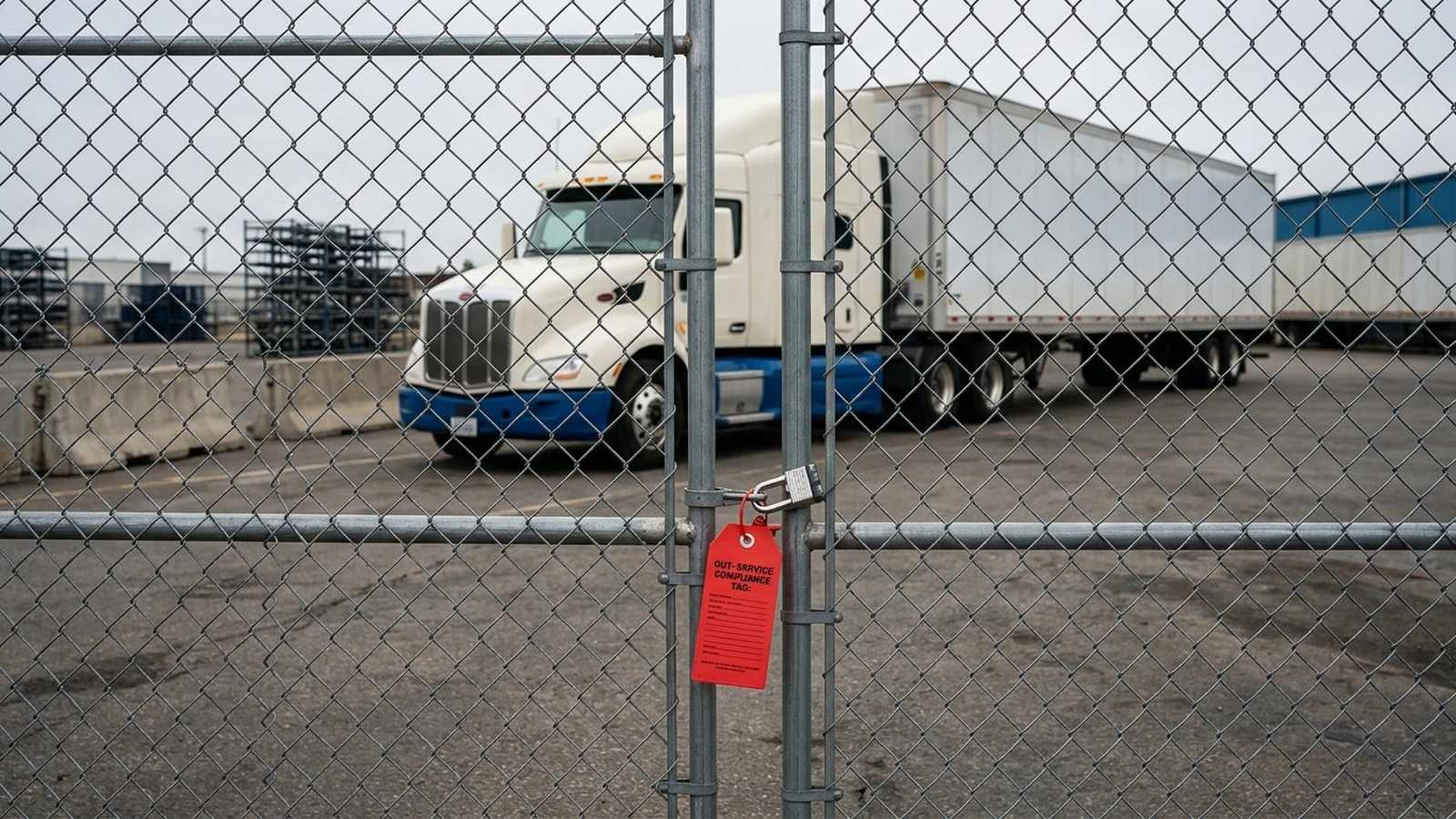
FMCSA compliance for small fleets got more urgent this year because capacity can leave the market for reasons that have nothing to do with freight demand. For a 3-to-50-truck operation, one bad file, one vendor problem, or one ELD disruption can park a truck fast.
That is Monday-morning stuff for small carriers. The office can feel normal one day, then a document check, training question, or device problem turns into missed loads and a long afternoon.
Why it matters
When a big carrier loses a truck, it often has backup staff, extra equipment, and someone who handles compliance full time. Small fleets usually run leaner. A lot of guys have the owner dispatching in the morning, answering calls at lunch, and digging through records at night.
That is why enforcement-driven capacity removal hits smaller operators harder. The FMCSA Drug and Alcohol Clearinghouse keeps drivers in prohibited status off the road until they complete the return-to-duty process, and the agency’s Entry-Level Driver Training rule ties new CDL applicants and certain upgrades to training recorded in the Training Provider Registry. In real life, that means FMCSA compliance for small fleets is not a back-office chore. It affects dispatch, customer service, and whether a truck rolls tomorrow. On the operations side, Trucker Path Command/Fleet gives managers one place to watch active drivers and day-to-day movement while paperwork issues get sorted.
Which CDL files need a second look right now?
Start with every active driver file, not just new hires. Most problems hide in the file everybody assumes is fine because that driver has been there a while.
A solid review starts with the basics: current CDL copy, medical examiner’s certificate when required, motor vehicle record review, road test or equivalent qualification record, prior employment checks when required, Drug and Alcohol Clearinghouse steps, and onboarding or training records. FMCSA lays out driver qualification file requirements in 49 CFR Part 391, Subpart F. If a document is missing, expired, unreadable, or sitting only in text messages, that is a weak spot.
Then check for consistency. CDL class, endorsements, restrictions, hire date, and training records need to match across the file. A mismatch can create a bigger headache than one missing page. Many fleets do not find those conflicts until an audit, a crash review, or an insurance question brings them up.
Most small fleets get farther with a plain checklist than with a fancy binder. Review drivers one by one. Mark what is current, what needs follow-up, and what still needs outside verification. That keeps the office from treating every issue like the same kind of fire.
This is also where day-to-day operations visibility helps. Even when routing gets most of the attention, Trucker Path Command/Fleet gives managers a practical view of active drivers and assignments, which makes it easier to catch a record issue before dispatch stacks another week of loads on top of it.
Are your driving school and service vendors creating hidden risk?
A lot of small fleets trust paperwork that comes in from third parties. That includes driving schools, permit trainers, consortiums, ELD providers, and onboarding services. The hard lesson is simple: a weak vendor can hand a carrier a problem that does not show up until later.
If a driver came through a school or training pipeline that later gets questioned, the fleet may need to verify what training actually happened and what records it can prove. Under FMCSA’s ELDT rule, training providers have to register with the Training Provider Registry and submit driver training certification to FMCSA. Carriers can review the federal ELDT framework directly at the Training Provider Registry and on FMCSA’s ELDT page. The same idea applies to outside services handling log setup, qualification paperwork, or onboarding. If that company disappears or changes systems, the carrier still owns the gap.
ELD planning belongs in the same conversation. FMCSA’s ELD requirements in 49 CFR Part 395, Subpart B make record access and malfunction procedures operational issues, not just admin issues. For a small fleet, that means checking where log data lives, who can access it, how drivers switch devices if one fails, and who handles the first call when a log problem starts eating into the day.
Most fleets do not need a giant tech project here. They need a short vendor list with names, contacts, service dates, and one plain answer to this question: if this company vanished tomorrow, what records or daily functions would get messy first?
What changes belong in dispatch policy before an ELD or compliance issue turns into downtime?
Dispatch policy is where paperwork problems become money problems. A shaky file can stay invisible until dispatch keeps assigning tight freight, routing through dense delivery areas, and assuming the truck will keep moving like normal.
Most small fleets benefit from writing down a few simple triggers for dispatch to stop and recheck before sending the next load. Common examples are a driver changing equipment, a new hire’s first week under load, an ELD malfunction report, an expired document alert, or a training record that still needs verification.
It also helps to spell out who makes the call when an ELD issue hits late in the day. Does the driver call dispatch first, safety first, or the owner? Who documents the problem? Who updates the customer if the run slips? A lot of downtime gets worse because nobody owns the first ten minutes.
For fleets trying to tighten that handoff, Trucker Path Command/Fleet fits on the operations side because dispatchers and managers can keep multi-driver accounts, route configuration, and live vehicle tracking in one place while a compliance or ELD issue gets sorted. It will not fix a bad file, and commercial routing still needs local verification, but it can keep the rest of the day from turning into confusion.
One more thing experienced operators often separate: “can this truck legally and safely move?” and “can we still cover the customer?” Those are two different questions. When dispatch writes a backup plan for both, small problems stay smaller.
Frequently Asked Questions
What does capacity removal mean for a small fleet?
It means trucks or drivers leave the market because of enforcement, record failures, training issues, or technology problems, not just because freight got slow. For a small fleet, losing one truck from rotation can throw off dispatch and cash flow in a hurry.
What paperwork is most important in a driver qualification file?
Most carriers start with the current CDL, medical certification when required, MVR review, road test or equivalent record, prior employer checks when required, Clearinghouse steps, and any training documents tied to onboarding. The exact file rules are laid out in 49 CFR Part 391, Subpart F.
How do carriers check whether entry-level driver training records were properly reported?
Many fleets start with the driver’s onboarding records, then confirm the training provider and certification through FMCSA’s Training Provider Registry. That helps the office verify that required ELDT reporting actually happened.
What is a practical first step when an ELD provider changes or a device fails?
Most fleets begin by confirming access to historical log data, documenting the malfunction process, and naming one office contact for drivers to call first. That keeps records easier to find and reduces the scramble while the truck is already moving.
What tool helps when dispatch and compliance start crossing wires?
A lot of small carriers want one place to manage drivers, routes, and truck visibility while the office works through a compliance problem. That is where Trucker Path Command/Fleet can help, especially when dispatch needs live tracking and route control without bouncing between separate screens.
Summary
- FMCSA compliance for small fleets is an everyday operations issue, not just office paperwork.
- Driver qualification files deserve a fresh review, especially for active drivers already under load this week.
- Training providers, onboarding services, and ELD vendors can create hidden risk if records are weak or access disappears.
- Simple dispatch triggers and a clear call chain can reduce downtime when a compliance or ELD problem pops up.
- Federal sources like the Clearinghouse, ELDT page, Training Provider Registry, and the CFR give fleets a more reliable place to verify requirements.
Sources
- FMCSA — “Drug and Alcohol Clearinghouse”, accessed August 14, 2026
- FMCSA — “Entry-Level Driver Training (ELDT)”, accessed August 14, 2026
- FMCSA — “Training Provider Registry”, accessed August 14, 2026
- eCFR — “49 CFR Part 391, Subpart F — Files and Records”, accessed August 14, 2026
- eCFR — “49 CFR Part 395, Subpart B — Electronic Logging Devices (ELDs)”, accessed August 14, 2026
For fleets trying to keep trucks moving while tightening paperwork and dispatch control, Trucker Path Command/Fleet can help with multi-driver management, live tracking, and commercial route setup that still needs local verification.
Figures and enforcement conditions may have changed since publication.