Fuel Costs Are Squeezing Fleets Again: What Drivers Should Check This Week as Diesel Stays Elevated
Published July 21, 2026
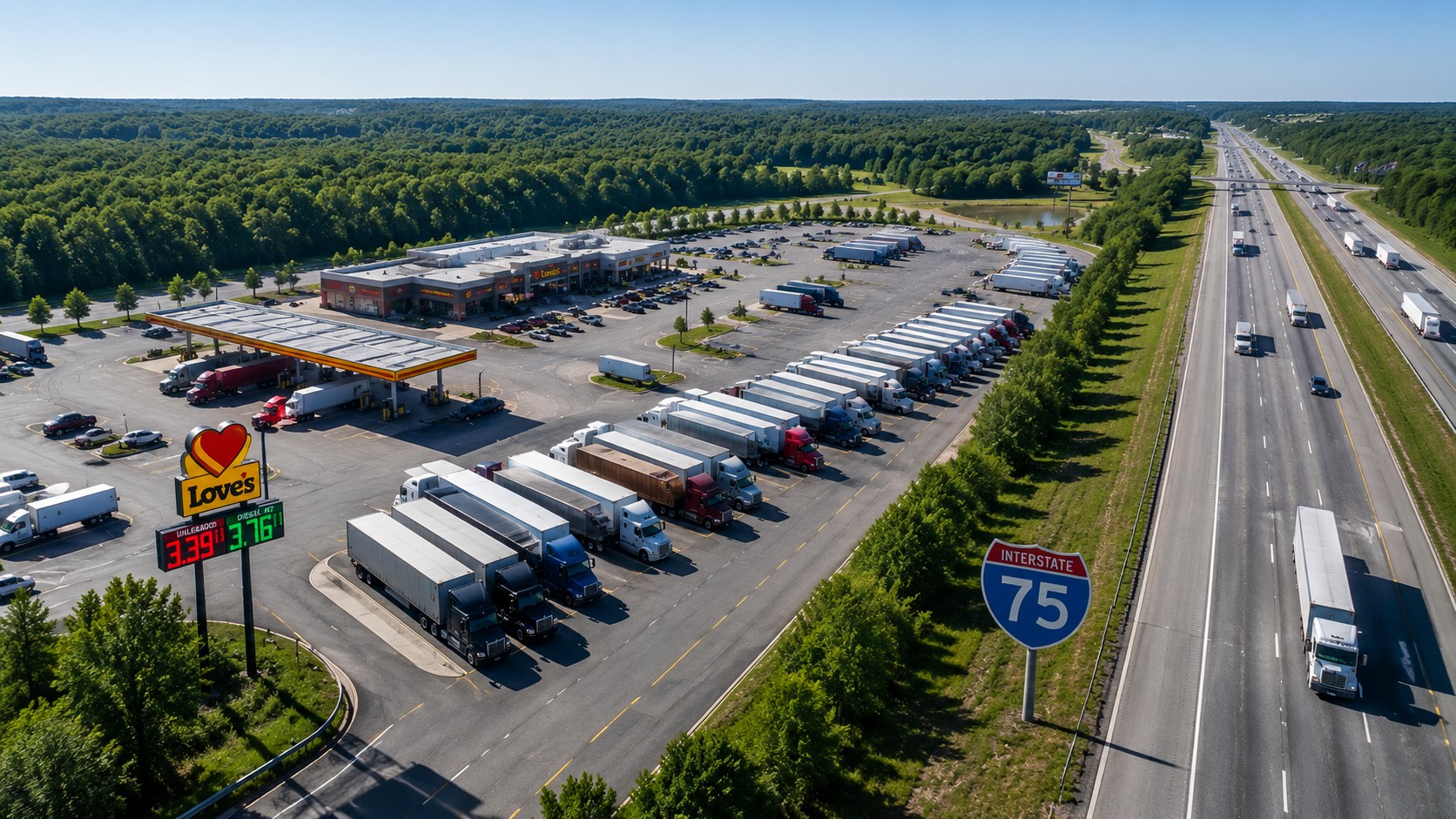
The EIA put the national average for on-highway diesel at $4.796 per gallon for the week of July 13, 2026, and by July 17 pump prices had pushed past $5.00 — the second sharp spike of the year after a January supply shock and a brief spring dip to $3.78-$3.81. In the Roanoke Valley, diesel hit $5.13 on July 20, a 50% jump over six months.
At this level, a bad fuel stop, extra off-route miles, or a late parking decision can turn a decent run into a thin one fast — and smaller operations feel it first. Drivers who plan fuel stops as part of the full route, not as a last-minute decision, tend to avoid the worst of the extra cost from detours, idling, and rushed late-day stops.
Why do smaller fleets feel diesel swings faster than large carriers?
Smaller fleets and owner-operators usually carry more of the fuel cost upfront. When prices move faster than surcharge terms can reset, that gap comes out of the margin on the current load — not a future settlement. A Magnus Technologies report cited by Commercial Carrier Journal found that a 55-truck fleet on a monthly surcharge reset failed to recover roughly $168,000 in fuel costs during the 2026 spike, while fleets on a quarterly reset saw unrecovered costs top $400,000. For an independent owner-operator with no company account to absorb that gap, the math gets personal fast: at these EIA prices, a 200-gallon fill runs over $1,000 today, versus roughly $730 back in the spring.
How do drivers compare fuel stops without wasting time?
Most drivers are not hunting for the lowest sign on the map. They are trying to find a stop that fits the route, the clock, and the parking plan later in the day. A practical fuel check usually runs in this order:
- Review fuel options on or near the route before departure
- Compare posted prices before the tank gets low
- Watch for long stretches with fewer truck stop choices
- Match the fuel stop to the parking plan for the end of the day
A lot of guys lose money by treating fuel as a separate decision from routing and parking. A cheaper stop can stop being cheap if it adds off-route miles, pushes the truck into heavier traffic, or leaves no solid parking option at the end of the run. Trucker Path shows along-route fuel prices so drivers can compare stops with the rest of the day already in view.
Diesel back above $5 and margins tight? Check along-route fuel prices, live parking availability, and truck-safe routing in one place before the day gets away from you.
What should a driver check on the route before departing this week?
Start with the route itself. With fuel prices this elevated and still climbing in some corridors, one wrong turn costs more than it did a year ago. Truck-safe routing in Trucker Path keeps drivers off restricted roads, low clearances, and awkward detours that burn fuel without moving the load forward.
Traffic and weather come next, checked across the full route, not just at the start. A slow afternoon can push a planned fuel stop into a crowded window and throw off the rest of the day — and when margins are already tight, avoidable delays get more expensive, not less. Parking belongs in that same pre-trip scan; if the target stop fills early, a driver may stop short, buy fuel at an unplanned location, or keep rolling and hope the next lot works out.
- Route first — avoid wasted miles before they happen
- Traffic and weather next — protect stop timing across the full run
- Parking after that — keep the fuel plan from falling apart in the last hour
How can parking decisions raise fuel costs on a long day?
Parking affects fuel decisions more than most drivers expect — the final few hours of a long day often decide whether the original fuel plan still holds. When parking fills up early, drivers improvise: stopping short, idling while searching for space, detouring to another lot, or buying fuel wherever the day leaves them. With fuel prices this elevated, that improvisation adds cost fast.
Trucker Path shows live parking availability — open, full, or closed — along the route, so drivers can shift a stop earlier or line up a backup before the late-day rush starts, instead of reacting to whatever is left. Worth asking by mid-afternoon: does this corridor’s parking usually tighten up early, is there a backup stop that doesn’t add miles, and if parking changes, does the fuel stop still make sense?
Frequently Asked Questions
What is the current national diesel price for truck drivers, and why is it rising again?
The EIA put the national average for on-highway diesel at $4.796 per gallon for the week of July 13, 2026, and prices pushed past $5.00 by July 17 as renewed conflict in the Gulf disrupted oil markets — the second sharp swing this year, after a January spike and a brief spring dip to around $3.80.
Are small fleets and owner-operators getting hit harder than large carriers?
Generally yes. Smaller operators typically have less cushion to absorb fuel swings, especially when surcharge terms lag behind the market. A Magnus Technologies report found that fleets on quarterly surcharge resets absorbed more than $400,000 in unrecovered fuel costs during the 2026 spike, compared to roughly $168,000 for fleets on monthly resets. Independent owner-operators, with no company account to offset the swing, tend to feel it first.
How does poor parking availability raise fuel costs?
When drivers can’t find parking at the planned stop, they often idle while searching, detour to another lot, or buy fuel at an unplanned location at a higher price. Checking parking availability earlier in the day gives drivers time to adjust without scrambling.
What is the most common fuel planning mistake on a long day?
Treating fuel as a separate decision from routing and parking. A stop that looks cheaper on the sign can end up costing more once off-route miles, heavier traffic, and a disrupted parking plan get factored in.
Summary
- National on-highway diesel was $4.796 per gallon for the week of July 13, 2026 per EIA, then pushed past $5.00 by July 17 as renewed conflict in the Gulf hit oil markets again
- Smaller fleets and owner-operators absorb fuel swings fastest — one report found quarterly-reset fleets lost over $400,000 in unrecovered fuel costs during the spike, versus about $168,000 for monthly-reset fleets
- Route mistakes, traffic delays, idling, and unplanned parking changes each add cost when diesel is this elevated
- Planning fuel stops as part of the full route — alongside routing, traffic, and parking — tends to produce better results than treating fuel as a last-minute decision
If elevated diesel prices are putting pressure on your margins this week, check along-route fuel prices, live parking, and truck-safe routing before the day gets away from you.
Check Fuel Prices Along Your Route
Sources
- U.S. Energy Information Administration — Weekly Retail Diesel Prices, week of July 13, 2026
- Xinhua — “Diesel prices rebound squeezes U.S. truckers, drives up freight costs”, July 17, 2026
- WDBJ7 — “Diesel prices hit $5.13 in Roanoke Valley”, July 20, 2026
- Commercial Carrier Journal — “How the 2026 Diesel Surge is Costing Trucking Fleets Hundreds of Thousands”
Fuel prices change frequently and may have moved since this article was published (July 21, 2026); figures above reflect the dates and sources cited.