How to Negotiate Better Rates With Freight Brokers
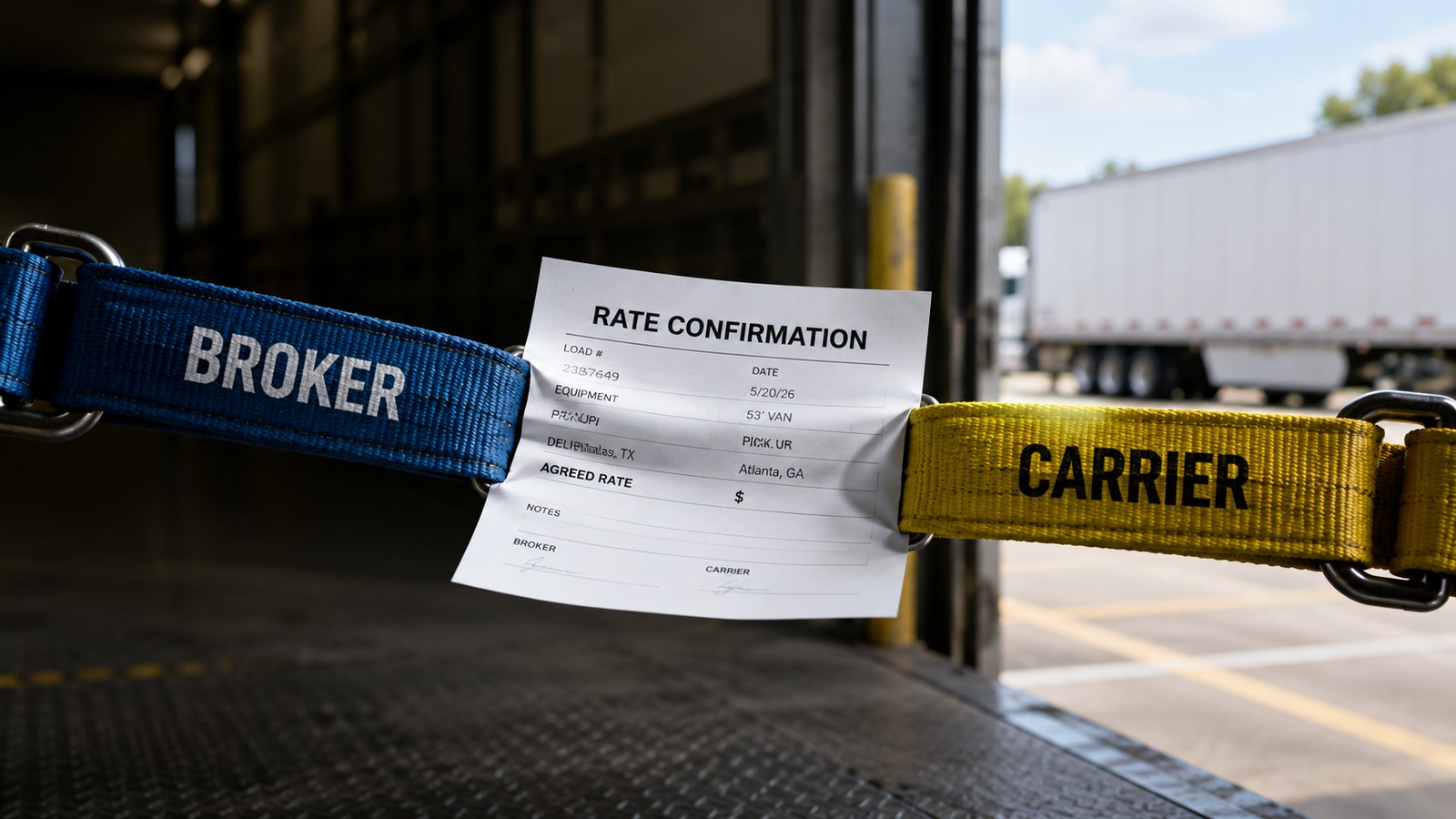
How to negotiate better rates with freight brokers starts before the call, not during it. Most drivers get more traction when they compare similar loads, measure deadhead and reload risk, and make one calm counter tied to facts instead of tossing out a random higher number.
A load can disappear while a guy is still thinking about what to say. That’s why the real work happens first: check other postings, see how tight that lane looks, know your position after delivery, and have two short reasons ready for a higher ask.
Negotiating Better Rates Starts Before the Call
A lot of owner-operators lose money before the negotiation even starts because they only look at one posted load. If that’s the only option on the screen, the broker controls the whole conversation. If there are several similar loads, or a stronger reload on the back end, the driver has room to talk.
This is where a bigger search view helps. When loads from TruckLoads and partner boards show up in one place, a driver can compare the same lane by pickup area, equipment, distance, and date without bouncing around multiple apps. That gives a cleaner picture of what the market is offering right now, even if rates are moving hour by hour. For a dry van run out of Atlanta into the Midwest, or a reefer load out of California where outbound timing can get tight, that side-by-side view matters more than a generic national average.
Most drivers get further when they walk in with three quick facts:
- Lane demand: is outbound freight tight or loose where the load picks up?
- Comparable options: are similar loads paying better, or is this one thin?
- Your true cost on this run: deadhead in, deadhead out, wait time risk, and whether the reload market is weak.
TruckLoads helps with that research in one place. Rate Check lets drivers compare rates by lane, state, and region, and the Capacity Indicator shows where markets look tight versus loose. If the pickup sits in a strong outbound area, that’s useful proof. If the delivery drops into a soft market, that matters too, because a cheap outbound load can get even cheaper once the truck is stranded. Market conditions also shift by season and region, which lines up with broad patterns tracked by FMCSA’s active operating authority data and the BLS trucking industry outlook, but the call still comes down to what that lane looks like on the board today.
What Can Drivers Say to Ask for More Money Without Losing the Load?
The cleanest rate negotiation sounds calm and specific. Brokers hear “Can you do better?” all day long. A better approach is a short ask tied to facts: I’m seeing this lane move stronger today, and I’ve got extra deadhead getting into pickup. If you can come up a bit, I can cover it and get moving now.
Most guys do better when they bring two pieces of proof, not ten. One can be a market comp from similar posted freight. The other can be something about the truck and service: on-time history, clean communication, same-day pickup, trackable updates, or experience with that shipper type. A broker trying to cover a problem load often pays more for less risk. For example, a same-day power-only move with a late dock appointment creates a different conversation than a standard next-day dry van run with plenty of capacity around it.
Your service record matters more than a lot of drivers think. If a broker knows the truck picks up on time, answers the phone, sends documents fast, and doesn’t create drama at delivery, that truck is easier to sell inside the broker’s office. Broker credit scores and days-to-pay also matter here. A load that looks fine on rate can still drag cash flow if payment stretches out too long. TruckLoads also shows some broker-related information and driver-submitted reports, which can help spot patterns from user feedback, but those reports are not third-party verified.
Better negotiations start with better comps and a backup plan. Use one board to compare similar freight, check broker pay habits, and line up another option before making the call.
When Is the Best Time to Push on a Freight Rate?
Timing changes everything. Asking for more right after a load posts into a loose market usually gets a fast no, because the broker expects plenty of calls. Asking later, when pickup is getting close and the load still hasn’t moved, often gets a very different answer.
That doesn’t mean every old load turns into a good load. It means the broker’s pain gets clearer as the clock runs down. If pickup is same day, after-hours, weekend, or sitting in an area with fewer trucks, the case for more money gets stronger. That’s especially true when a driver can cover quickly and save the broker from another hour of phone calls. A flatbed load out of a rural shipper with a narrow pickup window is a different negotiation than a common dry van lane near a major freight hub.
Load alerts and push notifications help here because they show when matching freight posts and when rates change. If a lane starts firming up, a driver can catch that shift early. If the board shows a load still hanging there while other freight in the same area is moving, that tells a story too: either the rate is light, the appointment is tough, or the broker needs help fast. TruckLoads gives drivers that view with alerts, search filters, and live load comparisons instead of guessing off one phone call.
When Do You Push, and When Do You Walk Away?
Not every load deserves a fight. Sometimes the smarter move is one clean counter, then move on. If the broker won’t budge, the reload is weak, the deadhead is ugly, and pay timing looks slow, that load can eat a whole day and still leave the truck behind.
A lot of owner-operators talk themselves into weak freight because they’re afraid the next load won’t come. That fear gets smaller when the board is deep enough to compare options. With nationwide search by location, equipment type, deadhead, and date, plus a load density map showing inbound and outbound volume by state, TruckLoads makes it easier to see whether this is truly the only workable move or just the first one on the screen. That matters on hard repositioning runs, like delivering into a softer outbound market where the next reload may take longer to find.
Most drivers keep negotiations simple with a rule like this:
- Make the first counter with a reason.
- If the broker moves, decide whether the load now fits the trip.
- If the broker doesn’t move and better freight exists, walk.
Walking away gets easier when the truck already has another lane in mind. That’s real negotiating power. Not attitude, not bluffing, just options.
Frequently Asked Questions
How do I negotiate better rates with freight brokers?
Most drivers get better results when they call with lane comps, timing, and a clear reason for the ask. A short counter tied to deadhead, reload risk, market demand, or service quality usually works better than throwing out a random higher number.
What do freight brokers want to hear from carriers?
Brokers usually want confidence, speed, and low risk. Clear pickup timing, accurate equipment details, good communication, and a calm rate discussion make it easier for them to say yes.
When should I ask a broker for more money on a load?
The strongest moments are often when pickup is getting close, the load has sat for a while, or the lane is tightening. If the truck can cover fast and solve a problem, the broker has more reason to move on rate.
How do owner-operators justify a higher freight rate?
The cleanest proof is market comps, deadhead, weak reload conditions, and service history. A driver who can show the lane is paying stronger or the trip carries extra risk has a better case than a driver who just says the posted rate is too low.
When should a carrier walk away from a brokered load?
If the rate stays weak after a fair counter and the trip still looks bad on time, positioning, or pay terms, walking often makes more sense. Saying no is easier when another load is already lined up as a backup option.
Summary
- Most rate increases come from facts: deadhead, demand, reload risk, and a solid service record.
- The best time to push is often when pickup is close, the load is aging, or the market has tightened.
- Walking away gets easier when a driver can compare several loads instead of betting everything on one broker.
Sources
- Federal Motor Carrier Safety Administration — “A&I Online: Registration Statistics”, accessed August 21, 2026
- U.S. Bureau of Labor Statistics — “Industries at a Glance: Truck Transportation, NAICS 484”, accessed August 21, 2026
Figures and market conditions can change quickly after publication, so always compare current load and lane data before booking.