U.S. Refiners Are Boosting Diesel Output: What Truckers Should Watch on Pump Prices This Week
Why Does Record Diesel Production Not Lower Every Pump at the Same Time?
More refinery output helps the supply side first. Retail prices follow later, and not evenly. EIA data for the week of July 13 shows the spread already in the numbers: the Gulf Coast at $4.546, the Midwest at $4.659, the Rocky Mountains at $4.600, and California at $6.126 — all at the same moment. That $1.58 gap between the cheapest and most expensive region shows how unevenly the same supply picture lands across the country. At the exit-by-exit level, the gap can be meaningful even within a single corridor. A stop near a freight hub may still hold higher prices while a location a few miles ahead with faster turnover softens first. That is not unusual when supply shifts. Wholesale conditions move broadly. Pump signs move one location at a time. For drivers running I-40, I-70, I-10, or any long interstate corridor, that pattern creates a practical opportunity: the lower-priced stop this week may not be the closest one, and it is worth checking a few options before committing to a full tank.Where Should Drivers Watch for Diesel Price Relief First in July 2026?
Start with lanes where nearby stops already show a noticeable spread. When supply loosens, those gaps tend to widen before the regional average catches up. A metro bypass may still carry higher prices while a stop outside town softens sooner. Border areas between higher-cost and lower-cost regions — say, a run crossing from California into Nevada or Arizona — can show sharply mixed pricing for days. The first fuel decision after a restart often matters most. So does the buy before a long deadhead, or the stop before crossing a dense city where time burns fast. In those moments, the better question is not “what is the lowest sign right now?” It is “which stop fits the next leg without forcing a bad parking or traffic call later?” A realistic example: a driver leaves a distribution area in the morning with enough fuel for several more stops. The closest truck stop is convenient, but prices there have not moved. Two stops farther down show lower numbers. If those stops also line up with the truck route and easier in-and-out access, waiting makes sense. If the day is headed toward heavy congestion or a thin parking window, an earlier buy at a fair price may still be the cleaner move.Find Cheap Fuel Along Your Route
How Do Drivers Compare Diesel Prices Along a Route Without Wasting Time?
Most drivers know the two bad habits: filling too early out of routine, or waiting too long and losing options. With diesel prices this uneven across regions — and likely to shift further as July production records flow through to retail — both habits carry more cost than usual. A better approach starts with the next useful fuel window, not the first available stop. If several truck stops sit ahead on the same route, comparing them before buying big pays off. If the run ends near a tight parking market, fuel and parking need to work together. A lower pump price does not help much if the lot is full and the driver ends up burning time hunting for a place to shut down. Traffic and weather matter too. A stop with a slightly lower price can become the wrong stop if storms stack up ahead or a city choke point turns a short detour into lost time. Trucker Path shows along-route fuel prices next to live parking availability and commercial routing — so the fuel choice fits the whole trip instead of optimizing one variable at the expense of the others. A simple scenario: late afternoon, quarter tank left, parking getting tight ahead. One stop offers solid diesel pricing and likely available spaces. Another farther on may be cheaper, but traffic is building and weather is moving in. A lot of experienced drivers take the solid stop, fuel there, and protect the end of the day. That is how a record-production month actually turns into real savings on the road — not by calling the exact low, but by making fewer rushed fuel decisions.Frequently Asked Questions
How much diesel are U.S. refiners producing right now?
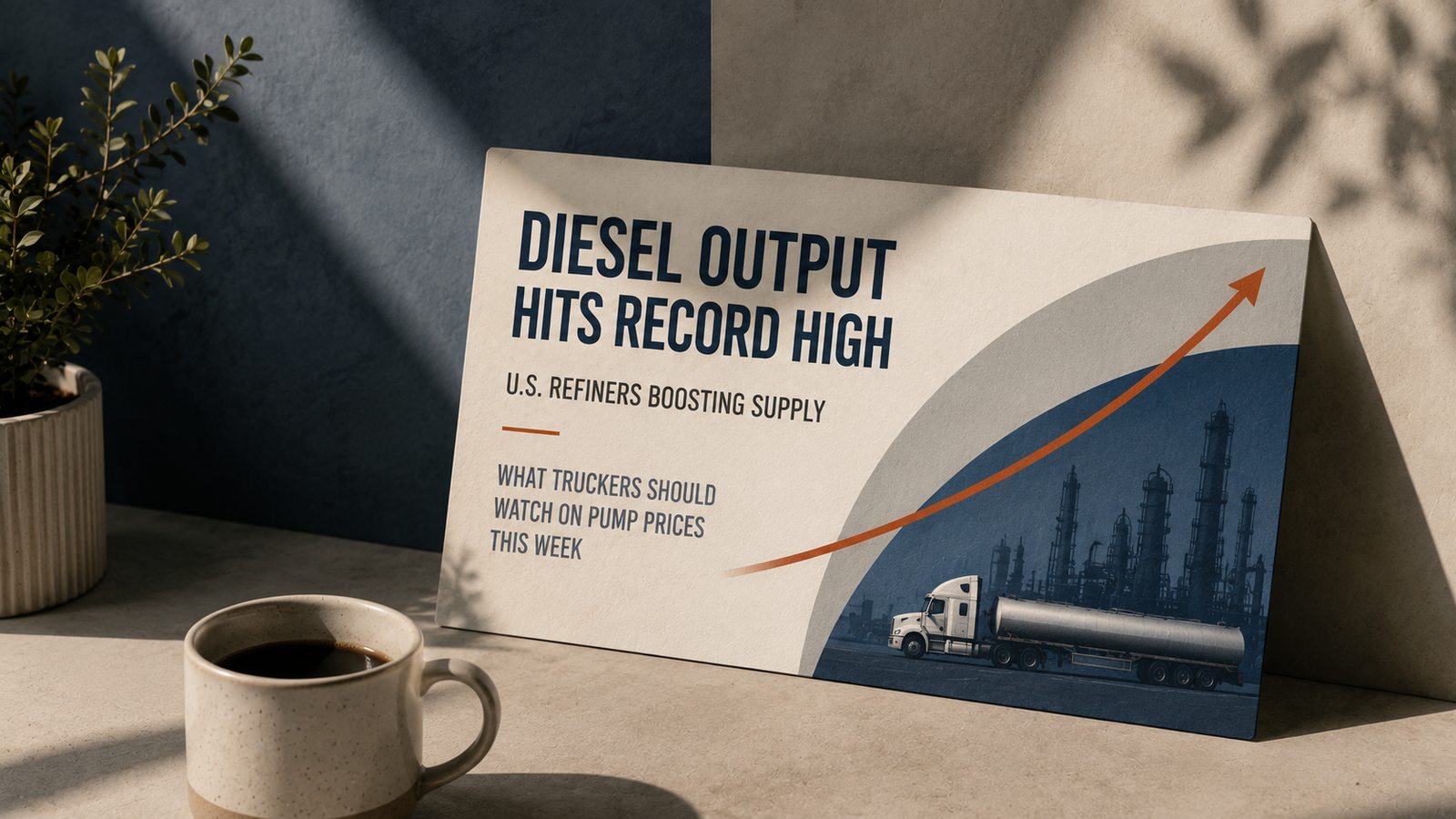
EIA data shows U.S. refiners produced approximately 5.3 million barrels per day of diesel in July 2026 — the highest output ever recorded for the month and one of the top production periods outside winter heating season, according to Reuters. The increase reflects both strong domestic demand and elevated export volumes.What is the national average diesel price per gallon in July 2026?
The national average for on-highway diesel was $4.796 per gallon for the week ending July 13, 2026, per EIA data. Prices pushed past $5.00 in some corridors by mid-month. Regional variation is significant: the Gulf Coast averaged $4.546 while California reached $6.126 the same week.Will diesel prices drop right away because refiners are making more fuel?
Not all at once. Retail prices typically lag supply changes, and the move is uneven across regions and exits. Some corridors are already softer — the Gulf Coast is a full dollar below the national average. Others remain elevated. Watching route-level prices rather than waiting on a single regional headline is the practical move.Which routes may show lower diesel prices first?
Price softening tends to appear first where nearby stops already price differently — major interstate corridors, freight hubs, and outer rings of large metros. The Gulf Coast region is already pricing notably below the national average. Drivers crossing from high-cost into lower-cost regions may see meaningful differences within a single run.Is it smarter to top off early or wait this week?
That depends on how many good fuel options sit ahead, plus parking, traffic, and weather. Many drivers wait if several practical stops are coming up with better prices. They buy sooner if later options look tight or risky. The goal is not the absolute lowest sign — it is the stop that fits the whole leg.Summary
- U.S. refiners produced approximately 5.3 million barrels per day of diesel in July 2026 — a monthly record and one of the highest outside winter, per Reuters and EIA
- The national average hit $4.796 per gallon the week of July 13 and crossed $5.00 in parts of the country by mid-month; regional spread runs from $4.546 (Gulf Coast) to $6.126 (California)
- Retail prices do not all move at once — supply relief shows up lane by lane, exit by exit, before regional averages catch up
- The best fuel stop this week is the one that fits route, parking, traffic, and weather — not just the lowest number on the sign
- Comparing a few along-route options before buying tends to surface price relief sooner than fueling on habit or reacting to one regional headline
Sources
- Transport Topics / Reuters — “U.S. refiners are ramping up diesel production,” July 23, 2026
- U.S. Energy Information Administration — Gasoline and Diesel Fuel Update, week of July 13, 2026
- USDA Diesel Price Report — National and Regional Breakdown, week ending July 13, 2026
- Bloomberg — “US Goes All-In on Diesel Production Amid Growing Global Shortage,” July 22, 2026