FMCSA Restores 30-Day Emergency HOS Exemption: What Drivers and Small Fleets Need to Change Now
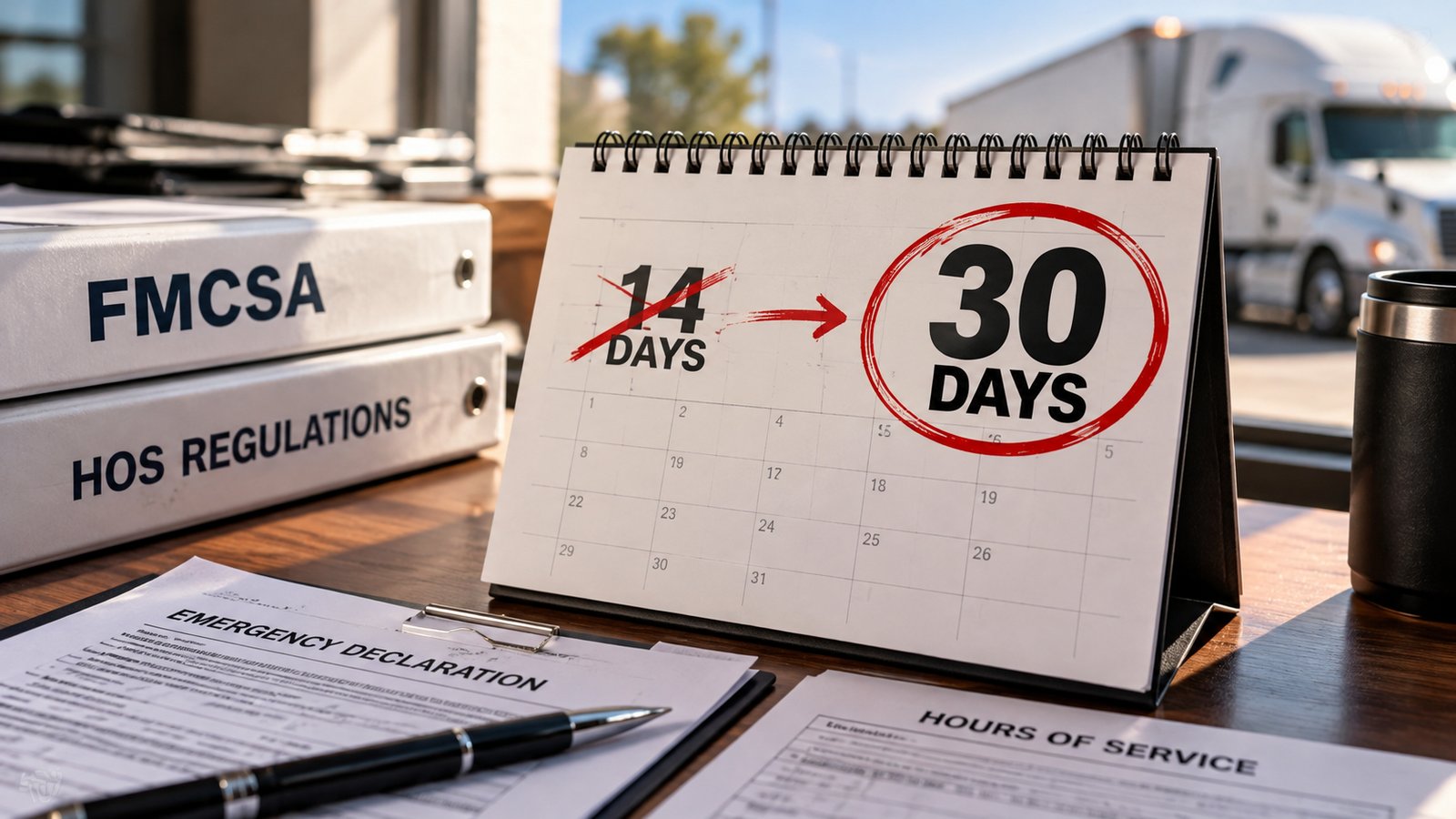
FMCSA’s emergency HOS exemption is back to 30 days: the automatic window FMCSA shortened to 14 days in 2023 is restored, effective right away, but it only applies during a declared regional emergency when a driver is providing direct assistance. That gives small fleets more room on real relief runs, not a blanket pass for every urgent load.
FMCSA published its final rule on Oct. 5, restoring the automatic hours-of-service emergency exemption period from 14 days to 30 days. For drivers running relief freight during a declared regional emergency, that means the automatic HOS emergency exemption window is back to 30 days instead of cutting off after 14.
That sounds simple, but this is where a lot of guys get crossed up: the exemption does not cover every load tied to a storm, fire, or other emergency. It applies when a declared emergency exists and the driver is providing direct assistance, so dispatch plans and log notes need to match what the truck is actually doing.
Why it matters
The old 14-day automatic window created a real planning problem for small fleets. A regional emergency can drag on well past two weeks, especially when roads reopen in stages and freight shifts from urgent relief to regular replenishment.
With FMCSA restoring the automatic exemption period from 14 days back to 30 days in its Oct. 5 final rule, dispatchers get more breathing room on true emergency runs. The flip side is that a longer window can make people sloppy, and that is usually when a truck keeps running under “emergency” status after the direct-assistance part already ended.
When does the 30-day exemption actually apply?
Start with the part that matters most: this is an automatic emergency HOS exemption tied to a declared regional emergency. FMCSA’s Oct. 5 final rule restored that automatic period from 14 days back to 30 days, effective immediately.
In plain English, that means a driver does not get a blank 30-day pass anytime bad weather hits the news. The exemption kicks in when there is a qualifying emergency declaration and the truck is providing direct assistance tied to that emergency.
A lot of confusion starts with the words “emergency freight.” Some loads feel urgent but still do not fall under direct assistance. Once the load turns into ordinary commercial hauling, regular HOS rules come back into the picture. Our guide to the 11-hour and 70-hour HOS rules covers what those regular limits look like once the exemption ends.
Most small fleets handle this better when dispatch writes down three things before the truck moves:
- What emergency declaration the load ties to
- What relief purpose the load serves
- When the truck is expected to stop providing direct assistance
That last part matters more than people think. If a truck delivers emergency supplies, then deadheads into a routine reload, the exemption does not just float along with the truck for the rest of the week because the first load qualified.
What counts as direct assistance — and what does not?
Direct assistance usually means the truck is actively helping meet the immediate need created by the emergency. Think moving relief supplies, equipment, or other freight tied to restoring essential services or supporting the response effort.
Where drivers get burned is in the handoff. The direct-assistance phase often ends before the driver heads home, before the truck gets empty, or before the week is over.
Here are the common real-world situations where fleets need to slow down and call it straight:
- A load starts as emergency relief, then the next load is regular store or warehouse replenishment
- A driver delivers emergency supplies, then repositions for normal freight
- A mixed trip includes some emergency-related freight and some ordinary commercial freight
- A customer says “disaster load,” but nobody can point to the declaration or the relief purpose
In those cases, most carriers are better off treating the exemption as narrow, not broad. Keep the record tied to the actual assistance being provided, not the general situation in the region.
For small fleets, this is also where recordkeeping starts to matter. A short dispatch note, BOL notation when available, and a clear time marker showing when direct assistance ended can save a lot of back-and-forth later. If the operation uses ELD data and basic trip records, keep those lined up with the dispatch story instead of trying to reconstruct it after the fact.
How should owner-operators and small fleets change dispatch today?
The first move is simple: update the internal assumption from 14 days to 30 days, but only for loads that really qualify. A lot of dispatch habits were built around the shorter window, and some of those habits now need a reset.
Most fleets can tighten this up with a basic emergency-load checklist:
- Confirm there is a declared regional emergency tied to the trip.
- Write down why the load counts as direct assistance.
- Note when direct assistance is expected to end.
- Tell the driver what changes once the exemption ends.
- Switch the trip back to normal HOS planning as soon as the emergency work is over.
That fourth step gets overlooked all the time. A driver can run clean all day under the exemption, then get jammed up later because nobody clearly told him when regular limits were back in force.
Owner-operators handling their own dispatch can use the same approach. Keep a note with the load info, the declaration reference, and the point where the trip stops being emergency relief. If there is any doubt, a conservative plan usually beats trying to stretch the exemption.
For fleets with a few trucks, routing and communication matter just as much as logs. If one truck is still on direct assistance and another has already shifted back to routine freight, dispatch needs those trucks planned differently. Route settings, live tracking, and clear load assignment notes help keep one driver’s emergency status from bleeding into another driver’s normal run — the same layered planning habit covered in our truck route map guide.
Frequently Asked Questions
Did FMCSA really restore the emergency exemption to 30 days?
Yes. FMCSA’s final rule published on Oct. 5 restored the automatic emergency hours-of-service exemption period from 14 days to 30 days, and it took effect immediately.
Does the 30-day window apply to every load moving into an emergency area?
No. The key issue is whether the driver is providing direct assistance during a declared regional emergency. A load headed into the area can still fall under normal HOS rules if it is ordinary commercial freight.
What happens after the emergency delivery is finished?
Once direct assistance ends, the exemption ends with it. From that point, regular HOS limits come back, so dispatch and the driver both need a clear handoff point.
What kind of documentation helps if questions come up later?
Most fleets keep a simple paper trail: dispatch notes, load details, any declaration reference available, and a note showing when direct assistance began and ended. The cleaner that timeline looks, the easier it is to explain the trip.
How can a small fleet keep emergency trips from turning into a dispatch mess?
A lot of small fleets do better when they keep route plans, driver status, and trip records in one workflow instead of chasing texts and screenshots. Trucker Path can help dispatch track trucks in real time, manage multi-driver accounts, and keep route plans organized when one emergency load turns into three different next steps.
Summary
- FMCSA restored the automatic emergency HOS exemption window from 14 days to 30 days in its Oct. 5 final rule, effective immediately.
- The exemption applies during a declared regional emergency when the driver is providing direct assistance, not just hauling freight that feels urgent.
- The biggest risk is not the start of the exemption; it is the moment direct assistance ends and normal HOS rules come back.
- Small fleets run this cleaner when dispatch writes down the emergency basis, the relief purpose, and the handoff point back to normal operations.
If dispatch needs a cleaner way to track trucks, assign routes, and keep emergency run notes from getting scattered, Trucker Path can help keep that workflow organized.