Truck Driver Salary by State & What Makes for the Best Routes
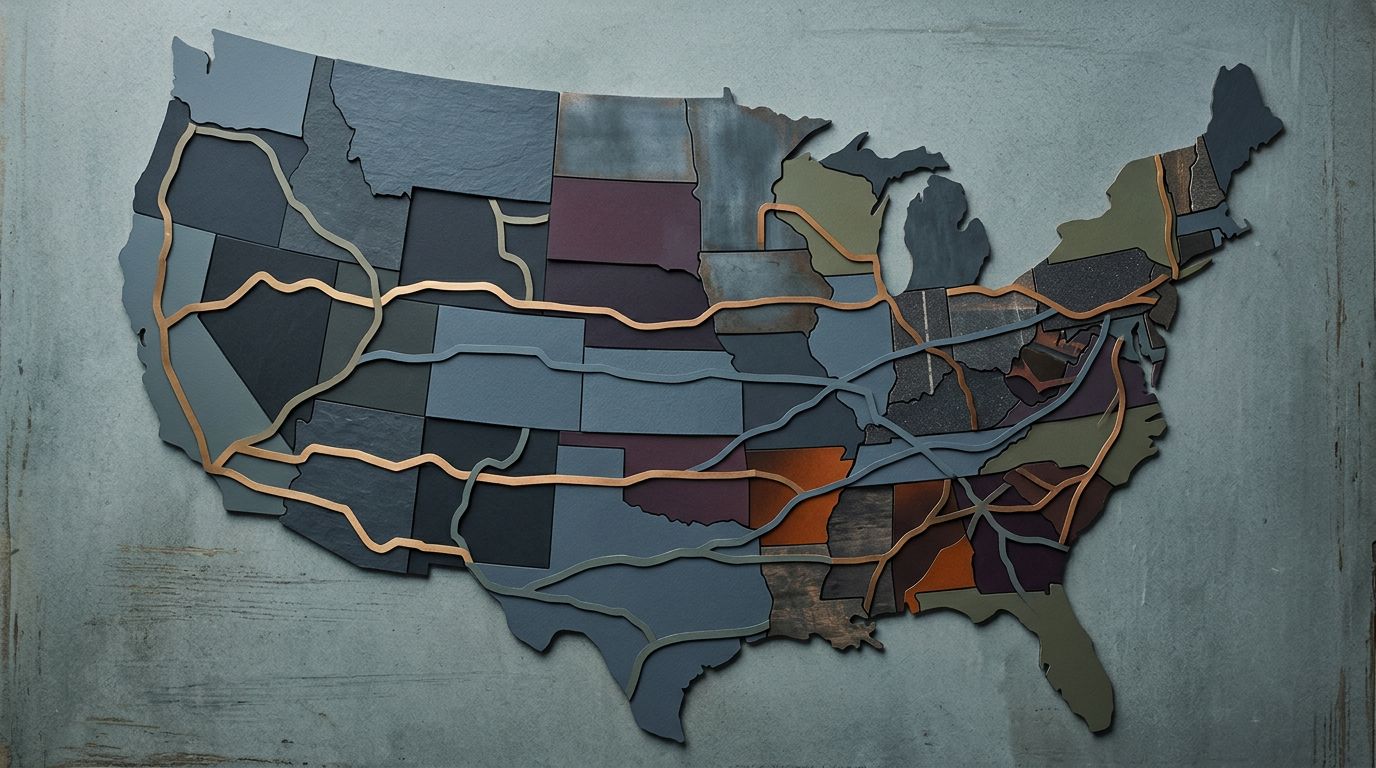
Truck driver salary by state in 2026 varies a lot, but the fastest answer is this: pay maps matter, yet take-home depends on the lane, the freight, and the daily costs tied to that state. Drivers looking for state-by-state pay need real rankings first, then a reality check on what those lanes actually cost to run.
That is why the real question is not just where pay looks high. It’s which lanes keep moving, let a driver buy fuel at the right stop, and make it easier to find parking before hours get tight. A better route often beats a prettier pay map.
Which states pay truck drivers the most in 2026?
According to the U.S. Bureau of Labor Statistics’ May 2025 occupational wage data for heavy and tractor-trailer truck drivers, the national median annual wage was $58,640. Alaska topped every state at $70,100, followed by Washington ($64,760), the District of Columbia ($64,170), New Jersey ($63,570), and Massachusetts ($63,030). States that often land lower on the list include parts of the Southeast and lower-cost rural markets. BLS updates this table annually, so it’s worth checking the current release before quoting a specific rank.
Those rankings help as a starting point, but they do not settle the decision. Higher-wage states often come with heavier traffic, denser freight markets, tighter parking, and costlier fuel and toll patterns. A state can rank high on annual pay and still produce a frustrating week if the route burns time in metro areas or forces expensive stop choices.
For company drivers, that shows up as a route that looks good on dispatch but drags through the day. For lease operators and small owners, the hit lands harder because every extra mile, idle hour, and late parking scramble comes straight out of the week. A lane through a top-paying state only helps if the trip stays clean enough to protect the check. For a deeper look at how routing and timing affect take-home pay beyond the state you’re in, see how much truck drivers really make by route and miles.
Where can drivers find state-by-state truck driver pay data without guessing?
The safest place to compare state averages is the U.S. Bureau of Labor Statistics map and wage tables for heavy and tractor-trailer truck drivers. That gives drivers a state-by-state snapshot instead of vague talk about “good markets” or “bad markets.” It also helps to compare those wage tables with the actual kind of freight a driver runs, since local, regional, and long-haul jobs can look very different inside the same state.
That is also where a lot of online salary lists fall short. Some mix all CDL jobs together. Some pull from self-reported postings. Some focus on one carrier type or one metro area and label it as a whole-state number. A driver looking at salary by state needs to know whether the figure reflects statewide averages, a niche lane, or a recruiting ad.
If the pain point is not the headline pay but the day going sideways, that usually shows up later, on the road. Parking fills up, fuel prices change by stop, and a late receiver can throw off the whole shutdown plan. That is where practical trip tools help more than another generic pay chart. A lot of drivers compare truck parking near your route and along-route diesel price checks before the day gets tight.
Which freight corridors actually leave more money in your pocket?
A lot of profitable weeks come from repeatable corridors, not from chasing the state with the highest headline pay. Drivers usually keep more when they run lanes with steady freight, fewer bottlenecks, and enough truck stops to control fuel and stop timing. Think practical corridors instead of bragging-rights geography. A truck route planner makes it easier to compare these lanes before committing to one.
Texas-to-Midwest, Southeast-to-Texas, and parts of the Midwest triangle often make sense because freight stays active and the route options are broad. A driver can usually recover from one bad stop or one backed-up shipper without losing the whole day. Compare that with runs that depend on crossing major coastal metros at the wrong hour, fighting for parking late, or paying premium fuel because the next safe stop is too far out.
That does not mean high-paying coastal or port lanes are bad. It means they need a sharper pencil. If a route pays more but adds extra time around urban choke points, harder parking, and expensive fuel choices, the lane may lose to a lower-stress corridor that turns faster. The paycheck starts with pay, but take-home pay comes from how the week actually runs.
How do parking and fuel choices change your weekly take-home?
This is where a lot of money leaks out. Not all at once, either. It goes in small pieces: pulling into a high-price fuel stop because the tank got low too early, burning time circling for a place to shut down, or stopping short because the planned lot filled up before arrival.
Parking is not just a comfort issue. It decides whether a driver ends the day clean or wastes part of the clock hunting for a spot. The same goes for fuel. Buying at the wrong place once may not look like much, but doing it across a full week can flatten a good run. A lot of drivers also plan maintenance stops, showers, and washes around where they can actually park, which is why parking availability and reservable parking matter more than a salary chart.
There’s also the simple fact that no one can control a receiver taking too long or traffic stacking up after a wreck. But a driver can control where the fuel gets bought and how early the parking plan gets made. Trucker Path shows both crowd-reported parking availability and reservable parking, which gives drivers a backup plan before the last hour gets ugly.
Frequently Asked Questions
What state pays truck drivers the most?
Per BLS’s May 2025 wage data, Alaska pays heavy and tractor-trailer truck drivers the most, with a median annual wage of $70,100. Washington ($64,760), the District of Columbia ($64,170), New Jersey ($63,570), and Massachusetts ($63,030) round out the top five. The catch is that a high-ranking state does not always produce the strongest weekly take-home on a real lane.
What state pays truck drivers the least?
Lower-paying states tend to show up in lower-cost rural or Southeastern markets, but the exact bottom spot can shift depending on the dataset and update cycle. That is one reason a lot of drivers compare the latest BLS table instead of trusting a recycled blog ranking.
How much do truck drivers make in each state?
The cleanest answer comes from the U.S. Bureau of Labor Statistics wage tables for heavy and tractor-trailer truck drivers. The national median was $58,640 as of the May 2025 release, with state figures breaking out well above and below that number depending on local demand and cost of living.
Does higher pay in one state mean better take-home pay?
No. A higher-paying state can still lead to less take-home if fuel runs high, parking gets tight, or traffic and delays stretch the trip. A lower-stress lane with steadier movement often wins over a flashy lane that burns time and money.
How do drivers find truck parking near their route?
Most drivers look ahead before the last part of the day, not when the clock is almost out. The smart move is checking both crowd-reported parking availability and reservable parking so there is a backup if the first stop fills up.
Summary
- Truck driver salary by state is useful, but it only starts the conversation.
- BLS’s May 2025 data puts the national median at $58,640, with Alaska leading all states at $70,100.
- Top-paying states can still be hard to profit from when traffic, parking, tolls, and fuel choices pile up.
- Steady freight corridors often beat flashy lanes because they turn cleaner and waste less time.
- Most drivers make better decisions when they compare the route and daily costs, not just the posted wage ranking.
Sources
If the goal is protecting what the run actually pays, the Plan Better Stops with the Trucker Path app.