Find available carriers immediately with our truck search feature on Truckloads.
There are over 100,000 carriers searching through three million monthly loads posted to the Truckloads load board. Our new truck search feature can simplify and enhance the process of finding a carrier to haul a load faster than ever.
Brokers who post freight on the Truckloads load board can now search for verified carriers who could be a match to haul a load. There are hundreds of qualified carriers added every day located throughout America.
Our automated matching process accounts for a truck’s location, the trailer or equipment type, and the carrier’s safety rating matching you with the best carrier for your freight. We have carrier capacity for 11 different types of truck freight including:
Unlike other load boards, Truckloads new truck search feature allows brokers the ability to contact interested carriers. Now it’s easier than ever to connect with truck drivers ready to haul your freight. Easily post loads through our TMS integrations and move more freight quickly and efficiently with Truckloads!
[button text=”Search for Trucks Now” href=”https://truckerpath.com/truckloads/broker-signup/?utm_source=blog&utm_medium=trucksearchfeature_dec7″ width=”250px”]
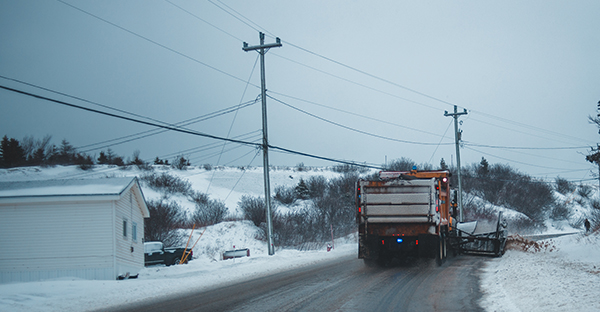


10 Safety Tips for Hitting the Road this Winter <span style="font-weight: 400;">Navigating the road during winter can be difficult even for expert truckers. During this season, truckers have to put up with icy roads, poor visibility, and reduced traction while driving a big rig. However, implementing preventive safety precautions can help you sail smoothly throughout winter without any major problems.</span>
<h3></h3>
<h3><b><i>Vehicle Inspection</i></b></h3>
<span style="font-weight: 400;">Before anything else, you need to ensure that your truck is in the best shape to survive the tough conditions of the winter season. See your tire pressure, antifreeze levels, and engine oil before your trip. If you have the time and the means, have a mechanic inspect your vehicle. This will help ensure that your vehicle can withstand the harsh conditions during winter.</span>
<h3></h3>
<h3><b><i>Watch Your Speed</i></b></h3>
<span style="font-weight: 400;">Accidents during the winter season mostly happen due to overspeeding. Driving through an icy road can result in poor traction. This is why it’s wise to compensate by reducing your speed. Going easy on your accelerator also gives you a longer reaction time should things go south. </span>
<h3></h3>
<h3><b><i>Allot Extra Space</i></b></h3>
<span style="font-weight: 400;">While driving on wet roads, stopping distance is usually twice more than normal. However, stopping distance increases to 10 times more than usual on icy roads. This is why you have to leave lots of room between your truck and the vehicle in front of you. Doing this will keep you out of harm’s way during accidents.</span>
<h3></h3>
<h3><b><i>Be Smooth</i></b></h3>
<span style="font-weight: 400;">Don’t do any sudden movements on icy roads. Refrain from sudden brakes, acceleration, etc. Should you find yourself in a sticky situation, lightly pump your brakes. Be sure to keep your speed consistent. Avoid doing anything that will reduce your traction on a slippery, icy road.</span>
<h3></h3>
<h3><b><i>Pay Attention to Tire Spray</i></b></h3>
<span style="font-weight: 400;">One quick way to assess the road’s condition is to observe the water coming off the tires of surrounding vehicles. More water indicates wetter roads. Meanwhile, less tire spray indicates icy roads. This should prompt you to exercise more caution while driving. </span>
<h3></h3>
<h3><b><i>Light the Way</i></b></h3>
<span style="font-weight: 400;">Visibility can decrease relatively due to poor weather conditions. Don’t forget to turn your headlights on while driving. This allows other drivers to keep a safe distance from your truck. </span>
<h3></h3>
<h3><b><i>Be Evasive</i></b></h3>
<span style="font-weight: 400;">Be evasive on snow-covered roads. This is relatively better instead of sudden and hard braking. Decelerate your truck slightly and carefully maneuver through obstacles to avoid collisions.</span>
<h3></h3>
<h3><span style="font-weight: 400;"> </span><b><i>Avoid Extreme Conditions</i></b></h3>
<span style="font-weight: 400;">If the weather seems too severe, pull over. There’s no point in risking a drive during extreme weather conditions. Your safety should always come first. If the weather gets too extreme, find a safe way to get off the road and wait until it’s safe enough to drive. </span>
<h3></h3>
<h3><b><i>Prepare Yourself</i></b></h3>
<span style="font-weight: 400;">After you’ve ensured that your vehicle is ready for winter, it’s time to prep for the cold weather. Be sure to carry warm clothes and thick blankets. It won’t hurt to bring miscellaneous items like a flashlight, shovel, matches, traction devices, etc. You would never know when these things may come in handy. It’s also to make sure you have roadside assistance for trucks should you encounter trouble on the road.</span>
<h3></h3>
<h3></h3>
<span style="font-weight: 400;">During a whiteout blizzard, visibility is compromised. This will make it difficult to see traffic lights and road signs. Stay safe by looking twice before proceeding on intersections or one-way streets.</span>
<span style="font-weight: 400;"> </span>
<span style="font-weight: 400;">Truckers are constantly being tested on the road. As winter begins, it brings with it obstacles that make driving challenging. During this season, it’s important to exercise caution while driving. These tips can help prevent accidents and mishaps from happening during the drive.</span>
Freight Contracts [p] Freight contracts are necessary for binding agreements between freight brokers and carriers. While they can be confusing, if you remain organized and follow these examples, you will better manage your freight contracts.
[h2] Freight Contracts [/h2]
[p] There are several different types of freight contracts encompassing the responsibilities and liabilities of both the freight broker as well as the carrier. In this instance, we will be focusing on the details of freight contracts and agreements between the freight broker and carrier.[/p]
[p]Since the freight broker is representing the company who wishes to ship a load, freight brokers are required to have contracts and agreements with carriers which ensure that prior to the freight being hauled, there will be a certain rate paid, delivery within a specific time period as well as other verifications of the delivered freight. [/p]
[h2] Broker Carrier Agreement [/h2]
[p] A freight broker may negotiate a rate with a carrier before agreeing to freight contract terms and signing a Broker Carrier Agreement. Let's say a freight broker posts a load on a load board that needs to be picked up from Dallas and delivered to Kansas City. [/p]
[p]The freight broker may offer to pay the carrier $1,000 but the carrier wants to negotiate for a higher rate. Eventually, the two parties agree that $1,300 is a fair rate and they wish to proceed. This is where a Broker Carrier Agreement comes in. [/p]
[p] A Broker Carrier Agreement will include things like:
[ul]
[li] The Broker and Carrier's Information (including MC#) [/li]
[li] Agreement Date [/li]
[li] Days to Pay [/li]
[li] Procedures for Invoicing [/li]
[li] Liability and Insurance [/li]
[/ul]
[/p]
[button-white href="https://truckerpath.com/uploads/2017/07/Model-Motor-Carrier-Broker-Agreement.pdf"]Broker Carrier Agreement Template[/button-white]
[h2] Load Tender or Load Confirmation [/h2]
[p] A load tender or load confirmation highlights the necessary details of the load for the carrier. The load tender form will include information like the address and hours of operation for the shipping location and consignee who will be receiving the load. It will also include the type of trailer used including the length, width, height, and weight as well as a description of the freight. [/p]
[h2] Rate Confirmation [/h2]
[p] A rate confirmation is an agreement of pay between the freight broker and carrier that is legally binding. A freight broker must provide a rate confirmation for the carrier to sign before proceeding. The rate confirmation portion may be included in the load tender form or included on a separate sheet.[/p]
[h2] Accessorial Charges [/h2]
[p] Although the parties may agree on a rate confirmation, there are circumstances when a carrier is entitled to additional payments. When a carrier performs specific tasks beyond the scope of the agreed pickup and delivery he or she is entitled to accessorial charges.[/p]
[p] Accessorial charges can include things such as detention or wait time, the potential need for additional fuel, tarping, refusal of shipment, storage and other unexpected costs that could arise. [/p]
[h2] Bill of Lading[/h2]
[p] What is a bill of lading? A bill of lading (BOL) is considered a receipt for the delivery of freight by a carrier to a consignee. The bill of lading will have load details, the destination and time frame to deliver, as well as any special instructions. [/p]
[p] The bill of lading is a legally binding document that is provided by the shipper or freight broker prior to the carrier hauling the freight. The carrier must have the bill of lading signed at the time of delivery as proof the freight has been delivered. [/p]
[p] For an owner operator to use a freight factoring company and get paid sooner, he or she will need to submit forms like the bill of lading and rate confirmation in order to provide proof of work completed and the rate to be paid for the work. [/p]
[h2] Truckloads Broker Load Board [/h2]
[p] If you're a freight broker you rely on tools like load boards to find carriers and move freight. Our load board Truckloads has over 800 freight brokers posting loads for over 100,000 qualified carriers to view and includes unique features like freight tracking and truck searches. You can post loads via TMS and see how many times and which carriers have viewed a load. [/p]
[video id="o_tsuJHWayo"]
[button-green href="https://truckerpath.com/truckloads/broker-load-board/?utm_source=Blog&utm_medium=contracts&utm_campaign=Aug2"]Try Truckloads Free [/button-green]
How to Filter Locations on the Map [h2] How to Filter Locations on the Map [/h2]
[p] There are nearly 30,000 trucking related locations on the Trucker Path app. That can be quite cluttered on a map found on a mobile device. Fear not, there is a simple way to either show or hide locations from the map on the Trucker Path app. [/p]
[button-green href="https://truckerpath.com/trucker-path-app/?utm_source=blog&utm_medium=how_to_addplaces"]Try Trucker Path For Free[/button-green]
[p]<strong> Steps: </strong>[/p]
[p]1. Open the Trucker Path app. [/p]
[p]2. Click the Places button at the top bottom right of the map screen. [/p]
[android-img src="/uploads/2017/11/map-home.png" alt="Trucker Path home"]
[p]3. You can swipe left through the locations to view more Places. [/p]
[android-img src="/uploads/2017/11/all-places.jpg" alt="All places"]
[android-img src="/uploads/2017/11/swipe-for-more.png" alt="More locations"]
[p]4. If you only want to show Parking locations, click Parking Availability. [/p]
[android-img src="/uploads/2017/11/available-parking.jpg" alt="Available parking"]
[p]5. Tap on the icons corresponding to the locations you want to hide from the map. Places you deselect will show as gray icons. [/p]
[p]In this example, only Love's locations will appear on the map. [/p]
[android-img src="/uploads/2017/11/show-only-loves-1.jpg" alt="Love's locations"]
[p]6. If you want to show the locations on the map again, just tap the icons and they will reappear. [/p]