A broker carrier agreement is required in order to have a freight contract that will ensure a motor carrier hauls truck freight for the freight broker.
A freight broker may negotiate a rate with a carrier before agreeing to freight contract terms and signing a Broker Carrier Agreement. Let’s say a freight broker posts a load on a load board that needs to be picked up from Dallas and delivered to Kansas City.
The freight broker may offer to pay the carrier $1,000 but the carrier wants to negotiate a higher rate. Eventually, the two parties agree that $1,300 is a fair rate and they wish to proceed. This is where a Broker Carrier Agreement comes in.

A Broker Carrier Agreement will include things like:
Carriers want to know when they will be paid, what sort of liability they might be required to have any other stipulations of the truck load before considering to haul it. Without the broker carrier agreement, truck freight cannot be booked and subsequently hauled.
Brokers can’t come to an agreement without having an interested carrier in the mix. So how do freight brokers find carriers? This is where tools such as load boards come in to play.
Truckloads free broker load board is one of those with unmatched technology. It provides you with access to over 100,000 verified freight carriers who are qualified to haul your freight. It’s easy to post truck loads via CSV or TMS and you can keep tabs to see which freight carriers have viewed your load and how many times.
Truckloads also has unique features such as Truck Search which allows you to search for available trucks in a specific location. View a carrier’s Safer Watch Rating to confirm if they are qualified and if you’re interested, contact the freight carrier directly. Now you can move more truck freight than ever before!
[button text=”Find Motor Carriers Now” href=”https://truckerpath.com/truckloads/broker-signup/?utm_source=blog&utm_medium=brokercarrieragreement” width=”250px”]
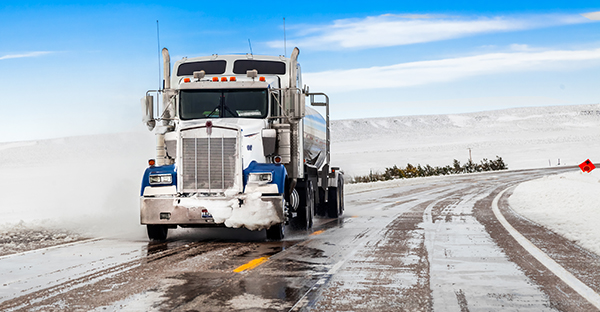




10 Safety Tips for Hitting the Road this Winter <span style="font-weight: 400;">Navigating the road during winter can be difficult even for expert truckers. During this season, truckers have to put up with icy roads, poor visibility, and reduced traction while driving a big rig. However, implementing preventive safety precautions can help you sail smoothly throughout winter without any major problems.</span>
<h3></h3>
<h3><b><i>Vehicle Inspection</i></b></h3>
<span style="font-weight: 400;">Before anything else, you need to ensure that your truck is in the best shape to survive the tough conditions of the winter season. See your tire pressure, antifreeze levels, and engine oil before your trip. If you have the time and the means, have a mechanic inspect your vehicle. This will help ensure that your vehicle can withstand the harsh conditions during winter.</span>
<h3></h3>
<h3><b><i>Watch Your Speed</i></b></h3>
<span style="font-weight: 400;">Accidents during the winter season mostly happen due to overspeeding. Driving through an icy road can result in poor traction. This is why it’s wise to compensate by reducing your speed. Going easy on your accelerator also gives you a longer reaction time should things go south. </span>
<h3></h3>
<h3><b><i>Allot Extra Space</i></b></h3>
<span style="font-weight: 400;">While driving on wet roads, stopping distance is usually twice more than normal. However, stopping distance increases to 10 times more than usual on icy roads. This is why you have to leave lots of room between your truck and the vehicle in front of you. Doing this will keep you out of harm’s way during accidents.</span>
<h3></h3>
<h3><b><i>Be Smooth</i></b></h3>
<span style="font-weight: 400;">Don’t do any sudden movements on icy roads. Refrain from sudden brakes, acceleration, etc. Should you find yourself in a sticky situation, lightly pump your brakes. Be sure to keep your speed consistent. Avoid doing anything that will reduce your traction on a slippery, icy road.</span>
<h3></h3>
<h3><b><i>Pay Attention to Tire Spray</i></b></h3>
<span style="font-weight: 400;">One quick way to assess the road’s condition is to observe the water coming off the tires of surrounding vehicles. More water indicates wetter roads. Meanwhile, less tire spray indicates icy roads. This should prompt you to exercise more caution while driving. </span>
<h3></h3>
<h3><b><i>Light the Way</i></b></h3>
<span style="font-weight: 400;">Visibility can decrease relatively due to poor weather conditions. Don’t forget to turn your headlights on while driving. This allows other drivers to keep a safe distance from your truck. </span>
<h3></h3>
<h3><b><i>Be Evasive</i></b></h3>
<span style="font-weight: 400;">Be evasive on snow-covered roads. This is relatively better instead of sudden and hard braking. Decelerate your truck slightly and carefully maneuver through obstacles to avoid collisions.</span>
<h3></h3>
<h3><span style="font-weight: 400;"> </span><b><i>Avoid Extreme Conditions</i></b></h3>
<span style="font-weight: 400;">If the weather seems too severe, pull over. There’s no point in risking a drive during extreme weather conditions. Your safety should always come first. If the weather gets too extreme, find a safe way to get off the road and wait until it’s safe enough to drive. </span>
<h3></h3>
<h3><b><i>Prepare Yourself</i></b></h3>
<span style="font-weight: 400;">After you’ve ensured that your vehicle is ready for winter, it’s time to prep for the cold weather. Be sure to carry warm clothes and thick blankets. It won’t hurt to bring miscellaneous items like a flashlight, shovel, matches, traction devices, etc. You would never know when these things may come in handy. It’s also to make sure you have roadside assistance for trucks should you encounter trouble on the road.</span>
<h3></h3>
<h3></h3>
<span style="font-weight: 400;">During a whiteout blizzard, visibility is compromised. This will make it difficult to see traffic lights and road signs. Stay safe by looking twice before proceeding on intersections or one-way streets.</span>
<span style="font-weight: 400;"> </span>
<span style="font-weight: 400;">Truckers are constantly being tested on the road. As winter begins, it brings with it obstacles that make driving challenging. During this season, it’s important to exercise caution while driving. These tips can help prevent accidents and mishaps from happening during the drive.</span>
Truck Freight Quote [p] Learn how freight brokers determine truck freight quotes and find carriers to ship truck loads. [/p]
[h2] Truck Freight Quote [/h2]
[p] When a freight broker connects with a shipper, the shipper will provide information about an available truck load such as the pickup/drop off locations, weight and equipment type. The freight broker will then send a truck freight quote or the expected rate to be paid for the load to the shipper. [/p]
[h2] Determining Truck Freight Quotes [/h2]
[p] If you're a freight broker and are looking to determine a truck freight quote, you will first need to know <a href="https://truckerpath.com/blog/how-do-freight-brokers-find-shippers/">how to find shippers</a>. Once you connect with an interested shipper, you will want to present a quote to the shipper for the load. [/p]
[p] Freight quotes are determined by the truck-to-load ratio or the supply of available trucks vs demand for loads, the area of pickup/drop off destination as well as the equipment type. The market fluctuates and <a href="https://truckerpath.com/blog/truck-freight-rates/">truck freight rates </a>will vary due to the type of freight as well. Typically freight rates range from $1.50 to $4.00 per mile. [/p]
[h2]Negotiating Truck Freight Rates [/h2]
[giphy]<iframe src="https://giphy.com/embed/Te0zPUD9m7KDe" width="480" height="339" frameBorder="0" class="giphy-embed" allowFullScreen></iframe>[/giphy]
[p] Negotiating truck freight rates isn't quite the same as two rival wrestling legends coming together (or maybe it sort of is). It's a mutual partnership for freight brokers and carriers with one relying on the other to complete their end of the deal. [/p]
[p] Once the freight broker sends a freight quote, the shipper has the option to counter the offer, accept the quote or reject it entirely. Let's say that the offer was fair and the shipper agrees to ship the load at a $2,500 rate. Now that the freight quote has been agreed to, it's time to find a carrier. [/p]
[p]A Freight brokers will then rely on their carrier network to find a carrier willing to haul the shipper's freight at the given rate. Freight brokers use load boards like <strong>Truckloads</strong> to post their freight and connect with qualified carriers. [/p]
[h2] How Freight Broker's Make Money [/h2]
[p] Freight brokers are paid based on the profit or difference between the agreed truck freight quote rate and the rate agreed with the carrier. [/p]
[p]Let's play out a scenario to show how the agreed freight quote relates to the broker's earnings:[/p]
[ul]
[li] Broker submits quote to shipper of $2,500 for a flatbed load to travel 800 miles [/li]
[li] Shipper agrees to the $2,500 rate [/li]
[li] Broker finds a carrier on a load board willing to haul the load for $2,000 [/li]
[li] Broker earns $500, the difference between $2,500-2,000 [/li]
[/ul]
[p]This is why negotiating truck freight rates is important for freight brokers to earn more money. They must find a happy medium where they are paying a fair rate to the carrier hauling the load while finding a reasonable opportunity to turn a profit for brokering the freight deal. [/p]
[h2] Broker Load Board - Truckloads [/h2]
[p] Freight brokers can use <strong> Truckloads </strong> load board to post available <a href="https://truckerpath.com/blog/truck-freight/">truck freight </a> in order to reach over 100,000 qualified carriers and use features such as truck search, making it easier than ever to find carriers to haul a load! [/p]
[ul]
[li] 100k+ qualified carriers [/li]
[li] Post loads via TMS, CSV or various other integrations [/li]
[li] Confirm a carrier's Safer Rating [/li]
[li] See how many times a loads been viewed [/li]
[li] Search for Available Trucks ready to haul now! [/li]
[/ul]
[video id=o_tsuJHWayo]
[button text="Try Truckloads for Free" href="https://ship.truckerpath.com/signup?utm_source=blog&utm_medium=truckfreightquote&utm_campaign=Sept12" width="250px"]
Truck Driver Injury Prevention [p] Driving a heavy-duty truck is one of the most dangerous jobs in America. Take a look at these truck driver injury prevention tips to stay safe on the road. [/p]
[h2] Truck Driver Injury Prevention [/h2]
[p]The trucking industry is a profession with one of the highest workers’ compensation claim rates. The profession itself requires long hours of driving, poor diets, and little exercise, making truck drivers prone to injuries. These truck driver injury prevention tips can help limit drivers at risk. [/p]
[p] In America, Washington State alone, workers’ compensation claims are so high that there is an initiative for preventing on the job injuries for truck drivers. It is referred to as the TIRES Initiative. [/p]
[p]Each year, 1-out-of-13 truck drivers in Washington state has a work-related injury serious enough that they have to miss work for a long period of time, on an average of 184 days.[/p]
[p]Truck drivers had more nonfatal injuries (over 151,000) than workers in any other occupation in 1995. 50 percent of the nonfatal truck accident injuries were serious sprains and strains; this may be attributed to the fact that many truck drivers must unload the goods they transport. (Source: According to Knestaut, A. Compensation, and Working Conditions, 1997, Fall)
[/p]
[p]Long hours of driving, poor diets and little exercise make drivers prone to work-related strains and sprains with injuries to muscles, tendons, nerves and other musculoskeletal disorders (MSDs). [/p]
[p]<strong>Injuries are often due to:</strong>[/p]
[ul]
[li]Overexertion[/li]
[li]Being struck by an object[/li]
[li]Falling[/li]
[li]Transportation accidents[/li]
[li]Repetitive use of body[/li]
[li]Lifting heavy boxes and cargo[/li]
[li]Awkward postures such as reaching overhead [/li]
[li]Gripping tightly or improperly[/li]
[/ul]
[p]Work-related strains and sprains make up 50% of injuries are the most costly and most frequent injuries in the trucking industry. Sprains, strains and overexertion make up for the most trucking-related injuries. [/p]
[p]Studies show that costs exceed $107 million and resulting in 576,000 lost-work days per year. About 70 percent of these injuries were to truck drivers. Many of the injuries occurred when opening shipping container doors or connecting or disconnecting a trailer to the truck.[/p]
[p]<strong>Strains and sprains can include:</strong>[/p]
[ul]
[li]Back pain[/li]
[li]Shoulder pain[/li]
[li]Muscle strain[/li]
[li]Tendonitis[/li]
[li]Carpal tunnel syndrome (CTS)[/li]
[li]Tennis elbow (epicondylitis)[/li]
[li]Other common injuries include bruises, fractures, cuts and lacerations, soreness and pain, and multiple traumatic injuries.[/li]
[/ul]
[p]<strong>The most common situations where truck accident injuries occur include:</strong>[/p]
[ul]
[li]Vehicle accidents[/li]
[li]Carpal tunnel injury[/li]
[li]Strained wrists from opening hard to open containers[/li]
[li]Strains and back injuries from lifting and moving items or releasing 5th wheel to remove tractor from trailer[/li]
[li]Slip and falls climbing in or out of the cap or trailer[/li]
[li]Accidents while loading or unloading trailer[/li]
[li]Slip and falls on docks[/li]
[li]Crush injuries where part of load falls on driver[/li]
[/ul]
[p]<strong>Workers’ Compensation Costs</strong>[/p]
[ul]
[li]41% of compensable claims are the result of strains and sprains to the neck, back and upper extremity (shoulders, elbows, hands/wrists)
[li]The average cost for a claim is over $26,000
[li]Average of 184 time-loss days Compared to other industries
[/ul]
[p]Couriers have almost four times the rate of work-related strains and sprains claims of all industries combined. Waste Collection has three and a half times the rate and General Freight trucking is close with almost two and a half times the rate of work-related strains and sprains of all other industries combined.[/p]
[p]<strong>Additional Costs</strong>[/p]
[p]Work-related time off also increases the cost of hiring and training, increasing turnover and decreasing productivity. Sometimes workers are unable to return to their full wage jobs after an injury or require extensive life-altering surgeries or treatments to recover.[/p]
[p]Take Steps to equip truck drivers and operators with the proper tools needed to help them avoid injury.[/p]
[p]To help offset these unwanted expenses we introduce <a href="https://www.shippingcontainertool.com/">OPNBar</a>, a 3 in 1 shipping container safety leverage tool, <a href="https://www.shippingcontainertool.com/use-tire-beater-check-tires-properly-inflated/">tire beater/thumper</a>, and <a href="https://www.shippingcontainertool.com/how-to-release-a-5th-wheel/">5th wheel release handle/hook</a>. Our product was originally designed for opening and closing truck trailers and shipping container doors with the safety for the operator foremost in mind. The OPNBar trucker tool, for instance, can help avoid some injuries by providing an ergonomic means of opening shipping containers, checking for low pressure tires, and aiding operators in releasing the tractor from the trailer.[/p]
[video id="wdokuVGpIcE"]
[p]Educate truckers, equip them with the right tools, and teach them good health habits to keep them safe and healthy. These simple precautions can help companies avoid unexpected fees and missed work days.[/p]