2. Not getting clear directions to a delivery or pick up: Ensure good directions to avoid getting lost or in an awkward spot where it’s impossible to get turned around. Plan your trips using a trip planner (check out Trucker Path while you’re at it).
3. Lack of focus when backing up: This is one of the greatest challenges as a professional truck driver. Get out of the vehicle and survey the vicinity first. Check for obstructions and clearance. Do it slowly and safely and always focus on your driver aids (side mirrors, cameras, etc).
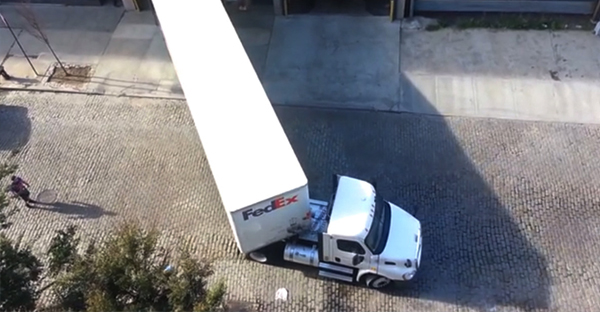
4. Hurrying: Hurry for no one. Hurrying leads to mistakes. Mistakes as a professional truck driver can be fatal. Take all the time you need to get it right EVERY TIME.

5. Complacency: Experienced truck drivers as well as the new truck drivers can be guilty of being complacent and overconfident. Be thorough and 100% focused at all times and never ever take something for granted. Complacency can get any driver into serious trouble.
There are many more tips out there but in general it all leads to focus, and safety. Got some tips to share? Let us know down the comments section.


Lease Purchase Trucking [p]If you're a company driver, lease purchase trucking is a way for you to become an owner operator and eventually be your own boss, but consider all the factors before signing on. [/p]
[h2] Lease Purchase Trucking[/h2]
[p] You might consider a lease purchase trucking agreement if you've been a company driver for a few years now and you like the idea of <a href="https://truckerpath.com/blog/how-to-become-an-owner-operator/">becoming an owner operator</a> in order to earn more and create a more flexible schedule, right? We don't blame you! [/p]
[p] The road to becoming an owner operator and running your own trucking company can be a bumpy one (though not nearly as bad as some of the California interstates) but as long as you understand the costs and have a plan, you can indeed succeed! [/p]
[h2] What is Lease Purchase Trucking? [/h2]
[p] Lease purchase trucking is when a carrier decides to become an owner operator by making payments on a truck leased to a trucking company. This end goal is to pay off the truck, generate a reputation for being a reliable carrier and then once the truck payments and term agreement expire, you can venture out to grow your <a href="https://truckerpath.com/blog/how-to-start-a-trucking-company/">trucking company</a>. [/p]
[p] Lease truck payments can range anywhere from $300 to upward of $1,200 per week depending on if you choose a used or new truck and the trucking company you sign on with. [/p]
[h2] Things to Consider in a Lease Purchase [/h2]
[p] Trucks, like any piece of equipment, will require repairs and the costs to cover are the responsibility of the owner-operator. Truck repair costs can be up to $17,000 annually for an average OTR truck driver logging 100,000 miles. Therefore you must be extra cautious when considering a used truck lease purchase. [/p]
[p]If the truck is used, be certain to review the repair records of the truck and double-check if another driver previously ran the truck as a lease. These might seem like common sense but being thorough in your examination of a used truck can save you from making a potentially disastrous mistake. [/p]
[p]When you agree to a truck lease purchase, the company you sign with will ultimately decide your revenue because they decide your loads. Make certain that there is ample freight available and check load boards like <em>Truckloads</em> for regions and routes that they want you to haul through to see if there are enough loads to haul. [/p]
[p] Keep in mind which <a href="https://truckerpath.com/blog/types-of-truck-freight/">type of truck freight</a> equipment you will be hauling. On average, flatbed loads are the highest paying truck load with freight often being oversized heavy machinery or other large goods for construction. [/p]
[p] While most drivers haul dry van, consider the type of truck equipment you'll be using and if the company has the loads for it regularly or not. This can have a tremendous impact on your success as you transition for lease trucking into running your own trucking company. [/p]
[h2] Use Truckloads Free Load Board [/h2]
[p] As we mentioned before, you can use our free load board <em>Truckloads</em> to search for loads based on location and equipment type to double-check that there are ample loads available in a given area and for a specific freight type. Once you finish paying off your leased truck and have your <a href="https://truckerpath.com/blog/trucking-authority/">own trucking authority</a> without being signed to a company, you can use Truckloads to help you find the perfect loads to fit your needs. [/p]
[video id=snyBYpnuhWw]
[button text="Try Truckloads for Free" href="https://truckerpath.com/truckloads/free-load-board/?utm_source=Blog&utm_medium=truckfreight&utm_campaign=Aug10" width="250px"]
New Year, New Trucks 2021
[p]The trucking industry has had to deal with several challenges in the past few years, with more yet to come. The ever-changing world has ushered in a new era urging the industry to change with it. We have arrived at a point in time, where the environment is better cared for, and driver safety is held supreme. As a result, traditional semi-truck manufacturers have had to adapt and conform to modern safety and emission standards. The new threat from all-electric trucks is another drive for old truck manufacturers to change their ways or risk losing to the competition. We are nearing the era of sustainable, greener trucks that are environmentally friendly and easy to drive.
[/p]
[p]So what do we have in store for 2021? Let's take a look at the much-awaited upcoming trucks from the industry-leading marques.
[/p]
<h2></h2>
[p][b]Kenworth [/b][/p]
[p]Kenworth is one of the oldest truck manufacturers in America with a rich history. They have plenty to offer when it comes to heavy-duty class 7 and class 8 trucks. The Kenworth T680, the Kenworth W990, and the Kenworth T880 are three notable mentions that deserve a place on our list. The three trucks are due to come out in 2021 with a fresh approach towards safety, efficiency, and performance. [/p]
[img src="https://truckerpath.com/uploads/2021/01/202101-BLOG-New-Year-New-Trucks-2021-Kenworth.jpg" alt=""]
[p]The giant machines are safer than ever, with a host of driver-assist features to make driving hassle-free. The W990 and the T880 can sport the Wabco OnGuardACTIVE safety system that enhances your abilities as a driver. [/p]
[p]What’s more, the new T680 gets Level 2 autonomy with Bendix Wingman Fusion, which is a step into the future for the traditional marque. Kenworth has also partnered with the Meritor for the T680e, an electric version of the sturdy T680 that would work wonderfully on short routes. [/p]
<h2></h2>
[p][b]Peterbilt [/b][/p]
[p]The Peterbilt 579 comes new and improved for 2021 with even better comfort and safety options. The 579 truck has been a popular choice in the past years, and more customers are likely to turn towards the new UltraLoft Sleeper model. The fresh model 579 comes with the Bendix Wingman Fusion system as standard.[/p]
[img src="https://truckerpath.com/uploads/2021/01/202101-BLOG-New-Year-New-Trucks-2021-Peterbilt.jpg" alt=""]
[p]The 579 truck has top of the line aerodynamics that reduce drag, improve efficiency, and result in overall better performance on the highway. Not to mention the mighty engine that roars under the hood producing inhumane levels of torque. [/p]
[p]The Peterbilt 389 is another popular model that makes its way into 2021 with extra features to go with its traditional styling. It comes equipped with Peterbilt’s SmartNav technology and the SmartLINQ diagnostics system that allows over the air updates and lets you diagnose engine issues while sitting in the cabin. The 389 is a step in the future with the same traditional looks. [/p]
<h2></h2>
[p][b]Mack [/b][/p]
[p]Mack trucks have been around for more than a century and they have proven to be the best of the rest. The Mack Anthem is a testament to Mack's unwavering commitment to making up-class trucks. The Anthem comes with a dominant design, a potent engine, and a comfortable interior making it the perfect all-around truck for highway driving. [/p]
[img src="https://truckerpath.com/uploads/2021/01/202101-BLOG-New-Year-New-Trucks-2021-Mack.jpg" alt=""]
[p]The 2021 machine gets Command Steer that reduces the driver's effort by over 30% allowing you to maneuver with masterful precision anytime every time. However, if you are a bit of an old-timer then the Mack Pinnacle is the truck for you. This traditionally designed big-rig carries on with the design philosophy of an old truck, but it has the safety and technology of a modern one. The Pinnacle has a low center of gravity for better road grip, a forward axle position for heavier payloads, and a sturdy chassis to handle extremely heavy freight. All in all, a great truck for both off-road and on-road applications. [/p]
<h2></h2>
[p][b]Freightliner [/b][/p]
[p]The Freightliner Cascadia takes the limelight in the Freightliner line-up as this new truck comes with a host of modern technological upgrades that old truckers would only dream of in their time. The Daimler Detroit Assurance Suite 5.0 comes equipped in the Cascadia providing Level 2 autonomy and safety. On the other hand, the Detroit powertrain ensures no payload is heavy enough for Cascadia. [/p]
[img src="https://truckerpath.com/uploads/2021/01/202101-BLOG-New-Year-New-Trucks-2021-Freightliner.jpg" alt=""]
[p]If you are looking to shift to a greener option within the Freightliner line-up, you can consider the eCascadia, an electric version of the brilliant Cascadia. The e-version gets all the tech and safety features and the comfort options found in the Cascadia. The largest difference comes in terms of performance as the eCascadia gets a 475 kWh battery to power the truck for 250 miles. The 0 to 80% charge takes 90 minutes, which is remarkable considering the size of the battery. [/p]
<h2></h2>
[p][b]Conclusion[/b][/p]
[p]When it comes to buying a semi-truck in America there are many options to consider. You can go for the more traditional looking variants or step into modern territory with the futuristic-looking big-rigs. If you go even further, there is the all-electric truck market that hasn't been tapped to its full potential. The Tesla Semi is one truck you can consider as it is planned for a 2021 release. No matter the case, with <a href="https://www.epa.gov/transportation-air-pollution-and-climate-change/carbon-pollution-transportation">emissions reaching alarming levels</a>, it is time for the semi-truck manufacturing industry to move into new territories. [/p]
<h2></h2>
<h2></h2>
[p][b]By Aldous Aldwin[/b][/p]
COVID19: State of Trucking <h4>By Trucker Path</h4>
<h3></h3>
<h3></h3>
<img src="https://truckerpath.com/uploads/2020/05/b5.png" alt="Trucker Path COVID19" />
<h3><strong>Trucker Path COVID-19 Initiatives</strong></h3>
The Trucker Path team is actively monitoring the spread of the Coronavirus (COVID-19) and preparing resources to assist truckers as they help keep America running.
<h2></h2>
In addition to providing updates on the Trucker Path <a href="https://www.facebook.com/TruckerPath/">Facebook Page</a>, a dedicated COVID19 thread has been created in the official Trucker Path forum.
<h2></h2>
A COVID-19 Tracker has been introduced on the Trucker Path mobile app which is available on <a href="http://bit.ly/truckerpathios">iOS</a> and <a href="http://bit.ly/truckerpathdroid">Google Play</a>. This feature will enable truckers to easily check the spread of the Coronavirus and see insights both for America and abroad, with live updates on infections and recoveries.
<h2></h2>
Along side the COVID-19 Tracker is the COVID-19 Navigation Tool which has been integrated on the Turn-by-Turn feature to track the latest information regarding reported cases and infected areas and provide alternate routing.
</a>
<h2></h2>
<h2></h2>
<img src="https://truckerpath.com/uploads/2020/05/b7.jpeg" alt="FMCSA" />
<h3><strong>FMCSA Emergency Declaration to be extended until June 14</strong></h3>
The agency's COVID-19 Emergency Declaration has been extended until June 14. The original declaration was set to expire last Friday.
Full announcement can be found <a href="https://www.fmcsa.dot.gov/emergency/extension-expanded-emergency-declaration-no-2020-002-under-49-cfr-ss-39025">here</a>.
<h2></h2>
FMCSA’s emergency declaration provides for regulatory relief for commercial motor vehicle operations providing direct assistance supporting emergency relief efforts intended to meet immediate needs for:
Medical supplies and equipment related to the testing, diagnosis and treatment of COVID-19
Supplies and equipment necessary for community safety, sanitation, and prevention of community transmission of COVID-19 such as masks, gloves, hand sanitizer, soap and disinfectants
Food, paper products and other groceries for emergency restocking of distribution centers or stores
Immediate precursor raw materials — such as paper, plastic or alcohol—that are required and to be used for the manufacture of essential items
Fuel
Equipment, supplies and persons needed to establish and manage temporary housing or quarantines
Persons designated by federal, state or local authorities for medical, isolation, or quarantine purposes
Persons necessary to provide other medical or emergency services
</a>
<h3></h3>
<h2></h2>
<img src="https://truckerpath.com/uploads/2020/05/b6.jpeg" alt="CDC" />
<h3><strong>CDC Guidelines for Long Haul Truck Drivers</strong></h3>
The Center for Disease Control and Prevention has recently updated guidelines for long haul truck drivers in the wake of the COVID-19 pandemic.
Here are some prescribed steps to avoid contamination and reduce spread.
<ul>
<li>Notify your supervisor and stay home if having symptoms.</li>
<li>Make a plan with your employer and your family as to what to do if you become sick while you’re on the road. Include where to stop, where and how to seek medical advice and treatment, and plans for freight delivery.</li>
<li>Limit close contact with others by maintaining a distance of at least 6 feet when possible.</li>
<li>CDC recommends wearing cloth face coverings in public settings where other social distancing measures are difficult to maintain, especially in areas of significant community-based transmission. </li>
<li>Clean and disinfect frequently touched surfaces on a routine basis.</li>
<li>Practice proper hand hygiene. This is an important infection control measure. Wash your hands regularly with soap and water for at least 20 seconds, or use an alcohol-based hand sanitizer containing at least 60% alcohol.</li>
<li>Avoid touching surfaces often touched by others when outside of the cab.</li>
<li>Do not share personal protective equipment (PPE) (such as vests, safety glasses, hard hats),tools, phones, radios, or other personal items.</li>
<li>Use pre-qualified truck stops or hotels identified by your employer as having appropriate COVID-19 protections.</li>
<li>When team driving or ride-alongs are required, wear cloth face coverings inside the truck and avoid sharing bedding in the sleeper berth.</li>
</ul>
Full guidelines can be viewed <a href="https://www.cdc.gov/coronavirus/2019-ncov/community/organizations/long-haul-trucking.html">here</a>.