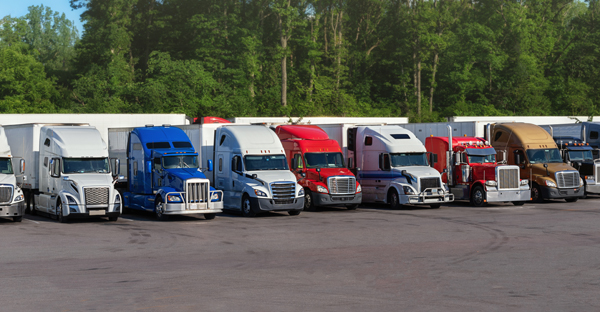
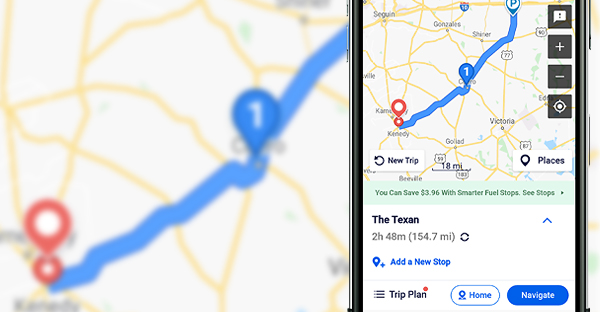
2. Maximize your stops: Plan to take care of everything you need at a truck stop when you are there the first time. Stopping to fuel, refill your coffee, and eat is better than stopping five times.
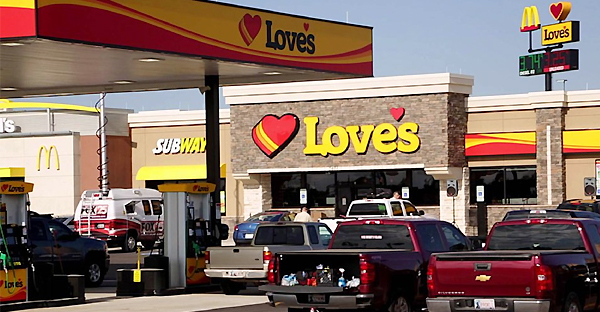
3. Avoid parking at the end of a row: Not only is there traffic crossing next to you but most people park on the end because they are tired and after a long day the end is the closest spot. Avoiding the end of a parking lot helps you avoid drivers who are parking when they are tired. Removing yourself from high traffic areas can help reduce risk.
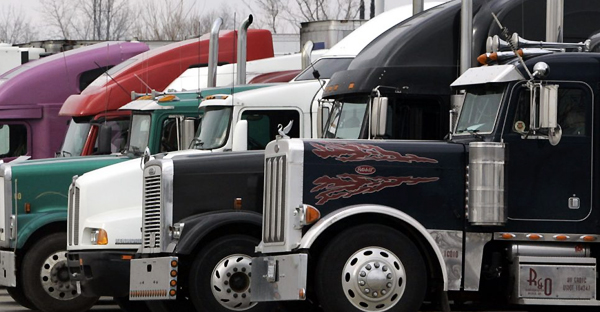
4. Avoid a spot that will force you to back out when you leave: Choose a spot you can either pull through (the best option) or back into (second best option).
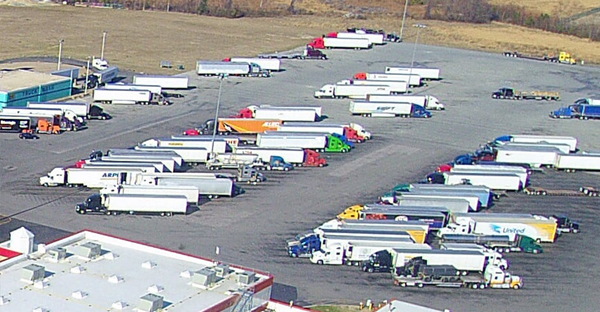
5. Park where there is space around you: The back of the lot will usually have more room than the front so let other drivers take the risk of all that traffic coming and going. No need to be a super Trucker when a safe and easy place is available. Think safe, not convenience.
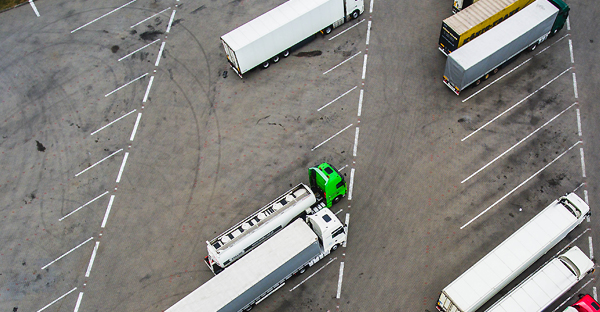
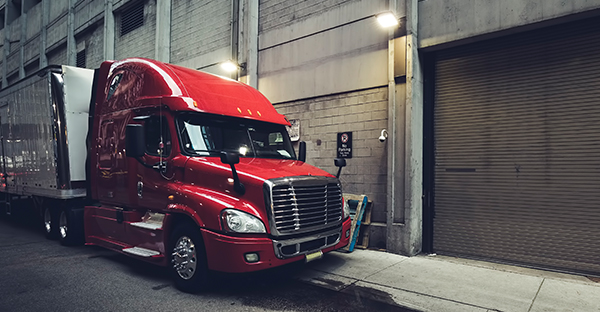
6. Use your cameras: Don’t be complacent when parking. When your space is tight, utilize what you have to your advantage. Using your cameras will help you see tight spots on sides and at the rear. Take your time and you can also step down to survey the surrounding areas.


Industry Update - January 8, 2020 <h4>By Paul DeCoste</h4>
<h3><strong>Transitioning to New Trucker Path ELD?</strong></h3>
Take a look at these resources for self on-boarding to your new Trucker Path Pro ELD:
<h3></h3>
<h4><strong>Blog Post:</strong> <a href="https://truckerpath.com/blog/self-onboard-your-new-eld/">https://truckerpath.com/blog/self-onboard-your-new-eld/</a></h4>
<h3></h3>
<h4><b>Web Application On-boarding:</b> <a href="https://www.youtube.com/watch?v=bCAhI4Byb5E&feature=youtu.be">https://www.youtube.com/watch?v=bCAhI4Byb5E&feature=youtu.be</a></h4>
<h3></h3>
<h4><b>Mobile Application On-boarding:</b> <a href="https://www.youtube.com/watch?v=IBAr9Lo9cpg">https://www.youtube.com/watch?v=IBAr9Lo9cpg</a></h4>
<h3></h3>
<h4><strong>Cab Card Link:</strong> <a href="https://documentcloud.adobe.com/link/track?uri=urn%3Aaaid%3Ascds%3AUS%3Ab7f1d6a5-0ebd-4dc3-b9e4-f55dcbe9071c">https://documentcloud.adobe.com/link/track?uri=urn%3Aaaid%3Ascds%3AUS%3Ab7f1d6a5-0ebd-4dc3-b9e4-f55dcbe9071c</a></h4>
<h3></h3>
<h3><strong>Did you Know?</strong></h3>
<a href="https://www.ttnews.com/articles/fmcsa-increases-random-drug-test-rate-50-2020">The FMCSA is increasing random drug screenings from 25% to 50% in 2020?</a>
<h3></h3>
The rate of drug screenings was initially reduced from 50% to 25% in 2016 but is being raised again. With 3.2 million CDL holders participating in interstate commerce and 1 million CDL holders participating in intrastate commerce, there will be more than 2 million random tests organized in 2020.
<h3></h3>
<h3><strong>Trucking Tip of the Week</strong></h3>
This week, Love’s announced that 10 of their existing locations will now have Truck Care Centers and Speedco facilities. <a href="https://www.truckersnews.com/loves-adds-truck-care-speedco-locations/">Take a look</a> at which locations have been upgraded and are now accessible if you need tire, lube or mechanical services.
<h3></h3>
<h3><strong>Diesel</strong></h3>
<a href="https://www.freightwaves.com/news/how-are-diesel-prices-determined">How are diesel prices determined?</a>
<h3></h3>
The price for diesel is established like most retail goods, by the shift of supply and demand in the market. But, interestingly enough, the wholesale price for diesel does not always translate to the retail price for the same good. Retail prices are determined solely by each individual enterprise that sells diesel to consumers via gas stations and fuel stations. The "rack price" is a term used to refer to the daily wholesale price of diesel and there are many different resources available to keep tabs on the diesel rack price across different wholesalers.
<h3></h3>
<h3><strong>Celadon Employee Payout</strong></h3>
This week, Celadon was <a href="https://www.ttnews.com/articles/judge-approves-payout-plan-former-celadon-employees">granted approval to pay $4.6 million to drivers and employees that did not receive paychecks when the company shutdown.</a> A federal bankruptcy judge granted this approval. This order allows $3.4 million to be spent on unpaid compensation and termination benefits for former employees, $900,000 to owner operators, and $300,000 owed for employee benefits. Although the company is approved to pay out the drivers and employees that deserve their finals paychecks, Celadon is not bound to do so.
National Truck Driver Appreciation Week 2020
[p]The U.S economy is highly dependent on some 3.5 million individuals who spend their lives on the road delivering goods to move our economy. Yes, we are talking about truck drivers who deserve praise and gratitude for what they do every day.
[/p]
<h2></h2>
[img src="https://truckerpath.com/uploads/2020/09/blog-1.jpg" alt=""]
[p][b]Historical Significance [/b][/p]
[p]Trucking has been around for over a century. Alexander Winton built the first semi-trailer in 1898, and quickly over the next hundred years, its significance really started to take shape. In 1998, the American Trucking Association (ATA) decided that a celebratory week shall be commemorated on the 2nd week of September. Every year since then, we’ve reserved that date to celebrate and give thanks to the millions of OTR and local drivers. [/p]
<h2></h2>
[img src="https://truckerpath.com/uploads/2020/09/blog-2-1.jpg" alt=""]
[p][b]Impact on the Economy[/b][/p]
[p]Trucking plays an integral role in the U.S economy. Some have stated that trucks act like the red blood cells in a human body. The red blood cells deliver oxygen to vital parts of the body, the same as trucks deliver goods to every corner of the country. Without them, the entire economy comes to a halt.[/p]
[p]According to official statistics, trucks move 72.5% of all the freight inside the U.S. That’s about 11.84 billion tons of goods! The good news is that the demand for truck drivers is increasing every year. The U.S Bureau of Labor Statistics (BLS) reports that by the year 2026 approximately 108,400 more heavy-load truckers will be required to maintain the network. The future is bright for anyone who wants to join the party.
[/p]
<h2></h2>
[img src="https://truckerpath.com/uploads/2020/09/blog-3-1.jpg" alt=""]
[p][b]Showing Gratitude [/b][/p]
[p]Life on the road is not easy. Truckers are away from their loved ones several months out of the year.
[/p]
[p]Sometimes a simple thank-you can mean the world. Being courteous on the road, goodie bag, or even a few words of kindness can lift spirits. It’s not easy for truck drivers to always cook and pack their meals, buying them a meal goes a long way!
[/p]
[p]In spite of our current pandemic, truckers are still delivering the essential goods across the country. Keeping the shelves stocked, delivering critical medical supplies, helping us get from manufacturer to doorstep, truckers have taken on a special significance in these times. We must not forget these hardworking men and women. The National Truck Driver Appreciation Week is a wonderful time for Americans to acknowledge these unsung heroes who make our lives easier and keep the economic wheel spinning.[/p]
<h2></h2>
<h2></h2>
<h2></h2>
[p][b]By Aldous Aldwin[/b][/p]
COVID19: State of Trucking <h4>By Trucker Path</h4>
<h3></h3>
<h3></h3>
<img src="https://truckerpath.com/uploads/2020/05/b5.png" alt="Trucker Path COVID19" />
<h3><strong>Trucker Path COVID-19 Initiatives</strong></h3>
The Trucker Path team is actively monitoring the spread of the Coronavirus (COVID-19) and preparing resources to assist truckers as they help keep America running.
<h2></h2>
In addition to providing updates on the Trucker Path <a href="https://www.facebook.com/TruckerPath/">Facebook Page</a>, a dedicated COVID19 thread has been created in the official Trucker Path forum.
<h2></h2>
A COVID-19 Tracker has been introduced on the Trucker Path mobile app which is available on <a href="http://bit.ly/truckerpathios">iOS</a> and <a href="http://bit.ly/truckerpathdroid">Google Play</a>. This feature will enable truckers to easily check the spread of the Coronavirus and see insights both for America and abroad, with live updates on infections and recoveries.
<h2></h2>
Along side the COVID-19 Tracker is the COVID-19 Navigation Tool which has been integrated on the Turn-by-Turn feature to track the latest information regarding reported cases and infected areas and provide alternate routing.
</a>
<h2></h2>
<h2></h2>
<img src="https://truckerpath.com/uploads/2020/05/b7.jpeg" alt="FMCSA" />
<h3><strong>FMCSA Emergency Declaration to be extended until June 14</strong></h3>
The agency's COVID-19 Emergency Declaration has been extended until June 14. The original declaration was set to expire last Friday.
Full announcement can be found <a href="https://www.fmcsa.dot.gov/emergency/extension-expanded-emergency-declaration-no-2020-002-under-49-cfr-ss-39025">here</a>.
<h2></h2>
FMCSA’s emergency declaration provides for regulatory relief for commercial motor vehicle operations providing direct assistance supporting emergency relief efforts intended to meet immediate needs for:
Medical supplies and equipment related to the testing, diagnosis and treatment of COVID-19
Supplies and equipment necessary for community safety, sanitation, and prevention of community transmission of COVID-19 such as masks, gloves, hand sanitizer, soap and disinfectants
Food, paper products and other groceries for emergency restocking of distribution centers or stores
Immediate precursor raw materials — such as paper, plastic or alcohol—that are required and to be used for the manufacture of essential items
Fuel
Equipment, supplies and persons needed to establish and manage temporary housing or quarantines
Persons designated by federal, state or local authorities for medical, isolation, or quarantine purposes
Persons necessary to provide other medical or emergency services
</a>
<h3></h3>
<h2></h2>
<img src="https://truckerpath.com/uploads/2020/05/b6.jpeg" alt="CDC" />
<h3><strong>CDC Guidelines for Long Haul Truck Drivers</strong></h3>
The Center for Disease Control and Prevention has recently updated guidelines for long haul truck drivers in the wake of the COVID-19 pandemic.
Here are some prescribed steps to avoid contamination and reduce spread.
<ul>
<li>Notify your supervisor and stay home if having symptoms.</li>
<li>Make a plan with your employer and your family as to what to do if you become sick while you’re on the road. Include where to stop, where and how to seek medical advice and treatment, and plans for freight delivery.</li>
<li>Limit close contact with others by maintaining a distance of at least 6 feet when possible.</li>
<li>CDC recommends wearing cloth face coverings in public settings where other social distancing measures are difficult to maintain, especially in areas of significant community-based transmission. </li>
<li>Clean and disinfect frequently touched surfaces on a routine basis.</li>
<li>Practice proper hand hygiene. This is an important infection control measure. Wash your hands regularly with soap and water for at least 20 seconds, or use an alcohol-based hand sanitizer containing at least 60% alcohol.</li>
<li>Avoid touching surfaces often touched by others when outside of the cab.</li>
<li>Do not share personal protective equipment (PPE) (such as vests, safety glasses, hard hats),tools, phones, radios, or other personal items.</li>
<li>Use pre-qualified truck stops or hotels identified by your employer as having appropriate COVID-19 protections.</li>
<li>When team driving or ride-alongs are required, wear cloth face coverings inside the truck and avoid sharing bedding in the sleeper berth.</li>
</ul>
Full guidelines can be viewed <a href="https://www.cdc.gov/coronavirus/2019-ncov/community/organizations/long-haul-trucking.html">here</a>.