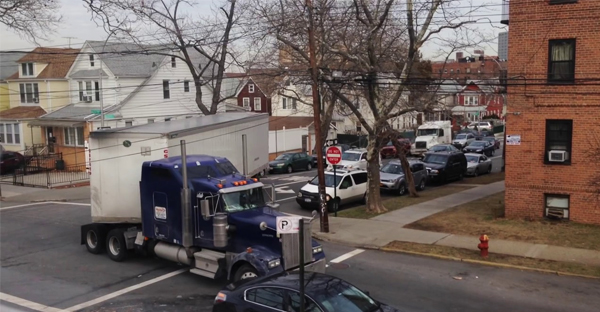
2. Not getting clear directions to a delivery or pick up: Ensure good directions to avoid getting lost or in an awkward spot where it’s impossible to get turned around. Plan your trips using a trip planner (check out Trucker Path while you’re at it).
3. Lack of focus when backing up: This is one of the greatest challenges as a professional truck driver. Get out of the vehicle and survey the vicinity first. Check for obstructions and clearance. Do it slowly and safely and always focus on your driver aids (side mirrors, cameras, etc).
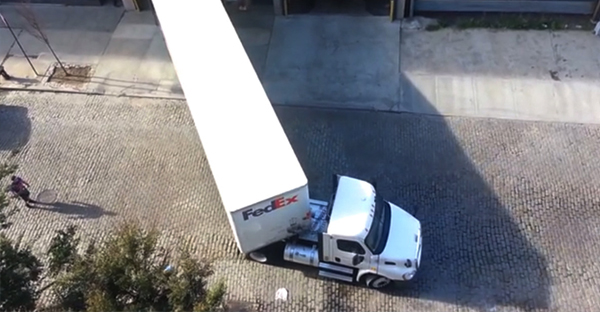
4. Hurrying: Hurry for no one. Hurrying leads to mistakes. Mistakes as a professional truck driver can be fatal. Take all the time you need to get it right EVERY TIME.

5. Complacency: Experienced truck drivers as well as the new truck drivers can be guilty of being complacent and overconfident. Be thorough and 100% focused at all times and never ever take something for granted. Complacency can get any driver into serious trouble.
There are many more tips out there but in general it all leads to focus, and safety. Got some tips to share? Let us know down the comments section.



Industry Update - November 22, 2019 <h4><strong>By Paul DeCoste</strong></h4>
<h3><strong>Did you Know?</strong></h3>
The trucker-themed movie, <a href="https://en.wikipedia.org/wiki/Roadgames">Roadgames</a>, came out this week almost 30 years ago. On November 19<sup>th</sup>, 1981. Starring Stacy Keach and Jamie Lee Curtis, this film is a personal favorite of Quentin Tarantino.
<h3></h3>
<h3><strong>Industry Update</strong></h3>
The <a href="https://globalnews.ca/news/6199178/cn-rail-strike-3rd-day/">strike at CN Railway</a>, Canada’s largest railroad, has entered its third day. 3,200 unionized workers began their strike on Thursday, and it has been recorded as the biggest company strike in a decade. The union is mainly fighting against worker fatigue and making sure that worker’s breaks are not reduced.
<h3></h3>
CN’s stock has slowly fell by 3$ over the past three days of this strike.
<h3></h3>
<h3><strong>Regulations</strong></h3>
House Democrats in Connecticut want the governor to <a href="https://cdllife.com/2019/dems-tell-connecticut-governor-to-revive-truck-only-toll-plan/">rethink a plan that will only toll commercial vehicles on 12 bridges throughout the state</a>. The funding plan, officially titled “CT2030”, will only toll semi-trucks and other commercial vehicles and is estimated to rake in $150 million in revenue per year. The Connecticut House Speaker, Joe Aresimowicz, argues that commercial vehicles do majority of the damage to interstate roads and therefore, should be tolled at a rate that is 7x higher than the rate for passenger vehicles.
<h3></h3>
Governor Lamont has since stated that, “the truck-only option provides too little revenue, too slowly and too piecemeal to make a meaningful difference.” For the time being, highway tolls in Connecticut will remain the same to all vehicles that pay their fees.
<h3></h3>
<h3><strong>ELD Update</strong></h3>
<a href="https://www.ttnews.com/articles/uber-freight-subsidizes-geotab-elds-0">Uber has recently partnered with Geotab and announced an interesting deal</a> to supply small carriers with their ELD service. Small carriers with 10 trucks or fewer are eligible to receive a free Geotab ELD as well as a free year of Uber Freight services. However, there’s a catch.
<h3></h3>
Carriers that accept this deal must agree to share their telematics data with Uber Freight. The breakdown of exactly what kind of data will be shared has yet to be announced but the value of telematics data has been on the rise in recent years and there is not telling how much valuable information you could end up giving away.
<h3></h3>
<h3>"Movember"</h3>
<a href="https://www.trucker.com/drivers/maxitrans-supporting-mens-health-movember-drive">MaxiTRANS is an Australian trailer manufacturer and they are using “Movember” to raise awareness</a> for mins health issues. Issues that include prostate and testicular cancer, mental health and suicide prevention. The company even commissioned an entire reefer trailer that is branded with Movember on all walls.
Types of Truck Freight [h2] Types of Truck Freight [/h2]
[p] There are many types of truck freight, each with a unique yet important role for moving different truck freight across the nation and load boards make it easy to find truck freight.
[/p]
[h2] Truck Freight [/h2]
[p]Truck freight is responsible for <a href="https://truckerpath.com/blog/trucking-industry-trends/">70 percent of all cargo that is transported in America</a>. That's over 10 billion tons each year![/p]
[p]Companies ship a variety of truck freight ranging in size, value, and contents. Ever wonder how ice cream somehow stays frozen when shipped across America or how huge machines make their way from a factory in Kentucky to a warehouse in California? It's all thanks to truck freight and the specific trailers and equipment necessary for the dedicated men and women of the trucking industry to haul the freight.
[/p]
[h2] Find Truck Freight on Truckloads Load Board[/h2]
[p]If you have <a href="https://truckerpath.com/blog/trucking-authority/">trucking authority</a> and are looking for truck freight loads you can use Truckloads free load board to customize your truck freight search and filter results that are the best fit for you. You can choose from 11 different trailer equipment types when searching for loads and search based on location, date, deadhead and even load weight. [/p]
[p]Use Truckloads web version or download the app and view over three million loads per month including unlimited access to premium loads as well as the ability to call a broker right from the app from anywhere. Stay loaded and know where nearby truck freight loads are with Trucker Path Truckloads![/p]
[button text="Try Truckloads for Free" href="https://truckerpath.com/truckloads/free-load-board/?utm_source=Blog&utm_medium=truckfreight&utm_campaign=Aug10" width="250px"]
[video id=snyBYpnuhWw]
[h2] Flatbed Trucks [/h2]
[p]Flatbed trucks are truck freight with a trailer that is leveled off and open with no sides or top, hence the name flatbed. This design makes it easier to load and unload large freight that otherwise couldn't fit into a standard 53-foot trailer. Truck freight is secured on flatbeds with straps, tarps and other locking devices to keep the load tied down. [/p]
[p]
Generally, flatbed trucks are used as truck freight for construction goods, large manufactured parts, and various oversized loads. An oversized load is any truck freight that is over 8.5 feet wide. This type of truck freight requires red flags and lights to help identify the oversized truck freight on the road.
[/p]
[img src="/uploads/2017/08/Flat-Bed-Final.png" alt="flatbed truck freight"]
[h2] Step Deck Trucks[/h2]
[p] Similar to flatbed trucks, step deck trucks also have a level surface that is open. The main difference between truck freight with a flatbed and step deck truck is that the step deck truck will have a lower position set closer to the ground. This helps truck freight that is taller sit lower to avoid potential hazards such as bridge clearances. [/p]
[img src="/uploads/2017/08/Step-Deck-Final.png" alt="step deck truck freight"]
[h2] Reefer Trucks [/h2]
[p]Also known as refrigerated trucks, reefer trucks are truck freight with a trailer that is temperature controlled in order to haul goods that must remain within a certain temperature zone at all times such as food. While reefer trucks commonly haul loads that include perishable foods, they also transport things like pharmaceuticals, chemicals, and other <a href="https://truckerpath.com/blog/hazmat-transportation/">hazmat materials</a>, though not at the same time of course. [/p]
[img src="/uploads/2017/08/Reefer-Final.png" alt="reefer truck freight"]
[h2] Dry Vans [/h2]
[p]Dry vans are the most common truck freight. They are typically a standard 53-foot trailer like the ones you see connected on the back of a semi-truck on the interstate that might say Walmart, Target or Schneider. Although not an actual van, they are the most common truck freight to haul goods, providing a trailer that is sealed and protected from the elements. [/p]
[p]
Look around your home and chances are the things you see were hauled by dry van truck freight. Dry van loads are used by a variety of companies looking to ship anything from consumer products, home goods, electronics, and a variety of other products that don't require refrigeration.
[/p]
[p]
Choosing to haul truck freight with a dry van can result in an increased opportunity in available freight to haul due to the volume of truck freight shippers have for dry vans. [/p]
[img src="/uploads/2017/08/Van-Final.png" alt="Dry Van freight"]
[h2] Other Types of Truck Freight [/h2]
[ul] There are several other truck freight loads you'll find as well, including:
[p]
[li]Auto Carrier - trailer that hauls automobiles and other vehicles[/li]
[img src="/uploads/2017/08/Auto-Trailer-Final.png" alt="auto carrier freight"]
[li] Dump Trailer - trailer with a lift to incline and allow for loads to be dumped [/li]
[img src="/uploads/2017/08/dump-trailer-Final.png" alt="dump trailer freight"]
[li] Tanker - trailer that is a long cylinder shape hauling liquids like fuel[/li]
[img src="/uploads/2017/08/Tanker-Final.png" alt="tanker truck freight"]
[/ul]
Industry Update - May 19, 2020 <h4>By Aldous Aldwin</h4>
<h3></h3>
<h3></h3>
<img src="https://truckerpath.com/uploads/2020/05/b1.jpeg" alt="Truck Stops" />
<h3><strong>Truck Stops to Remain Open</strong></h3>
As the nation endures the Covid-19 pandemic, <a href="https://www.ttnews.com/articles/truck-stops-remain-open-pandemic-despite-hit-bottom-line">truck stops have been working to ensure that drivers have a helping hand</a>. Some truck stops like Iowa 80 have enforced measures to limit the Covid-19 spread while keeping the showers and restrooms open. Loves installed plexiglass at all its stores, restaurants, and truck registers. Petro has remained open and has packaged their convenience store foods in a way that prioritizes customer safety.
<h2></h2>
<img src="https://truckerpath.com/uploads/2020/05/b2.jpeg" alt="FMCSA" />
<h3><strong>FMCSA HOS Rule Updates</strong></h3>
The <a href="https://www.fmcsa.dot.gov/regulations/hours-service/hours-service-drivers-final-rule">Final Rule</a> features four key changes to existing Hours of Service requirements.
<ul>
<li>The Agency will increase safety and flexibility for the 30-minute break rule by requiring a break after 8 hours of consecutive driving and allowing the break to be satisfied by a driver using on-duty, not driving status, rather than off-duty status.</li>
<li>The Agency will modify the sleeper-berth exception to allow drivers to split their required 10 hours off duty into two periods: an 8/2 split, or a 7/3 split—with neither period counting against the driver’s 14‑hour driving window.</li>
<li>The Agency will modify the adverse driving conditions exception by extending by two hours the maximum window during which driving is permitted.</li>
<li>The Agency will change the short-haul exception available to certain commercial drivers by lengthening the drivers’ maximum on‑duty period from 12 to 14 hours and extending the distance limit within which the driver may operate from 100 air miles to 150 air miles.</li>
</ul>
<h3></h3>
<img src="https://truckerpath.com/uploads/2020/05/b3.jpeg" alt="Jobs" />
<h3><strong>More than 80,000 Jobs Lost Last April</strong></h3>
According to the<a href="https://www.bls.gov/news.release/empsit.t17.htm"> Bureau of Labor Statistics</a>, 88,300 jobs were lost in the trucking industry, a 6.2% year-over-year decline, as the entire economy continues to suffer due to the COVID-19 pandemic. It is estimated that around 60% of the jobs mentioned are drivers.