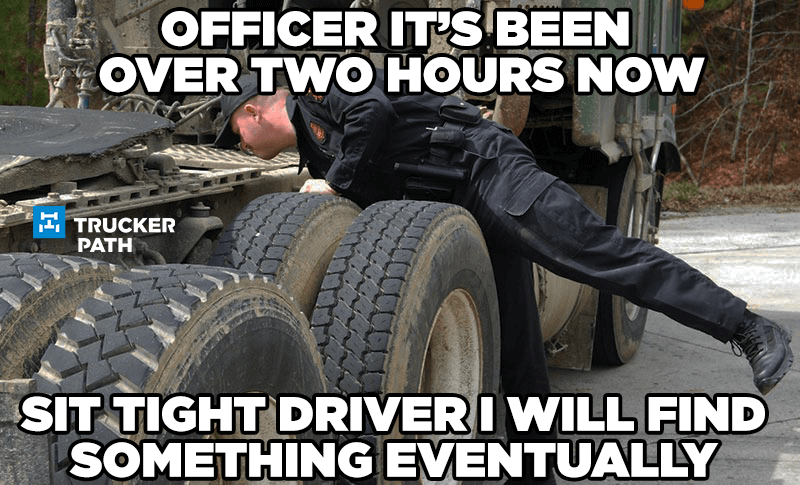
The Commercial Vehicle Safety Alliance (CVSA) has set September 7, 2017, as Brake Safety Day where inspections of trucks will occur throughout North America.
According to the CVSA, Brake Safety Day inspectors will primarily conduct the North American Standard Level I Inspection, which is a 37-step procedure that includes an examination of both driver operating requirements and vehicle mechanical fitness.
Brake inspections will look for things like (but are not limited to):

In the 10 jurisdictions using performance-based brake testing (PBBT) equipment, vehicle braking efficiency will be measured. PBBT systems include a slow speed roller dynamometer that measures total vehicle weight and total brake force from which braking efficiency is determined, says the CVSA.
The minimum braking efficiency for trucks is 43.5 percent, required by U.S. federal regulation and the CVSA out-of-service criteria.
From September 11-17 2016, the CVSA conducted a Brake Safety Week with inspectors reporting 13.2 percent of inspections resulting in out-of-service brake violations and 14.8 percent of inspections with non-brake related out-of-service violations.
During the 2016 International Roadcheck brake-related violations were responsible for 45.7 percent of all out-of-service violations, the largest percentage of any violation.



Different Types of Trucking Jobs
[p]Truck driving is a challenging profession that requires incredible mental fortitude. You are constantly on the road, away from family and the warm embrace of your home. On top of that, you are driving most of the time, so there is hardly time for any rest. Therefore, it is a good idea to choose a suitable trucking job that fits your schedule and allows you to relax.
There are plenty of opportunities you can explore![/p]
[p]There are plenty of opportunities you can explore!
[/p]
[img src="https://truckerpath.com/uploads/2021/05/202105-TP-BLOG-Different-Types-of-Trucking-Jobs-1.jpg" alt=""]
<h2></h2>
[p][b]Dry Van Hauling[/b][/p]
[p]Dry van hauling is tailor-made for beginner truckers. You only have to deliver non-perishable items from one place to another. The loading and unloading are also done by the client, so you only have to focus on the driving.[/p]
[img src="https://truckerpath.com/uploads/2021/05/202105-TP-BLOG-Different-Types-of-Trucking-Jobs-2.jpg" alt=""]
<h2></h2>
[p][b]Freight Trucker[/b][/p]
[p]Freight is a very broad term, so anything other than dry goods come under the definition. It's tough being a freight hauler as you are expected to transport all kinds of goods. They can be hazardous, liquid materials, or anything that dry haulers are not allowed to carry.[/p]
<h2></h2>
[img src="https://truckerpath.com/uploads/2021/05/202105-TP-BLOG-Different-Types-of-Trucking-Jobs-3.jpg" alt=""]
<h2></h2>
[p][b]Oil/Gasoline Tanker[/b][/p]
[p]Hauling a tanker is no easy task. You have to be focused every moment and take care of the cargo at all times. One mistake could result in a horrible accident. Tanker haulers are some of the most sought-after trucking jobs in the industry. The high risk means there is a high reward as well. So, it is natural for truckers to look for tanker jobs.[/p]
<h2></h2>
[img src="https://truckerpath.com/uploads/2021/05/202105-TP-BLOG-Different-Types-of-Trucking-Jobs-4.jpg" alt=""]
<h2></h2>
[p][b]Refrigerated Goods Transport[/b][/p]
[p]Transporting refrigerated goods does not require a lot of skill, but it involves being punctual. You cannot fall behind the deadline, or the entire cargo can spoil. There is a lot of responsibility on such truckers but the good thing is that these jobs are close to home. You are not always expected to transport goods to far-off places.[/p]
[img src="https://truckerpath.com/uploads/2021/05/202105-TP-BLOG-Different-Types-of-Trucking-Jobs-5.jpg" alt=""]
<h2></h2>
[p][b]Flatbed Trucker[/b][/p]
[p]Any item that is too large or has an irregular shape, is transported by flatbed truckers. Flatbed trailers are open, which means the cargo is exposed to the elements at all times. The job requires extreme skill, to deliver the goods safely and on time. Trucks, cars, heavy machinery, and other similar items are transported using a flatbed hauler.[/p]
[img src="https://truckerpath.com/uploads/2021/05/202105-TP-BLOG-Different-Types-of-Trucking-Jobs-6.jpg" alt=""]
<h2></h2>
[p][b]Regional Trucking Jobs[/b][/p]
[p]If you are not worried about earning the big bucks and you are happier near your home, then regional
trucking is for you. Such a job is easy and does not pay much, but at least you don’t have to be away
from home all the time.[/p]
[img src="https://truckerpath.com/uploads/2021/05/202105-TP-BLOG-Different-Types-of-Trucking-Jobs-7.jpg" alt=""]
<h2></h2>
[p][b]Hotshot Trucking[/b][/p]
[p]There is no need to be disappointed if you like trucking and you don’t have a semi. A class 3 or 5 truck can also do the job. Hotshot trucking is attaching a trailer to your small truck and transporting goods using that setup. Once you have the capital and experience to upgrade, you can shift to a semi and accept more serious trucking jobs..[/p]
[p]What about you? Which one are you or which one would you want to try out? Comment below.[/p]
<h2></h2>
<h2></h2>
[p][b]By Aldous Aldwin[/b][/p]
[p] Signing off.[/p]
Trucker Spotlight - Chris Lee <em>The Trucker Spotlight series explores the lives of truckers and their journey to make a difference in their industry. We interview different truck drivers to understand some life lessons that make them who they are today. We also learn more about their motivations, and the problems that they encounter on the job. We also tackle how Trucker Path's solutions helped them with what they do. The information that they provide helps inform other people who are looking to delve into the trucking world.</em>
<h2></h2>
[img src="https://truckerpath.com/uploads/2020/10/ts-chris_lee-blog-1.jpg" alt=""]
<h2></h2>
Today we are putting the spotlight on <strong>Chris Lee</strong>, who's been driving for around 3 years now. He's originally from Michigan, but has been in Texas for so long that he considers himself a Texan already. He's been married for two years and has a 10 year-old son. He decided to live his life on a vegan/plant-based diet due to trucking. Let's get to more about Chris and how trucking changed his life.
<h2></h2>
<h3></h3>
<h3><strong>What made you decide to be a trucker?</strong></h3>
I became a trucker because it had been something I had wanted to do years before I took the leap. I had been deterred and so I started a moving company. After doing that for a couple of years my wife then girlfriend at the time brought it up and I couldn't say no to the opportunity a second time.
<h2></h2>
<h3><strong>In the years that you have been driving, what are the significant changes that you've
noticed in the trucking industry?</strong></h3>
In the short amount of time that I have been in the trucking industry, I've seen electronic logs come and paper logs go, I have also seen two major changes to the hours of service.
<h2></h2>
[img src="https://truckerpath.com/uploads/2020/10/ts-chris_lee-blog-2.jpg" alt=""]
<h2></h2>
<h3><strong>What made you decide to put up your Youtube channel?</strong></h3>
I had also wanted to make Youtube videos for a while. I would make content about moving and I just wasn't confident enough nor did I understand how to upload videos onto the internet. When I got into trucking I wanted to put out information that I didn't have that I thought would help others looking to get into the industry.
<h2></h2>
<h3><strong>Any times when you get lonely while driving? How do you deal with it?</strong></h3>
When I drove OTR, it definitely got lonely so having people to talk to back at home really helped out a lot. Being able to have a support group via Youtube also keeps me from feeling like I'm out here by myself.
<h2></h2>
[img src="https://truckerpath.com/uploads/2020/10/ts-chris_lee-blog-3.jpg" alt=""]
<h2></h2>
<h3><strong>As a trucker, what are the current struggles in this COVID19 pandemic?</strong></h3>
The pandemic hasn't really affected my day to day operations. Shippers now require a covid form to be filled out for drivers entering their facility and may also take out temperature but that is about it.
<h2></h2>
<h3><strong>What are your usual routes? Favorite scenic truck route?</strong></h3>
I'm currently on a flatbed dedicated route so my sights are pretty routine, but when I was OTR my favorite places to drive were Nevada and Utah.
<h2></h2>
[img src="https://truckerpath.com/uploads/2020/10/ts-chris_lee-blog-5.jpg" alt=""]
<h3><strong>What was your weirdest or most unusual haul?</strong></h3>
Once I was hauling a load of livers and was asked at the receiver if I ate them. I told her no and she then asked why would I have them in my truck then.
<h2></h2>
<h3><strong>How often do you use rest stops / truck stops? What are the things that you look for in a truck stop? Favorite truck stop meal?</strong></h3>
I use rest stops and truck stops 99 percent of the time unless I can stay at a shipper or receiver overnight. When looking for a truck stop, I often check how many spots they may have, if they have showers, and the type of food they serve. I normally bring my own food from home to eat in the truck, but if I had to choose, I would say Indian food. I've been to a couple truck stops that serve that type of food while driving OTR.
<h2></h2>
<h3><strong>What are the common troubles or problems you encounter while trucking?</strong></h3>
The most common troubles or problems I encounter out on the road are other drivers, mostly the smaller vehicles cutting in front of big trucks.
<h2></h2>
<h3><strong>What are your pet peeves while driving/trucking?</strong></h3>
My biggest pet peeve about trucking is not having a shower or restroom in the truck. That would save me lots of time.
<h2></h2>
[img src="https://truckerpath.com/uploads/2020/10/ts-chris_lee-blog-4.jpg" alt=""]
<h2></h2>
<h3><strong>We're glad that you use the Trucker Path app on your day to day trucking. What features do you enjoy the most?</strong></h3>
My favorite features to use on <a href="http://www.truckerpath.com">Trucker Path</a> are the fuel price feature, knowing how far each rest stop/truck stop are from my location, knowing if weigh stations are open or closed, being able to route my trip in the app. Honestly there are so many things to like about the app because it's catered to truckers and I definitely appreciate that.
<h2></h2>
<h3><strong>What are some tips that you would like to share for aspiring truckers?</strong></h3>
Always do your pre-trip before getting on the road is tip number one! Another tip I would share is to learn how to save and invest your money so that your future self can appreciate your hard work.
<h2></h2>
<h3><strong>Where can people watch your videos on Youtube?</strong></h3>
They can view my videos on my <a href="https://www.youtube.com/channel/UCTuG9to9JYyvOc789furUKw">Youtube Channel, ChrisLeeTV</a>.
<h2></h2>
<iframe width="560" height="315" src="https://www.youtube.com/embed/Sgi5-ZiBpB8" frameborder="0" allow="accelerometer; autoplay; clipboard-write; encrypted-media; gyroscope; picture-in-picture" allowfullscreen></iframe>
<h2></h2>
Hope you guys enjoy!
<h2></h2>
<h2></h2>
<h4>By Aldous Aldwin</h4>
<h3></h3>
<h3></h3>
Truck Freight Rates [h2] Truck Freight Rates [/h2]
[p]Before getting into the details surrounding truck freight rates and how owner-operators can find the best one, it's important to understand what is a good truck freight rate and how are rates determined.[/p]
[h2]What is a Truck Freight Rate? [/h2]
[p]A Truck freight rate is simply the price or rate a broker or shipper is willing to pay a carrier to haul a load. Essentially, it's what you will be paid to haul a load. Our focus here is regarding truck freight rates for owner operators and carriers with authority. [/p]
[h2] Where Can I Find Truck Freight Rates? [/h2]
[p]You can find truck freight rates on load boards like <em>Truckloads</em>. Search over three million monthly truck loads and filter your results based on location, trailer type, weight, pick up/drop off date and more. Use Truckloads free load board to view a freight broker's credit rating, days to pay and call brokers directly from the mobile app to book the best freight rate for you! [/p]
[button text="Try Truckloads Today" href="https://truckerpath.com/truckloads/free-load-board//?utm_source=blog&utm_medium=truckfreightrate" width="250px"]
[video id="snyBYpnuhWw"]
[h2] How are Truck Freight Rates Calculated? [/h2]
[p]Truck Freight rates are calculated based on a variety of factors including the current market conditions, demand levels, overall weight or size, distance traveled and the type of goods being shipped. Certain routes and areas will offer higher freight rates because the supply of loads is so great, therefore the need for carriers will be higher.[/p]
[p]Keep in mind that truck freight rates are often set by a<a href="https://truckerpath.com/blog/what-is-a-freight-broker/"> freight broker </a> who takes a portion of the total rate a shipper is willing to pay and pays the carrier the difference. This rate is often negotiable and can fluctuate. [/p]
[p]If a shipper is sending valuable equipment that is extremely heavy, chances are the freight rate is going to be very favorable for carriers. [/p]
[p]Since the truck cargo that needs to be shipped is valuable, there is additional desire to find qualified carriers. Of course, you'll need to have the right equipment and trailer necessary to haul the specific load. [/p]
[giphy]<iframe src="https://giphy.com/embed/3o7btPCcdNniyf0ArS" width="480" height="268" frameBorder="0" class="giphy-embed" allowFullScreen></iframe>[/giphy]
[h2] What Loads Pay the Best Truck Freight Rate? [/h2]
[p]In order to maximize your earnings, you'll benefit from hauling loads with the best freight rate as often as possible. Freight rates are typically paid by the mile and can range from $1.50 to upwards of $4.00 or more per mile. Typically, the best freight rate is for flatbed loads but this is not necessarily always the case. [/p]
[p]We surveyed over 150 experienced <a href="https://truckerpath.com/blog/how-to-become-an-owner-operator/">owner-operators</a> asking them what they think are the best freight rates. 59 percent considered $3.00 per mile the best rate for carriers while 32 percent said $2.00 was a fair freight rate.[/p]
[p]While these are ideal freight rates for the carrier, they are often times difficult to find in most areas and the volume of freight shipping at these rates can also be limited. [/p]