Understand the requirements of HAZMAT transportation and how truck drivers can avoid violations.
HAZMAT transportation can be lucrative for carriers but it requires understanding common Department of Transportation violations and how to avoid them in regards to hazardous materials.
HAZMAT transportation can be extremely dangerous for truck drivers which is why it typically pays at a higher rate. To enforce regulations and promote the safety of HAZMAT transportation, the FMCSA conducts over 154,000 annual roadside inspections, with an estimated 35,000 DOT HAZMAT violations reported. That’s nearly 23 percent of inspections resulting in a violation!
Want to obtain a HAZMAT endorsement on your CDL and potentially earn more with HAZMAT transportation?
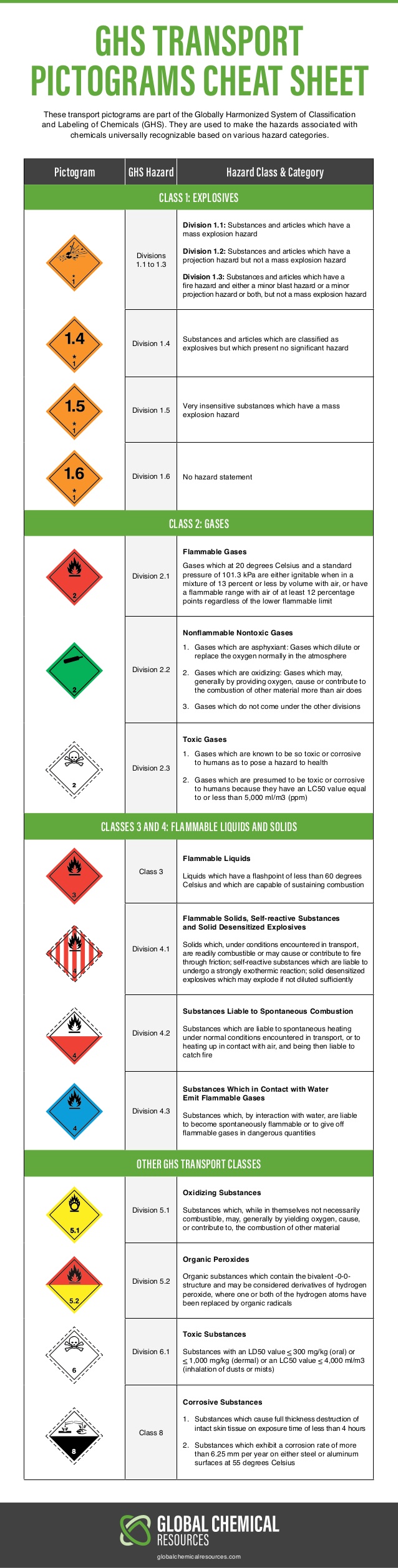
GHS Transport Pictograms Cheat Sheet for hazardous materials from Global Chemical Resources.



How to Start a Trucking Company
[p]Wondering how to start a trucking company and earn more money? There are several steps and a few guidelines to follow. [/p]
[h2] How to Start a Trucking Company[/h2]
[p]Deciding to start a trucking company is a great idea and the timing is right. <a href="https://truckerpath.com/blog/trucking-industry-trends/">Trucking industry trends</a> expect freight revenue to grow by 75 percent over the next nine years and with the trucking industry eclipsing over $726.4 billion in revenue for 2015, starting a trucking company now can be extremely lucrative. The trucking industry serves as a pillar in keeping things going and as long as people have demand for products, moving freight will be necessary for years to come.[/p]
[p]Don't be intimidated by the larger trucking companies with thousands of truck drivers and investors to provide capital. 90 percent of trucking companies are small fleets of six trucks or less so there's space in the industry for you to learn how to start a trucking company.[/p]
[h2] 1. Apply for Trucking Authority - Trucking Company Forms[/h2]
[p]Paperwork, documentation, and forms. They're tedious and might seem redundant but are necessary for you to get your trucking company started and earn <a href="https://truckerpath.com/blog/trucking-authority/">trucking authority</a>.[/p]
[p]If you haven't already been assigned a US DOT number, you will need to register for a DOT number form before you can apply to obtain trucking authority. Keep in mind the old [a href="https://www.fmcsa.dot.gov/registration/form-mcs-150-and-instructions-motor-carrier-identification-report"]MCS-150 form[/a] is now only for updating existing US DOT number and not for obtaining a US DOT number.[/p]
[p]To get a US DOT number you will need to use the new [a href="https://portal.fmcsa.dot.gov/UrsRegistrationWizard/"]Unified Registration System[/a]. The processing time can take 20-25 business days according to the FMCSA.[/p]
[p]If you already have a US DOT number and wish to apply for operating authority you can do so by [a href="http://li-public.fmcsa.dot.gov/LIVIEW/PKG_REGISTRATION.prc_option"]completing this registration form[/a] and paying the associated $300 fee.[/p]
[h2] 2. Choosing a Process Agent[/h2]
[p]You will need to choose a process agent who can represent you in regards to court papers. You will need to have a process agent for each state your trucking company operates in. They are used if there ever is an issue where court papers are to be served to your trucking company in a state other than the state your company is registered in.[/p]
[p]The FMCSA has a [a href="https://www.fmcsa.dot.gov/registration/process-agents"]list of process agents to choose from here[/a]. The process agent is responsible for completing [a href="https://www.fmcsa.dot.gov/sites/fmcsa.dot.gov/files/docs/registration/1996/boc-3-1-18-2017.pdf"]Form BOC-3[/a] on behalf of your trucking company.[/p]
[h2]3. Truck Insurance[/h2]
[p]Once you've established your trucking company you will need to make sure that it's properly insured. Liability insurance is required for trucking companies to cover potential damages or injuries caused by operating a commercial vehicle.[/p]
[p]Shop around and get several quotes before making a decision on which insurance provider is best for your trucking company. [a href="https://www.fmcsa.dot.gov/registration/insurance-requirements"]Here is a detailed overview of the FMCSA insurance requirements[/a] to help get you started.[/p]
[giphy]<iframe src="https://giphy.com/embed/3o6Zt2iHqqrjNlbPS8" width="480" height="270" frameBorder="0" class="giphy-embed" allowFullScreen></iframe>[/giphy]
[h2]4. Buying or Leasing a Truck[/h2]
[p]When starting your trucking company you can buy or lease trucks depending on what suits your needs best. If you have the working capital upfront to cover the cost and want to operate a small fleet with a few trucks, buying several trucks at once from a dealer might result in a discounted price per vehicle.[/p]
[p]You can also look into leasing trucks which often times keeps the monthly costs down and can even have a lease-to-own option available. However, there are usually restrictions that apply to leasing that vary by dealer. You will want to take the time to search and compare dealer options and offers before choosing.[/p]
[p]Lastly, there is also the option to purchase used trucks which can help save you upfront but can be costly down the line. You may find a used truck that is a few years old with over 400,000 miles on it for $40,000 to $50,000 less than a new one.[/p]
[p]It might be a great deal but remember, on average, truck repairs cost an estimated $15,000 annually according to the ATRI and with used trucks, that number can be even more.
[/p]
[h2]5. Choosing the Right Truck and Trailer Equipment [/h2]
[p]
Choosing the correct equipment to haul <a href="https://truckerpath.com/blog/types-of-truck-freight/">truck freight</a> can have a tremendous impact on your trucking companies earning potential. Although freight rates fluctuate week-to-week, typically flatbed truck loads pay the highest rate on average.
[/p]
[p]
That is not to say that a reefer, van or step deck load won't ever pay a better rate. Rather it's just an overall average to consider before choosing the equipment type for your truck. Keep in mind that location also plays a major factor in determining freight rates.
[/p]
[p]<strong>Looking ahead</strong>: when you're trucking company is set up, you can find truck freight to haul on free load boards like <strong>Truckloads</strong>. Customize your truck load searches by <a href="https://truckerpath.com/blog/what-is-deadhead/">deadhead</a> location and the trailer equipment type for you. [/p]
[video id="snyBYpnuhWw"]
[h2] 6. International Registration Plan (IRP)[/h2]
[p]
By registering your vehicle through the IRP in your home state, you will be allowed to haul interstate loads as well as freight through Canada without having to worry about additional registrations. You will be provided an apportioned license plate and cab-cards now display all jurisdictions that you cover.
[/p]
[p]
The IRP registration fee for your apportioned plate will vary depending on state and vehicle weight, but typically the price ranges from $1,500 - $2,000. [a href="https://www.fhwa.dot.gov/about/webstate.cfm"]Use this list to determine what the cost will be for your state.[/a]
[/p]
[button-green href="http://vip.truckerpath.com/gold-member?utm_source=email&utm_medium=how-to-start"]Try Trucker Path Premium FREE for 14 Days[/button-green]
Recourse vs Non Recourse Factoring [p]Get paid in a day with freight factoring and understand the benefits and differences between recourse vs non recourse factoring.[/p]
[h2]Recourse vs Non Recourse Factoring[/h2]
[p]What's the difference between recourse vs non recourse freight factoring actoring? Say you're an owner-operator who's interested in freight factoring because you no longer want to wait 30 days to get paid for hauling a load. You come across a few factoring companies offering different rates and notice some are recourse factoring and others are non-recourse but don't know which freight factoring option is best.[/p]
[h2]Recourse Freight Factoring[/h2]
[p]With recourse freight factoring, you agree to sell your invoices to a factoring company that will then pay you after hauling a load (days to pay vary) however, you're responsible for collections from your client. Recourse factoring is commonly used in factoring finance however it presents the highest risk.[/p]
[p] Even if a recourse factoring company has taken on your invoice or provided you an advance, you are still liable if they are unable to collect from your clients. This puts your business at risk for a potential loss.[/p]
[h2] Non Recourse Freight Factoring [/h2]
[p]The opposite is true for non recourse freight factoring. When you sell your invoices to the factoring company, you are not liable to collect from your clients. Instead, the factoring company pays you after hauling a load and they assume the risk if your client fails to pay. Due to this, typically a non recourse factoring rate is slightly higher because the burden to collect is placed on the factoring company and not you.[/p]
[p] If you're an <a href="https://truckerpath.com/blog/how-to-become-an-owner-operator/">owner-operator</a> or manage a small fleet, it's usually more beneficial to choose non-recourse factoring in order to avoid a potential loss in revenue if there are complications with collections. Choosing a non recourse factoring company like Trucker Path InstaPay allows you to focus on running your business and haul more loads.[/p]
[button-green href="https://truckerpath.com/instapay/?utm_source=blog&utm_medium=recourseornonJuly5"]Learn about InstaPay[/button-green]
[video id=h3kXwM59BgM]
CVSA Roadcheck Set to Begin June 6
[p]Of course, no [a href="https://app.appsflyer.com/com.sixdays.truckerpath?pid=Social Facebook"]truck driver[/a] wants to be flagged for a violation or worse, be put out of service by an inspection. Here's what you need to know in order to be prepared for the CVSA Roadcheck Blitz this June.[/p]
[h2]CVSA Roadcheck Enforcement 72-Hour Blitz[/h2]
[p][b]The Commercial Vehicle Safety Alliance (CVSA) will conduct it's International Roadcheck Blitz this year from June 6–8[/b]. The International Roadcheck includes all three North American countries (U.S.A, Mexico and Canada) and it's estimated that 17 trucks or buses are inspected every minute during the blitz.[/p]
[h2]Cargo Securement Will be the Focus[/h2]
[p]Each year there is a specific focus of the inspections and 2017 will be an emphasis on cargo securement. The most common cargo securement violations from 2016 were:[/p]
[ul]
[li]Failing To Secure Vehicle Equipment[/li]
[li]Failing To Prevent Load Shifting/Falling[/li]
[li]Leaking/Spilling/Blowing/Falling Cargo[/li]
[li]Insufficient Tiedowns; Without Headerboard/Blocking[/li]
[li]Damaged Securement System/Tiedowns[/li]
[li]Loose/Unfastened Tiedown[/li]
[/ul]
[p]There will also be a 37-step inspection with procedures conducted by an officer including:[/p]
[ul]
[li]Vehicle Mechanical Fitness[/li]
[li]Driver Operating Requirements[/li]
[li]HOS Documentation[/li]
[li]Medical Card[/li]
[li]CDL[/li]
[li]Brake Systems[/li]
[li]Exhaust Systems[/li]
[li]Tires, wheels, rims[/li]
[li]Steering Mechanisms (among a variety of others)[/li]
[/ul]
[img src="https://truckerpath.com/uploads/2017/05/DOT-INSPECTION-e.png" alt=""]
[h2]Pre-Trip Inspections[/h2]
[p]Remember to always conduct a thorough pre-trip inspection. This will help prevent you from being one of the unlucky few cited for a violation.[/p]
[img src="https://truckerpath.com/uploads/2017/05/driver-vehicle-inspection-report.png" alt=""]
[h2]Results from 2016 CVSA Roadcheck[/h2]
[p]Last year the CVSA conducted 62,796 inspections over a 72-hour period [b]placing 21.5 percent of trucks out of service due to violations and 3.4 percent of drivers.[/b] Meanwhile 45.7 percent of out-of-service trucks were flagged for brake system violations.[/p]
[quote]“International Roadcheck is an annual reminder of the diligence and dedication of law enforcement officials and commercial motor vehicle safety professionals,” said FMCSA Administrator T.F. Scott Darling, III. “While their tireless efforts every day greatly increase the level of safety on our roadways, it is critically important that everyone do their part to promote a national culture of roadway safety.”[/quote]
[img src="https://truckerpath.com/uploads/2017/05/Screen-Shot-2017-05-09-at-2.02.23-PM.png" alt=""]