How to Become a Freight Broker?
[h2] How to Become a Freight Broker? [/h2]
[p]To become a freight broker you need to understand the <a href="https://truckerpath.com/blog/trucking-industry-trends/">trucking industry trends</a> first. Thousands of products need to be moved across America and companies use every venue possible to ship their freight, but none more than through truck freight. The trucking industry produced $726.4 billion in revenue for 2015 and freight tonnage has increased since. Freight is hauled by truck drivers but moved by freight brokers. Here's how you can become a freight broker and enjoy a piece of the lucrative pie.
[/p]
[h2]1. Register your Freight Broker Company [/h2]
[p]
There are a couple routes you can choose to become a freight broker. The easiest way to start is to get hired by an established freight broker company. There you will fall under their insurance and use their capital as well as being provided training about the trucking industry. If you've already done this and have the necessary capital, this is where you would be registering your business with the local licensing department. Once you register your LLC you will receive your Tax ID Number [a href="https://irs-tax-id.com/?utm_source=bing&utm_medihttps://irs-tax-id.com/?utm_source=bing&utm_medium=cpc&utm_campaign=irs%20tax%20id%2Fein&utm_term=irs.gov%20tax%20id%20number&utm_content=irsum=cpc&utm_campaign=irs%20tax%20id%2Fein&utm_term=irs.gov%20tax%20id%20number&utm_content=irs"]from the IRS[/a].
[/p]
[h2]2. Have a Plan For Your Freight Broker Company [/h2]
[p]
The most important part of becoming a freight broker is to have a clear vision and plan, especially if you need to generate funding from lenders. Know your target, stick to your strengths, and don’t be afraid to grow.
[/p]
[p] Understand your region and what types of loads move through, who's your ideal customer base? What type of services will you offer? How will you market your freight brokerage?
[/p]
[giphy]<iframe src="https://giphy.com/embed/Sg21YDdh3Onqo" width="480" height="288" frameBorder="0" class="giphy-embed" allowFullScreen></iframe>[/giphy]
[h2]3. Build a Carrier Base [/h2]
[p]Life as a freight broker is all about who you know. Networking and connecting with motor carriers is the only way you will succeed in moving freight. You need to start building a list of trucking companies with capacity and willingness to work with you.
[/p]
[p]This is when networking meets relationship building. Establishing trust and showing that your work efficiently and provide good service can be the difference when finding carriers. The best way to find carriers is by using load boards from trusted companies like Trucker Path Truckloads. Load boards allow you to post your freight for carriers to view and then contact you if they're interested in hauling them. This way you can move more loads quickly and from anywhere. [/p]
[p] Don't forget, freight brokers also need to connect with shippers who need freight moved. Here's a closer look at <a href="https://truckerpath.com/blog/how-do-freight-brokers-find-shippers/">how freight brokers find shippers</a>.
[/p]
[h2]4. Freight Broker Authority [/h2]
[p]You’re well on your way to becoming a freight broker now that you have a registered business and a carrier group to connect with, but there are still a few more requirements. You must apply for a US DOT number with your local Department of Transportation branch. Once you are approved, take your DOT Number to the Federal Motor Carrier Safety Administration (FMCSA) to get a Motor Carrier (MC) number and broker authority. This is approved through the completion of the [a href="https://www.fmcsa.dot.gov/registration/form-op-1-application-motor-property-carrier-and-broker-authority"]OP-1 Form which includes a $300 application fee[/a].[/p]
[p] Here are a few more details as to how you can get your <a href="https://truckerpath.com/blog/freight-broker-license/">freight broker license</a>.
[/p]
[h2]5. Freight Broker Bond [/h2]
[p]
To show carriers and companies alike you have the financial backing to broker your business you will need at least a $75,000 <a href="https://truckerpath.com/blog/freight-broker-bond/">Freight Broker Bond </a>(BMC-84 or BMC-85). Think of this as insurance for your business. This will cover you in the instance something goes wrong leading to monetary losses of a company.
[/p]
[p] Let's say the carrier you contracted to haul a load shows up to the receiver with a truckload of spoiled milk because you instructed them to cool the reefer to 74 degrees instead of 47. You were deemed responsible and your client seeks repayment of damages for a load of milk valued at $65,000. Your bond covers that cost similar to the way car insurance companies handle a car accident.
[/p]
[giphy]<iframe src="https://giphy.com/embed/3o6Zt2iHqqrjNlbPS8" width="480" height="270" frameBorder="0" class="giphy-embed" allowFullScreen></iframe>[/giphy]
[h2]6. BOC-3 Blanket of Coverage [/h2]
[p]
One of the last filings you will have to complete in order to become a freight broker is your [a href="https://www.fmcsa.dot.gov/registration/form-boc-3-designation-agents-service-process"]BOC-3[/a].
This is the Blanket of Coverage for your company. Basically, you must file your BOC-3 in each state you will be operating. You will need to select a process agent to file. The process agent is the company who will be handling your legal processes in each state you have operating authority.
[button-white href="https://www.fmcsa.dot.gov/registration/process-agents"]List of FMCSA Agents[/button-white]
[/p]
[h2]7. Freight Broker Essentials [/h2]
[p]The tools of the trade for a freight broker are office equipment and supplies to make work easier and more organized. You'll need the basics like a computer with internet, printer, scanner, and fax machine. But you'll also need a phone with several lines and a quality headset to communicate with drivers and clients.
[giphy]<iframe src="https://giphy.com/embed/VmNVXIMH3bCsE" width="480" height="353" frameBorder="0" class="giphy-embed" allowFullScreen></iframe>[/giphy]
[/p]
[p]
Don't forget<a href="https://truckerpath.com/blog/freight-broker-software/"> broker software</a> as you'll want software that allows you to keep track of your loads, customers, carrier locations, and truck status (some load boards will do all of this for you). DR Dispatch and ITS Dispatch are a few of the programs that can be beneficial.
[/p]
[p]
Look for broker software offering GPS tracking based on logged location updates, bill of lading/invoice generators, pickup and delivery location (shed) logs, note taking/documentation, and most importantly rate confirmation generation. These are the essential functions needed to manage your loads from pick up to delivery.
[/p]
[h2]8. Freight Brokerage Financials [/h2]
[p]In order to continue your carrier relations, you need to get backing from a bank. As a freight broker, you will be paying the carrier after they deliver the load. Pay terms for carriers range from 1-28 days (sometimes more). Whereas you will be extending the customer a line of credit or they will pay up front for the services.
[/p]
[p] You make your money off of the margin known as the "spread". For example:
[ul]
[li]Company X pays you $3,000 to find a motor carrier[/li]
[li]You pay Carrier Y $2,500 to haul the load[/li]
[li]You earn $500 for brokering the arrangement. Of course, this isn't all profit as overhead costs will apply, but you get a general idea.[/li] [/ul]
[h2]9. Marketing Your Freight Company [/h2]
Lastly, in order to succeed as a freight broker, you have to make a name for yourself by building awareness surrounding your freight company. Reliable service that is transparent and convenient is key to building a reputation with carriers. Word of mouth is critical for growing your freight business locally but you have to put yourself out there and raise awareness just like any other startup if you want to be a successful freight broker.
[/p]
[button-green href="https://truckerpath.com/truckloads/broker-load-board/?utm_source=blog&utm_medium=becomeafreightbroker&utm_campaign=july12"]Get Started With Truckloads[/button-green]
Trucker Spotlight - Nikki Matthews <em>The Trucker Spotlight series explores the lives of truckers and their journey to make a difference in their industry. We interview different truck drivers to understand some life lessons that make them who they are today. We also learn more about their motivations, and the problems that they encounter on the job. We also tackle how Trucker Path's solutions helped them with what they do. The information that they provide helps inform other people who are looking to delve into the trucking world.</em>
<h2></h2>
[img src="https://truckerpath.com/uploads/2021/01/202101-TS-Nikki-Mathews-BLOG1.jpg" alt=""]
<h2></h2>
Today we are putting the spotlight on <strong>Nikki</strong>, who's a wife and mother of 6 kids. She's trainer at Stevens Transport and a lease purchase driver. She's been in the industry for more than 2 years now and she loves what she does. She's also an electronic junkie. Let's get to know more about Nikki and her life in trucking.
<h2></h2>
<h3></h3>
<h3><strong>What made you decide to be a trucker?</strong></h3>
I was driving 2 hours to the Post office and 2 hours home plus 4-6 hrs delivery Mail. All that driving made me think of driving trucks.
<h2></h2>
[img src="https://truckerpath.com/uploads/2021/01/202101-TS-Nikki-Mathews-BLOG3.jpg" alt=""]
<h2></h2>
<h3><strong>In the years that you have been driving, what are the significant changes that you've
noticed in the trucking industry?</strong></h3>
More women are coming out and that some of the older generation of Truckers doesn't respect women out here on the road at all.
<h2></h2>
<h3><strong>Any times when you get lonely while driving? How do you deal with it?</strong></h3>
Yeah there are times of loneliness. I just use that time to meditate and relax my mind just a bit. I use that as my "Me time".
<h2></h2>
[img src="https://truckerpath.com/uploads/2021/01/202101-TS-Nikki-Mathews-BLOG2.jpg" alt=""]
<h2></h2>
<h2></h2>
<h3><strong>What made you start a Youtube Channel? </strong></h3>
I didn't see that many videos encouraging women Truckers to come out in the industry and not many good videos of the company I work for.
<h2></h2>
<h3><strong>What are your trucking pet peeves? </strong></h3>
Truckers leaving pee bottles and trash on the ground at truck stop. Not cleaning behind themselves.
<h2></h2>
[img src="https://truckerpath.com/uploads/2021/01/202101-TS-Nikki-Mathews-BLOG4.jpg" alt=""]
<h2></h2>
<h3><strong>What keeps you busy nowadays? How did the current Covid-19 situation affect your trucking life? </strong></h3>
My 5 year old keeps me busy because he is growing and needs things so I stay out to provide for him and my fur babies. Covid-19 affect my trucking life by wearing masks all the time but I understand why I need it. Not able to sit down for lunch or dinner inside a restaurant. So I started cooking meals in my truck.
<h2></h2>
<h3><strong>What are your future career plans? Would you continue to be a trucker? Any plans on being an instructor? </strong></h3>
My future plan is to create me a small fleet of trucks under my business name. I will continue drive for a while until my fleet is established. I am currently a trainer. I haven't thought about being an instructor just yet.
<h2></h2>
<h3><strong>Favorite Truckstop? Truckstop Food? Favorite truck model?</strong></h3>
Pilot / Flying J is my favorite truck stop. Chicken wings and pizza at Pilot / Flying J. My favorite model of course is the Freightliner Cascadia.
<h2></h2>
<h3><strong>What are your must haves or the things that you bring with you when on the road?</strong></h3>
God, my sanity, food, good music clothes, personal hygiene items, sometimes my fur baby, all trucker tools, and my drone.
<h2></h2>
<h3><strong>What's your favorite scenic route?</strong></h3>
Going through I-70 through Utah to Colorado to see Aspen. So beautiful there. I just think how the western got from one point to the next point.
<h2></h2>
<h3><strong>We're glad that you use the Trucker Path app on your day to day trucking. What features do you enjoy the most?</strong></h3>
My fave feature of <a href="https://sixdays.page.link/tpfb">Trucker Path</a> is that one it stay open while I'm driving so I don't have to stop and open it to see where I'm going. Then HOS part when you're routing.
<h2></h2>
<h3><strong>What are some tips that you would like to share for aspiring women truckers? </strong></h3>
Don't let no one tell you what you can't do. If you wanna come out and drive trucks then do it. But don't let no one tell you any difference. Keep your head up. Don't let men bully you.
<h2></h2>
<h3><strong>Where can people watch your videos on Youtube?</strong></h3>
They can view my videos on my Youtube Channel, <a href="https://www.youtube.com/channel/UCgTa_9fKQR2_li03wAMZnqQ">OTR Diva</a>.
<h2></h2>
<iframe width="560" height="315" src="https://www.youtube.com/embed/P3DJKuJ85sM" frameborder="0" allow="accelerometer; autoplay; clipboard-write; encrypted-media; gyroscope; picture-in-picture" allowfullscreen></iframe>
<h2></h2>
Hope you guys enjoy!
<h2></h2>
<h2></h2>
<h4>By Aldous Aldwin</h4>
<h3></h3>
<h3></h3>
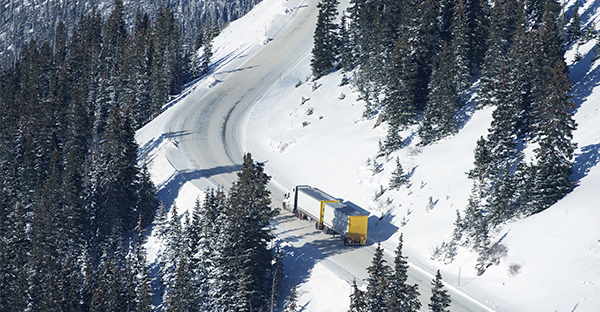
10 Safety Tips for Hitting the Road this Winter <span style="font-weight: 400;">Navigating the road during winter can be difficult even for expert truckers. During this season, truckers have to put up with icy roads, poor visibility, and reduced traction while driving a big rig. However, implementing preventive safety precautions can help you sail smoothly throughout winter without any major problems.</span>
<h3></h3>
<h3><b><i>Vehicle Inspection</i></b></h3>
<span style="font-weight: 400;">Before anything else, you need to ensure that your truck is in the best shape to survive the tough conditions of the winter season. See your tire pressure, antifreeze levels, and engine oil before your trip. If you have the time and the means, have a mechanic inspect your vehicle. This will help ensure that your vehicle can withstand the harsh conditions during winter.</span>
<h3></h3>
<h3><b><i>Watch Your Speed</i></b></h3>
<span style="font-weight: 400;">Accidents during the winter season mostly happen due to overspeeding. Driving through an icy road can result in poor traction. This is why it’s wise to compensate by reducing your speed. Going easy on your accelerator also gives you a longer reaction time should things go south. </span>
<h3></h3>
<h3><b><i>Allot Extra Space</i></b></h3>
<span style="font-weight: 400;">While driving on wet roads, stopping distance is usually twice more than normal. However, stopping distance increases to 10 times more than usual on icy roads. This is why you have to leave lots of room between your truck and the vehicle in front of you. Doing this will keep you out of harm’s way during accidents.</span>
<h3></h3>
<h3><b><i>Be Smooth</i></b></h3>
<span style="font-weight: 400;">Don’t do any sudden movements on icy roads. Refrain from sudden brakes, acceleration, etc. Should you find yourself in a sticky situation, lightly pump your brakes. Be sure to keep your speed consistent. Avoid doing anything that will reduce your traction on a slippery, icy road.</span>
<h3></h3>
<h3><b><i>Pay Attention to Tire Spray</i></b></h3>
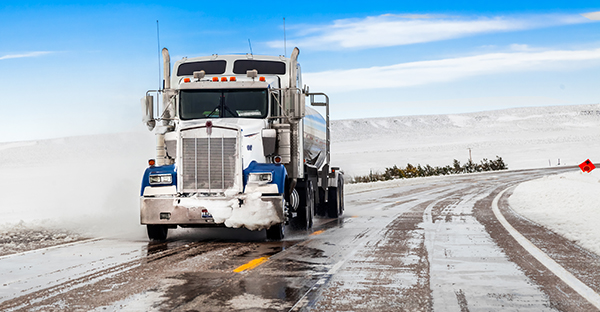
<span style="font-weight: 400;">One quick way to assess the road’s condition is to observe the water coming off the tires of surrounding vehicles. More water indicates wetter roads. Meanwhile, less tire spray indicates icy roads. This should prompt you to exercise more caution while driving. </span>
<h3></h3>
<h3><b><i>Light the Way</i></b></h3>
<span style="font-weight: 400;">Visibility can decrease relatively due to poor weather conditions. Don’t forget to turn your headlights on while driving. This allows other drivers to keep a safe distance from your truck. </span>
<h3></h3>
<h3><b><i>Be Evasive</i></b></h3>
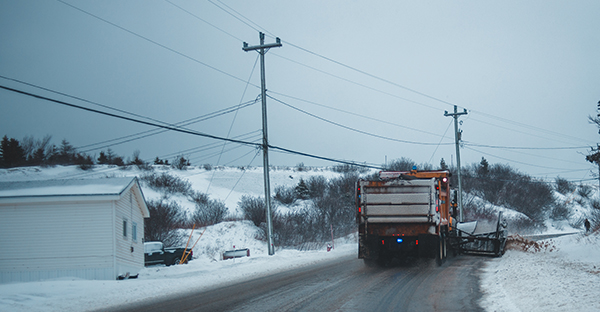
<span style="font-weight: 400;">Be evasive on snow-covered roads. This is relatively better instead of sudden and hard braking. Decelerate your truck slightly and carefully maneuver through obstacles to avoid collisions.</span>
<h3></h3>
<h3><span style="font-weight: 400;"> </span><b><i>Avoid Extreme Conditions</i></b></h3>
<span style="font-weight: 400;">If the weather seems too severe, pull over. There’s no point in risking a drive during extreme weather conditions. Your safety should always come first. If the weather gets too extreme, find a safe way to get off the road and wait until it’s safe enough to drive. </span>
<h3></h3>
<h3><b><i>Prepare Yourself</i></b></h3>
<span style="font-weight: 400;">After you’ve ensured that your vehicle is ready for winter, it’s time to prep for the cold weather. Be sure to carry warm clothes and thick blankets. It won’t hurt to bring miscellaneous items like a flashlight, shovel, matches, traction devices, etc. You would never know when these things may come in handy. It’s also to make sure you have roadside assistance for trucks should you encounter trouble on the road.</span>
<h3></h3>
<h3></h3>
<span style="font-weight: 400;">During a whiteout blizzard, visibility is compromised. This will make it difficult to see traffic lights and road signs. Stay safe by looking twice before proceeding on intersections or one-way streets.</span>
<span style="font-weight: 400;"> </span>
<span style="font-weight: 400;">Truckers are constantly being tested on the road. As winter begins, it brings with it obstacles that make driving challenging. During this season, it’s important to exercise caution while driving. These tips can help prevent accidents and mishaps from happening during the drive.</span>