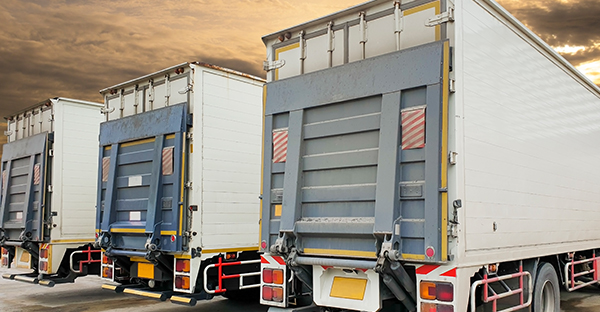
Truck Sanitation Tips <h2></h2>
During the last few months, the COVID-19 pandemic has begun to have an effect on everyone in the world. While truckers continue to deliver the vital needs of the country, there is continued risk in accumulating and spreading the virus in doing so. There is a lot that we can do to help prevent the spread of COVID-19.
Since truck drivers spend more time inside their trucks, it is important to make sure that it is a clean environment for you and for anyone who rides in it. In this article, we have put together a list of tips on how to clean and disinfect your truck.
<h2></h2>
<a href="https://truckerpath.com/uploads/2020/07/tst2.jpeg"><img src="https://truckerpath.com/uploads/2020/07/tst2-300x156.jpeg" alt="" width="300" height="156" class="alignleft size-medium wp-image-5233" /></a>
<h2></h2>
<h3><strong>1. Choosing Your Cleaning Materials</strong></h3>
The first step to cleaning and disinfecting your truck is to choose the right cleaning agents and materials you will use.
Isopropyl alcohol is a proven disinfectant, and is also safe to use on most truck interior surfaces. In fact, it is used in many production plants to put a final touch on interior components before they are shipped out. Isopropyl alcohol will remove many stains, smudges and residues, as well as kill bacteria and viruses. However, that stain removing quality can also cause problems with leather.
<h2></h2>
For leather components such as steering wheels, seating, and trim, a combination of soap and water is a safe and sufficient way to clean them. Avoid hard scrubbing when cleaning your leather interior, and avoid excess suds and water. Hand washing has been recommended as a primary way to protect oneself against infection by COVID-19, this holds true for washing your leather interior as well.
<h2></h2>
Another cleaning agent is chlorine dioxide (ClO2). It is a common disinfectant and odor eliminator, already prevalent in many shops. It is available in the form of tablets, and depending on the amount of water added, can be used in a vapor or liquid form.
<h2></h2>
It is recommended to use microfiber towels as cleaning material as it lessens the damage on any surface. Wash the towels thoroughly after each cleaning session.
<h2></h2>
<a href="https://truckerpath.com/uploads/2020/07/tst3.jpeg"><img src="https://truckerpath.com/uploads/2020/07/tst3-300x156.jpeg" alt="" width="300" height="156" class="alignleft size-medium wp-image-5234" /></a>
<h2></h2>
<h3><strong>2. Cleaning & Disinfecting Truck Interiors</strong></h3>
While truck interiors are built to be tough, hard scrubbing or using a rough cloth can cause scratches or even discoloration. A wipe with alcohol on hard surfaces and gentle circular cleaning on upholstery are the best bets for both cleaning and maintaining your truck interior.
<h2></h2>
It is also very important not to use too much water on your seats. If cloth upholstery soaks through with water, it can get into the cushion beneath. This can cause the growth of mold and that musty smell you will recognize if you've left your windows open in the rain.
<h2></h2>
If washing the seats of your truck, it is best to wet a cloth or sponge with soap and water and wipe the seats. You do not want to leave excess soap or water, as it can take a long time to dry. Isopropyl alcohol can safely be used on non-leather seats.
<h2></h2>
<a href="https://truckerpath.com/uploads/2020/07/tst4.jpeg"><img src="https://truckerpath.com/uploads/2020/07/tst4-300x156.jpeg" alt="" width="300" height="156" class="alignleft size-medium wp-image-5235" /></a>
<h2></h2>
<h3><strong>3. Cleaning & Disinfecting Truck Exteriors</strong></h3>
Truck exteriors should not be left behind. Wash you trucks regularly at truckstops. Pay attention to the parts which have frequent contact with your hands and shoes such as step boards and exterior door handles. You may clean these areas with soap.
<h2></h2>
<a href="https://truckerpath.com/uploads/2020/07/tst5.jpeg"><img src="https://truckerpath.com/uploads/2020/07/tst5-300x156.jpeg" alt="" width="300" height="156" class="alignleft size-medium wp-image-5236" /></a>
<h2></h2>
<h3><strong>4. Keeping Clean While on the Road</strong></h3>
While you're out, you're exposed to germs and viruses that can follow you back into your truck. If you don't have enough time to do a thorough truck clean, keep in mind of the common contact points such as door handles and controls, keys or start button, steering wheel, gear shift, seats, CB radio, all buttons and knobs on your dash, sun visor, anything touchscreen, the console and cup holders.
<h2></h2>
You can use disinfectant wipes on most surfaces. Wipe your mobile phones while you're at it too.
<h2></h2>
<h2></h2>
<h2></h2>
<h2></h2>
<h4>By Aldous Aldwin</h4>
<h3></h3>
<h3></h3>
Starting your Career as a Truck Driver
[p]Before starting this journey, you should be 100% sure that you want to go down this career path. Remember that despite it being a career that brings in the bucks and takes you to different cities, trucking also involves making sacrifices and paying heavy attention to safety. Familiarize yourself with the industry as much as you can. If you’re ready to begin, then we’ve put together a few pointers that might be useful before you start your career.[/p]
<h2></h2>
[p][b] Checklist for becoming a Truck Driver[/b][/p]
<ol>
<li>Obtain Commercial Driver's License.</li>
<li>Obtain endorsements for a particular truck/load type if necessary.</li>
<li>Buy your own truck and complete necessary insurance/paperwork OR join a trucking company and take on deliveries. </li>
</ol>
<h2></h2>
[p][b] Getting your Commercial Driver's License[/b][/p]
[p]You will need to attend a trucking school to train for your CDL Skills Test. On average, it takes about 7 weeks (between $3000 & $7000) to get your CDL whilst completing the program full-time. You will need to dedicate atleast 40 hours a week for your truck driving training. It is also possible to attend a paid CDL program, often held by some of the larger trucking companies. They will teach you how to drive their trucks, get the CDL and give their graduates a driving job. Paid training programs may have an extra set of requirements including a commitment to employment (depending on employer). [/p]
[p]To begin pursuing for your Commercial Driver's License (CDL),you will need to fulfill the basic requirements: [/p]
<ul>
<li>Possess a high school diploma or GED</li>
<li>Preserve a good driving record</li>
<li>Have a Class D license for at least 1 year and in good standing</li>
<li>Be at least 18 years old to drive in-state, 21 to drive state-to-state</li>
<li>Possess a social security card</li>
<li>Be able to show proof of insurance</li>
<li>Pass a 10-year background check</li>
<li>Pass TSA screening</li>
<li>Pass a medical examination</li>
<li>Pass periodic drug tests</li>
</ul>
<h2></h2>
[p][b] Step 1: Get your Commercial Learners Permit (CLP)[/b][/p]
[p]The CLP allows you to practice on legal roads with a CDL holder sitting next to you. Besides a countrywide 10-year driving record & health check, your state may have specific requirements. For a better idea, please check your state's CDL Manual. [/p]
<h2></h2>
[p][b] Step 2: Get your Commercial Drivers License (CDL)[/b][/p]
[p]You are required to hold the CLP for 14 days before taking the Skills Test. Some states may require you to take a CDL training beforehand. The Skills Test has three parts: The Vehicle Inspections Test, the Basic Controls Test, and the Road Test. Once you've pased the test, congrats! You're a certified commercial driver. You may be given the CDL on the same day or send it to you by mail. The CDL cost also varies according to state.[/p]
<table>
<tr>
<td>CDL Application Fee</td>
<td>$0 - $43</td>
<td>The Commercial Driver's License "application" is the form you will need to complete when applying for your Commercial Driver's License (CDL). This form will consist of your Identification Information (everything from your name, addresses, DOB, social security number to current license information),questions related to "Certifications" ("are you a resident in the state you're applying for your CDL in?", "do you have any limitations or medical conditions, either mental or physical?", and other questions related to qualifications). In addition to these questions, the application will ask about "CDL Endorsements" you are trying to obtain. For more on "Endorsements", read on.
</td>
</tr>
<tr>
<td>CDL Endorsement Fee</td>
<td>Varies</td>
<td>Varies depending on endorsement & state. Six endorsements that can be added:
- Double/Triple Trailers (Knowledge Test Only)
- Passenger (Knowledge and Skills Tests)
- Tank Vehicle (Knowledge Test Only)
- Hazardous Materials (Knowledge Test Only)
- Combination of Tank Vehicle and Hazardous Materials Endorsements (Knowledge Test Only)
- School Bus (Knowledge and Skills Tests)</td>
</tr>
<tr>
<td>CDL Written Test Fee</td>
<td>Upto $125</td>
<td>The CDL written test consists of questions on a number of topics, ranging from maintaining safe operating speeds in many types of driving conditions, handling cargo, using an electronic logging device, operating all the systems in the vehicle, and more.
Test-takers receive 60 minutes to complete the exam. If the driver would like a particular endorsement (see above),additional questions may be added. Most endorsement tests add an additional 20 to 25 questions. Most states do not set a time limit for the test-taker to answer the endorsement exam questions.</td>
</tr>
<tr>
<td>CDL Skills Test Fee</td>
<td>Upto $250</td>
<td>The CDL skills test involves a road test, a pre-trip inspection test, and a basic vehicle control test. The skills test is a necessary part of obtaining your CDL. During the skills test, you must drive on the road with a test administrator, so the test must be scheduled in advance. If you have two or more years of experience in driving with the military, you may able to waive the test. </td>
</tr>
<tr>
<td>CDL License Fee</td>
<td>Upto $120</td>
<td>Once you've passed the CDL exam, you must pay for your commercial driver's license, which can cost upwards of $120. You must renew your CDL on a regular basis, but frequency varies by state. Check your state's requirements to find out more.</td>
</tr>
</table>
[p]There are three types of CDL's for each state.[/p]
<table>
<tr>
<th>Commercial A</th>
<td>Any legal combination of vehicles with a gross combination weight rating (GCWR) of 26,001 pounds or more, provided the gross vehicle weight rating (GVWR) of the vehicle(s) being towed is in excess of 10,000 pounds.</td>
</tr>
<tr>
<th>Commercial B</th>
<td>Any single vehicle with a GVWR of more than 26,000 pounds, any such vehicle towing a vehicle not in excess of 10,000 pounds GVWR, or a 3-axle vehicle weighing over 6,000 pounds.</td>
</tr>
<tr>
<th>Commercial C</th>
<td>Any Class C vehicle with one or more of the following endorsements:
- Hazardous Materials (HazMat)
- Passenger Vehicle (PV)
- Tank Vehicle (TV)</td>
</tr>
</table>
<h2></h2>
[p][b] Time to find a Trucking job[/b][/p]
[p]As an entry-level trucker, your options may be limited but always ensure your employer provides the right work/life balance and benefits. Choosing between a big or small company also has its differences. Small companies give you a higher pay and closer connections with staff, whereas big companies allow you to grow within the company and work on exciting projects. Most trucking companies aren’t just going to let you out on the road in their own trucks without some sort of training. Training program lengths vary from company to company—but, for the most part, you can expect that they will be at least a few weeks long.[/p]
<h2></h2>
[p][b] Finding your balance[/b][/p]
[p]Once you’ve become more comfortable and have clocked in a few thousand miles, it might be a good idea to think about what’s next. Are you looking to move closer to home and do more regional work? Maybe you’ve got all the skills needed to move from a truck driver to an owner/fleet operator. Think about your goals, your accomplishments/ongoing challenges with truck driving before carefully selecting what’s right.[/p]
<h2></h2>
[p][b] Don’t worry, we’re by your side. [/b][/p]
[p] We hope this guide gives you an overview on how to start your exciting trucking career. As a company that’s made by truckers for truckers, we want to make sure you get the job done in the most efficient and safe way possible. With support from our thousands of daily users who rely on our services, we will continue to update our growing features.[/p]
<h2></h2>
[p][b]Stay in touch![/b][/p]
<h2></h2>
<h2></h2>
[p][b]By Tharaka[/b][/p]
Trucking Industry Update February 22, 2019 <h3>Trucking Industry Update February 22, 2019</h3>
<h4>By Jeremy Feucht</h4>
<h2><strong><u>Did you Know?</u></strong></h2>
We all know that trucking carries roughly 73% of all goods shipped in the US, but did you know that 94% of all hazardous material moved in the US is shipped via truck?
<h2><strong><u>Trucking tip of the Week</u></strong></h2>
Trip planning is essential. If it is a lane you have never driven before, planning becomes all that more imperative. When you leave could mean the difference between hitting traffic in a big city or not. Many areas have low bridges that semis cannot fit under. You need to know how to get around those. Knowing the best places to fill up with fuel and where scales are so you are filling up after leaving a scale. Filling up after leaving a scale can help you stay weight compliant yet have a full tank of fuel. Plenty of things to think about when planning your trip.
<h2><strong><u>Driver’s Pay</u></strong></h2>
There are signs that companies may be changing the way they pay their drivers. For the Owner-Operator, that could be a good sign. As companies increase the pay for their drivers in hopes of stabilizing retention rates, fewer and fewer drivers will attempt the owner-operator method. This means more loads on the spot market for them to find. <a href="https://www.joc.com/trucking-logistics/labor/new-truck-driver-pay-model-aimed-capacity-retention_20190220.html">Companies are looking into salaries</a>, amongst other ways to pay their drivers. Wages will be dependent upon their track record and in some cases tenure within the company.
<h2><strong><u>Technology in Trucking</u></strong></h2>
Companies are doing many different things to ensure the quality of the driver they are putting behind the wheel. Instead of waiting on the government to figure out what should be the minimum amount of training needed before driving, <a href="https://www.beaumontenterprise.com/technology/businessinsider/article/America-s-fifth-largest-trucking-company-has-a-13630774.php">Xpress, the fifth largest carrier company in the US</a>, sought out advice from its own drivers. Moving away from the classroom type setting, Xpress is creating a technology-based, self-paced learning regiment. On top of that, they have created a virtual reality simulator that their prospective drivers must pass long before getting behind the wheel of an actual truck. Could this be the wave of the future?
<h2><strong><u>Toll Roads</u></strong></h2>
Much like Virginia did a few weeks back, Connecticut is moving away from an idea of placing a heavy burden on truckers moving through their state. The governor, Ned Lamont, had sought to <a href="https://cdllife.com/2019/governor-flip-flops-away-from-truck-only-toll-promise/">create Truck only toll roads in the state of Connecticut</a>. Due to legal issues, he has backed off that idea. Instead, he is looking at creating toll roads across the entire state for all vehicles. The chances of this happening are slim because people, while naïve to the plight of the trucker and they tend not to worry about things that indirectly affect them, will not be in support of something that adds a more direct burden on themselves.